Category: 1001 Books
In my bed: March 2014
You know you’re in a blogging slump when: a monthly update becomes quarterly. At least I came up with a sassy new name?
Reading has trumped writing lately, and I blame all the wonderful books. In the first three months of 2014, I’ve read three five-star books, one that was ever so close, and many that rate a solid four-stars.
Recommended reading
I’ve read 17 books to date this year. Here are a few that I would recommend to almost anyone.
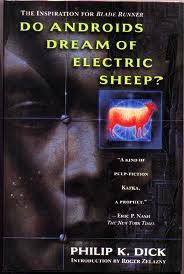



- Do Androids Dream of Electric Sheep by Philip K Dick. See my guest post over at ebookclassics and get ready to have your mind blown.
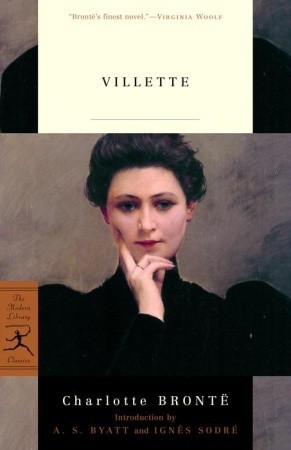
- Villette by Charlotte Bronte. Check out me Bronte fangirling here.
- The Orenda by Joseph Boyden. I knew this one was special after the first 15 pages and was a wreck after the last page. Review to come.
- Mad Hope by Heather Birrell. Seriously cannot wait to reread this when I review.
- The Bridge of Beyond by Simone Schwarz-Bart. My favourite of this year so far. As much for the translation as for the author’s work. It’s unbelievable that this was not written in English, because the language just soars.
Reading diverse
It was enlightening to count up the diversity (or lack thereof, sadly) in my reading last year, so I thought I’d track it more often in 2014. Of the 17 books I’ve read so far:
- 10 written by women
- 5 written by people of colour
- 3 written by Dead White Dudes (and just 1 by an Alive White Dude. Hi Todd!)
- 7 Canadian, 4 American, 4 British,1 Russian, and 1 Caribbean
So, still heavy on Canada/US/UK and heavy on white authors. A work in progress.
Reading local
I read some great local Edmonton books recently. Reviews for these are all to come.


- The Shore Girl by Fran Kimmel: Complex and satisfying.
- Follies Past by Melanie Kerr: Unexpected and authentic.
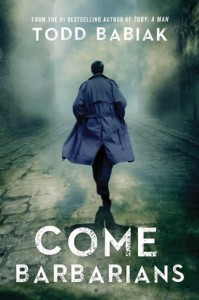
- Come Barbarians by Todd Babiak: A cross between Le Carre and Irving.
There are also some great recent and upcoming events in Edmonton:
- Sadly, Richard Wagamese (author of Indian Horse) couldn’t make it to the Macewan Book of the Year event, so it’s being rescheduled.
- I attended my very first CanLit Book Club at Jasper Place Library, and Indian Horse was the March pick. I think a full blog post is in order, but I’m so happy to have found this group! Our next book is Emma Donoghue’s Astray.
- This week, I’ll be staying up past my bedtime to attend Green Drinks: Local Literature. I’m not sure exactly what will go on, but I’ve been told it involved “literati,” possibly “glitterati,” and also high-fives. I will attempt to take selfies with the likes of Jason Lee Norman (Americas, 40 Below Project), Matt Bowes (NeWest Press), Diana Davidson (Pilgrimage), and Alexis Keilen (13, She Dreams in Red.) There are 24 tickets left as of 10:30 Monday night. Get on it!
What’s next on Reading in Bed


- Guest hosting on Write Reads: I haven’t been much into podcasts until I realized that my gym has free wifi and I can listen to them while I work out. I listened to Write Reads this week, and soon enough, I’ll be guest hosting with Tania and “Kirtles” (that’s what Tania calls him. I don’t know if I get to call him Kirtles right off the bat or not!) with my choice for Canadian New Release month: Emma Donoghue’s Frog Music.
- Reading for The Afterword Reading Society: The National Post books section came up with a quasi-book club of it’s own. Each week there’s a new book, and members can request a chance to read. 25 are picked and you get a review copy of the book and a set of questions to fill out. The results are summarized in the paper. I’ve been trying for months and finally got picked to read Dinaw Mengestu’s All Our Names. One of the questions asks, “what would you ask the author?” I had a real hard time coming up with something more intelligent than “why are you so awesome?” I’ll post all my answers on the blog soon.
- #1Tale2Cities Readalong: Dickens’ A Tale of Two Cities is the first readalong I’ve hosted since Moby-Dick. Watch for a sign up post soon! We’ll start reading on April 20th.
- Madame Bovary Readalong: I feel like living on the edge, so I’m signing up for this readalong the day before it starts. ebookclassics, Cedar Station, and a scandalous heroine? Yeah, I’m in. Sign up here, soon.
How about you, book bloggers and readers? Are you reading diverse or local or anything else we should know about?
A Very Bronte Blog Post: Villette and A Bronte Burlesque
Do you have a favourite Bronte novel? If not, go read some of their stuff. It’s okay, I’ll wait.
The perceptive Rory at Fourth Street Review suggests that many readers identify strongly with either Jane Eyre (Charlotte) or Wuthering Heights (Emily), but not both. I’ve been a Wuthering Heights girl since I read it 17 years ago, but I’ve broadened my Bronte horizons of late: I read my first Anne book, Agnes Grey last fall, I read Charlotte’s Villette last month, and just recently saw a play based on the Bronte’s lives. I’m still Team Emily, but it’s time for me to give Charlotte her due: Villette is her masterpiece (sorry Jane fans) and she’s the most interesting of the siblings.
I didn’t even get around to reviewing Agnes Grey last year. It definitely had it’s moments, but the biggest impression it left was my wonder at how things were so different in Anne’s time; mostly in terms of the qualifications needed to educate children (be female, be unmarried, have a pulse?) Villette made me wonder about this stuff too, but I also felt the universality of Lucy’s situation. She could be anyone, at any time, not just a 19th century teacher, whereas Agnes was trapped in time. Indeed, if you have ever loved someone more than they love you, you’ll identify with Lucy Snowe.
Villette reminded me of a smaller-scope Middlemarch. Both novels are named for a city and are about the divisions between classes and sexes and have wonderful feminist perspectives. Middlemarch has much more going for it, from politics to academia to satire – so much, in fact, that I’m paralyzed to write a proper review. Villette is more of a character study – a convincing portrait of Lucy and her world. It’s a tragedy, and at times gothic and romantic. It’s odd in its construction – a straightforward narrative most of the time, but then, BAM, there’s a stream of consciousness account of Lucy’s severe depression. Or a delerious description of Lucy tripping out after being drugged. An anti-Catholic rant. A ghost nun. And so on.
Jane Eyre is great, but it just wasn’t this ambitious or this awesome. I made the mistake of finishing Villette over lunch time at work, and spent that afternoon in a state of bewilderment. I may have said “oh no she DIDN’T” aloud. It’s pretty much the opposite of the satisfying “Reader, I married him,” but to me, the ending was more satisfying for being so ambiguous.
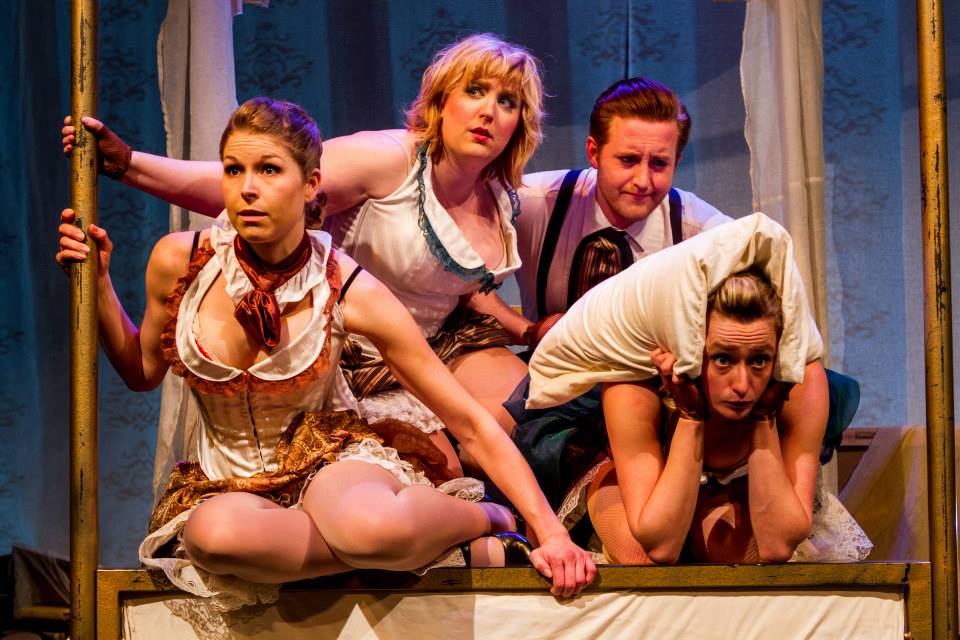
Send in the Girls in A Bronte Burlesque: Charlotte, Emily, Branwell, and Anne via https://www.facebook.com/sendinthegirls
Villette was the perfect preparation for seeing A Bronte Burlesque, a production of local theatre company Send in the Girls. Charlotte is the star, and we first meet her on her deathbed, her siblings having all died years earlier. Villette is never mentioned, and not often referenced (it’s all about Jane Eyre) but dying Charlotte, bitter and alone, put me in mind of Lucy Snow immediately.
In real life, Charlotte was newlywed and pregnant at her death, though this is never mentioned in the play. So, the story is manipulated, but what story isn’t? A Bronte Burlesque is confined to the insular world of the four Bronte siblings: Charlotte, Emily, Anne, and Branwell, the underachiever brother who I didn’t even know about till I saw the play.
It’s about exposing (get it?) the real Charlotte, how her ambition drove her to betray her siblings. She’s successful, but haunted by the past. Emily and Anne are laid bare as well – Anne and her jealousy, Emily and her depravity.
I had always wondered about Emily: how did she write so convincingly about obsession and loss, living such a short and isolated life? This play suggests that there was some Flowers in the Attic action going on up at Haworth, which made me question my teenage obsession with Wuthering Heights for a second before realizing this is a work of fiction about another work of fiction and every interpretation is as valid as the next – icky or not.
The burlesque element was fun, and worked well on a metaphorical level – you know, exposure, identity, femininity -but sometimes I would remember that they were supposed to be related and it got a a little weird. Or a lot weird. Seeing Emily throw herself at her own brother to the strains of Radiohead’s “Creep” was one of the more bizarre experiences of my life. This play was not exactly date night material.
The set, music and costumes were gorgeous. I was entertained and I gained a serious appreciation for Charlotte Bronte. And I simply love the fact that there’s a local theatre company doing something like this with literature and history! I never read biographies, but now I’m on the lookout for a good one – maybe Elizabeth Gaskell’s on Charlotte, or Daphne Du Maurier’s on Branwell.
Tell me, are you Team Emily or Team Charlotte? Is there a Team Anne? Branwell??
2014 Preview: Diversity, CanLit, Classics, and Second Chances
I’m still catching up on 2013 reviews, but 2014 reading is well underway. Here’s what you can expect this year on Reading in Bed.
Diversity!
I am pretty dismayed that off all the books I read last year, only 12% were by authors of colour. Here are some of my current and planned reads that will help tip me over 25% this year:

- The Orenda by Joseph Boyden. It’s my current read and HOLY CRAP IS IT GOOD.
- The Bridge of the Beyond by Simone Schwarz-Bart. nybooks.com says: “This is an intoxicating tale of love and wonder, mothers and daughters, spiritual values and the grim legacy of slavery on the French Antillean island of Guadeloupe.” Yeah. Plus, that cover.
- Inside Out: Reflections on a Life So Far by Evelyn Lau. An excuse to write about how Lau’s first memoir, Runaway, changed my life.
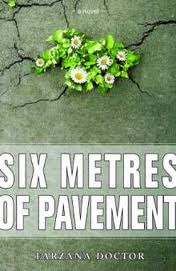
- Six Metres of Pavement by Farzana Doctor. My favourite calendar girl in Bare it for Books.
Follow book blogger Leonicka for lots of resources on diversity in Canadian literature. She’s going all out and reading 85% authors of colour this year!
Local Authors!
My next local read will likely be Come Barbarians by Todd Babiak. As for new #yegwrites stuff, so far I’m looking forward to Marina Endicott‘s fourth novel, Falling for Hugh and Laurence Miall‘s debut novel Blind Spot.
Here’s a great roundup of Edmonton books in 2014.
CanLit!
Apart from the Edmonton stuff, here’s my most anticipated CanLit:
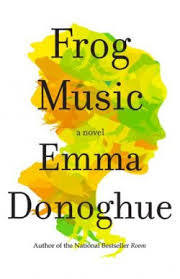
- Frog Music by Emma Donoghue. She’s got a way with titles. I loved Room and Slammerkin, so my expectations are high.
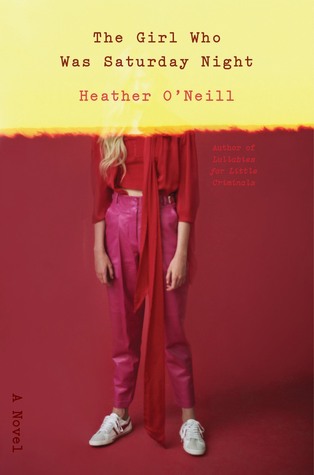
- The Girl Who Was Saturday Night by Heather O’Neill. I’ve been waiting eight years for O’Neill to write another book. Bring it on!
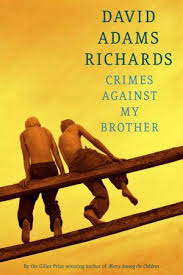
- Crime Against My Brother by David Adams Richards. Apparently brings the main character of Mercy Among the Children back – one of my favourite books of all time.
I will also solider on with the Storytellers Book Club challenge. It helps that I won a set of all five books in their contest last year!
Classics!
I haven’t forgotten about The Classics Club! In fact, I’m right on pace. I chose 50 books to read over five years, and approaching the one year mark, I’ve read eleven.
I’m also contemplating Behold the Star’s Russian Literature Challenge. Krisitlyn of Reading in Winter gave me War and Peace for Christmas, plus I hear reading Chekhov can improve your life.
Back from the DNF

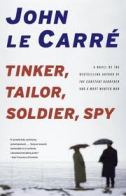


I might set this one up as a challenge hosted here on the blog. I’ve abandoned a few books over the years, and this is the year I give them another shot. I’m including books that I straight up DNF’d (did not finish) and books that I finished, but didn’t really appreciate, often because I read them too young. Here is a sampling, with my excuses for not finishing in the first place. Watch for an introductory post soon (and if anyone wants to help me design a button, that would be cool…)
- Tristram Shandy by Laurence Sterne: Pregnancy brain
- Tinker Tailor Solider Spy by John LeCarre: Baby brain
- The English Patient by Michael Ondaatje: Too young. Attempted at 22 or so and got really lost.
- The House of Sand and Fog by Andre Dubuois III: Too young. Read at age 20.
- Fifth Business by Robertson Davies: Too young. Forced to read in high school, I hated it. Read a description of it recently and it sounds AMAZING.
This sounds like a lot of books, but I’m leaving room for random books, recommendations, read-alongs, and review books; you know, the four Rs.
Obligatory end-of-post question: what are YOU planning to read this year?
Reading in Bed Year in Review #4: Best Books and Blog Stats
I love statistics. You’re probably sick of them by now, what with the many end-of-year blog posts, but I love how they’re both meaningless and mean everything; how “numbers don’t lie” but they can tell whatever story we want them to tell. Here are the numbers that made up my year of reading.
…but first, a public service announcement: Goodreads has a sweet stats thiny that shows you how many books you’ve read, how many pages you’ve read, how you rated your books, and more! Go to “My Books,” then “stats” which is on the left side in tiny font, then click “details.” It’s magic! Here’s mine. You can also export your books to Excel to do EVEN MORE analysis – click “import/export” in that same tiny, left hand menu.
Books Read
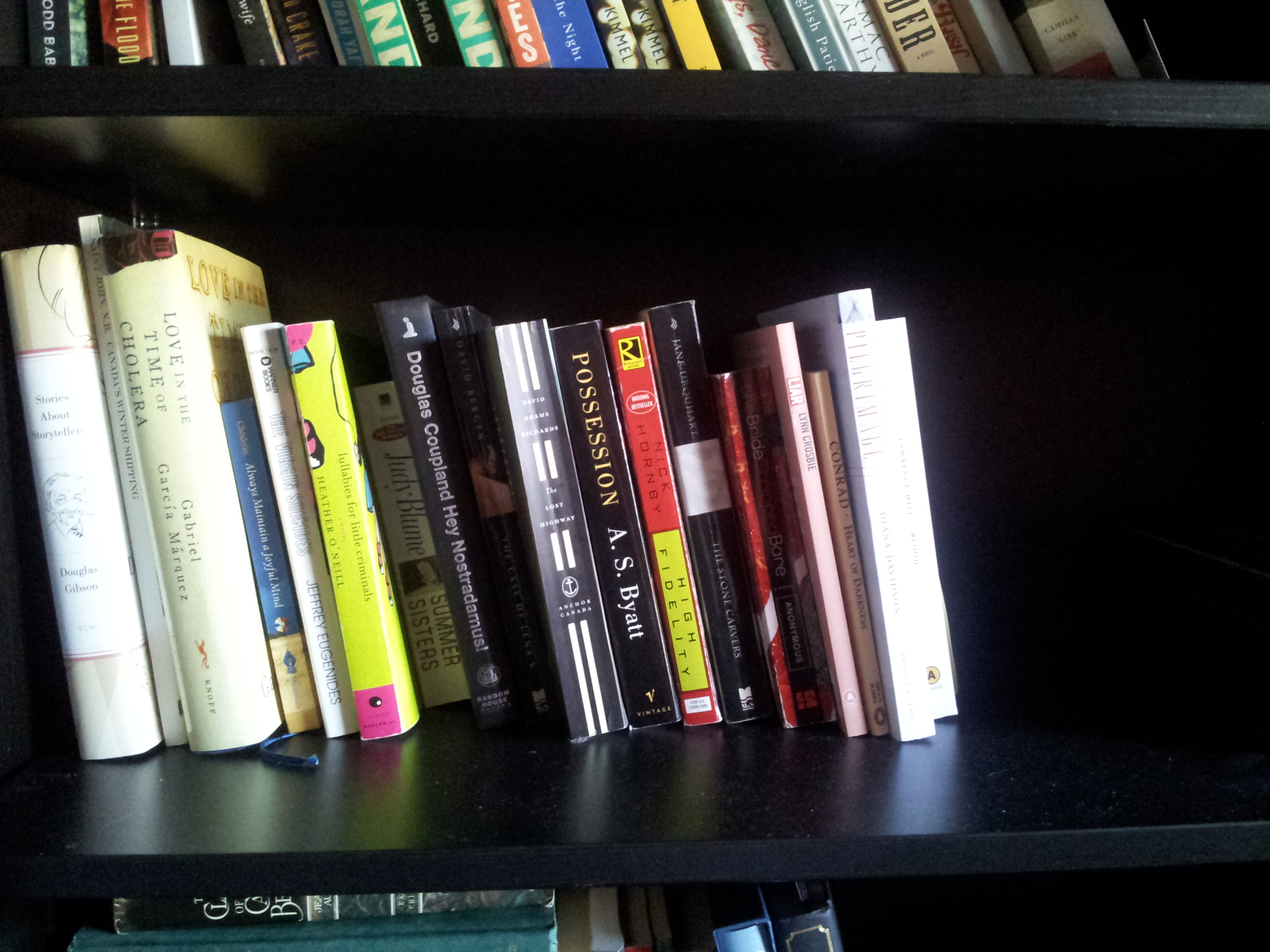
- Books read in 2013: 52 (Book a week!!)
- Books read in first six months: 12
- Books read in last six months: 40
I knew my reading picked up after I finished Moby-Dick this summer but I didn’t realize the extent till now. I never thought I’d read 50 books in a year, but it looks like I could reasonably go for 75 next year!
About the Author
- 35 Female (67%) 16 male (31%) 1 various (2%)
- 22 Canadian (42%) 16 American (31%) 9 British (17%) 2 French (4%) and 1 each: Columbian, Russian, Irish.
- 48 white (88%) 6 visible minority (12%)
I didn’t restrict myself to female authors this year, but I did stack the deck a bit by choosing female authors on the Classics Club list, and, by accepting review copies from independent presses – I have a feeling that female authors are over represented in smaller publishers. I won’t set any specific goals for next year, but I’d love to read more books by minorities. I’m sure I’ll still read lots of CanLit, butI gotta read some more World Lit too, beyond the States and the UK. Anyone got any good world lit reading challenges happening? I’ll probably do the Russian Lit one but would love to broaden my horizons even further…
Genres and Lists

- 18 classics (35%), 25 contemporary lit fic (48%), 3 non fiction (6%), 3 YA (6%), 2 romance (4%), 1 anthology (2%)
- 11 1001 Books for a total of 115 read
- 11 Classics Club picks for a total of 11
Ratings
- 10 five star reviews (19%), 19 four star reviews (37%), 14 three stars (27%), 3 two stars (6%), and 2 one star reviews (4%).
Compared to the average Goodreads rating…
- I rated 22 books higher. The most underrated book was The Testament of Mary, which I rated a 5, compared to average 3.56 rating.
- I rated 28 books lower. The most overrated book was Dragon Bound, which I rated a 1, compared to average 4.19 rating.
Blog Stats

- 17,000 page views in 2013. Compare that to 900 in 2011 and 3,500 in 2012. As Disco Stu would say, “if this trend continues, HEY!”
- Most viewed post of 2013: What’s The Deal With Infinite Jest? It’s a year later and I still don’t know what the deal is! It’s funny because I wrote it in a very unplanned, stream of consciousness style, which I don’t often do. I’m just happy to share the WTFness and the DFW love.
- Most viewed post that was actually written in 2013: The Fault in Our Stars: Use Your (Literary) Allusion. I get searches for “Fault in our stars allusions” on a daily basis, particularly in the summer, which tells me that a lot of students write papers on TFioS, and makes me realize how different writing papers must be these days.
And now, on to the good stuff: my best and worst reads of the year!
Continue reading
The Moonstone by Wilkie Collins
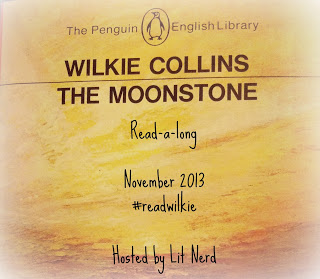
My rating: 3/5 stars
Goodreads
Read-along post #1
For someone who does a lot of read-alongs, sometimes I feel like I’m not very good at them. On the appointed day for our midway posts, I decided to post nothing and finish the book instead. I also feel like a bit of an outsider, as everyone else is positively swooning over The Moonstone, while I was left a little cold.
For a detective/mystery story, I didn’t feel much suspense at all for 90% of the book. It was only at the very end, when reading the factual, precise account of what happened to the moonstone, that I felt any real urgency to keep reading. Oh, I was curious about what happened to the moonstone. Sure. Who wouldn’t be? But the book utterly failed to make it matter beyond the whodunit aspect and that just wasn’t enough for me.
I think the ambivalence was intended, because the heroine and owner of the jewel is just awful, not to mention it comes to be in her family’s possession through murder. And colonialism. Her uncle is basically looting in India and kills a few Indians in the process. I don’t know what the general feelings on colonialism were in 1850, but the set up is so egregious I can’t help but think Wilkie (yes, we’re on a first name basis) wanted us to root for the Indians. India was still nearly 100 years from independence (wow) but really, it’s their damn diamond, maybe, I don’t know, give it back rather than be cursed and ruin everyone’s lives. JUST A THOUGHT.
What I don’t think was intended was the failure (to me) of the romance between Rachel and her first cousin Franklin. I struggle with the cousin thing. I know, different time, different culture and so forth. Maybe it’s because I share a family resemblance with a lot of my cousins so I just imagine these two making out and looking the same and it’s very Flowers in the Attic. Maybe it’s because Rachel has two romantic interests and they’re BOTH first cousins and I just think she needs to get out more. But I really didn’t care if Rachel and Franklin ended up together or not.
All that said, I did enjoy the book and would recommend it on the strength of the narrative structure alone. I’m a sucker for an epistolary novel, and Wilkie does it so well. We begin the novel with sweet, self-deprecating, sexist Betteredge, the Verinder family butler, hopelessly devoted to his Lady, his pipe, and Robinson Crusoe. You’d be hard pressed to find a more endearing narrator (in spite of the rampant sexism) or a funnier one. Pretty sure I snorted when I read this:
On hearing those dreadful words, my daughter Penelope said she didn’t know what prevented her heart from flying straight out of her. I thoughts privately that it might have been her stays.
Betteredge repeatedly addresses himself directly to the reader, here admonishing us to pay attention. Guilty as charged, I was totally thinking about my new bonnet while I was reading this…
Clear your mind of the children, or the dinner, or the new bonnet, or what not. Try if you can’t forget politics, horses, prices in the City, and grievances at the club… Lord! haven’t I seen you with the greatest authors in your hands, and don’t I know how ready your attention is to wander when it’s a book that asks for it, instead of a person?
The next narrator is one Miss Drusilla Clack and she was my favourite part of the whole book. I wish she’d narrated the whole thing. I wish the book was about her. She’s so delightfully hypocritical and a loves to play the martyr. She has a way with words; remarking on France’s “popery” and her aunt’s “autumnal exuberance of figure.” And then there are her tracts. Modern readers might be familiar with Chick Tracts (I was personally handed one at a Marilyn Manson concert in 1997 which is definitely in the top ten of “most 90s things that ever happened to me”) but Miss Clack’s tracts sound much more entertaining:
Here was a golden opportunity! I seized it on the spot. In other words, I instantly opened my bag, and took out the top publication. It proved to be an early edition of the famous anonymous work entitled THE SERPENT AT HOME. The design of the book is to show how the Evil One lies in wait for us in all the most apparently innocent actions of our daily lives. The chapters best adapted to female perusal are “Satan in the Hair Brush;” “Satan behind the Looking Glass;” “Satan under the Tea Table;” “Satan out of the Window” — and many others.
Seems like Clack needs to reread a few of those tracts herself. #Humblebrag alert:
On rising the next morning, how young I felt! I might add, how young I looked, if I were capable of dwelling on the concerns of my own perishable body. But I am not capable– and I add nothing.
I made a ton of annotations in Betteredge’s and Clack’s sections, and nearly none in the ensuing ones, narrated by the family’s lawyer, that dreamy first cousin Franklin, and a Mr. Jennings who I can’t really explain without spoilers. The rest of the book was interesting and well written and the ending was satisfying, but I just missed the first two narrators so much, I couldn’t get into it.
The Read-Along
Despite not loving the book, I had a lot of fun with this read-along! The #readWilkie hashtag was active, the bloggers were committed, and there is something very endearing about a group of girls so earnestly in love with a 19th century author (no judgement, I’m currently crushing on Anton Chekhov.) I heartily encourage you to visit the other #readWilkie bloggers, who may do a better job of convincing you to read The Moonstone.
- Our host Ellie at Lit Nerd
- Riv at Bookish Realm
- Juliana at Epilogues
- Hanna at Booking in Heels
- Kayleigh at Nylon Admiral
- Charlotte at Lit Addicted Brit
- Melbourne on my Mind
- Ellie at Book Addicted Blonde
There are a few more, but these are the bloggers who posted a mid-way post.. you know… who followed the rules.
THANK YOU to Ellie for hosting, and I eagerly await the flood of reviews at the end of the month!
Snap Scene: Picture Me Reading
Apparently using memes and GIFs is a “controversial” technique for reviewing books. While I’m certainly not clutching my pearls over this (I’ve used memes and GIFs myself,) I agree with the article’s assertion that they can be overused and just as cliche as calling a book “staggering” or “unflinching” or whatever.
So, maybe you should create your own visuals. Yeah, you can take a picture of your copy of the book, but that’s pretty boring too. Why not take things a little further and recreate an entire scene? Or take a picture of something that evokes the ambiance or the theme of the story? This is the idea behind Snap Scene, an Instagram project from Jessica Kluthe, author of Rosina, The Midwife (my review here.) From Kluthe’s website:
What is Snap Scene? It’s a simple concept. It offers another way for a reader to encounter a story/book/novel: through a photograph (a “Snap Scene”) that illustrates an otherwise text-only scene. It will offer the viewer some value by taking the viewer inside the story, the novel, the book, the essay…
If you’re a writer/author, this is a great chance to connect with some new readers. If you’re a bookworm, this is a great chance to find your next read.
What do you need to do? Stage a scene that illustrates a passage from a book/novel/story/essay. This can be as simple or as elaborate as you please. Along with the scene, in the caption below the photo I’d like to include 3 – 4 sentences from passage that inspired your Snap Scene.
Here’s an example Snap Scene of Love Letters of the Angels of Death, reviewed here not so long ago:
“I love how his headstone is so elegant and simple,” you say, defying the prejudices of no one in particular. “Remember that when you’re ordering one for me, Brigs. I don’t want anything too fussy–no statues or angels or lambs.” “I thought gravestone lambs were just for dead babies.” You’re turning away from me, waving one hand. “Everyone’s the same age in heaven.” – From Jenn Quist’s Love Letters of Angels of Death.| #author submitted #snapscene| http://www.jenniferquist.com
To date, Snap Scene’s contributors have mostly been local authors promoting their own books, but I think the potential for reader participation is huge. It’s a cool way to share what you’re reading and help other people discover a new book that’s a little more creative than #FridayReads. It also reminds me of wildly popular Tumblr Slaughterhouse 90201, where literary quotes are juxtaposed with pop culture images, so the appetite for this kind of thing is there. Continue reading
Reading Roundup: Strange Summer and Frantic Fall
Strange things are afoot at Reading in Bed. I’ve noticed a couple of things since I finished reading Moby-Dick back in July:
- I’m kind of addicted to read-alongs, as I signed up for another one immediately, this time for Margaret Atwood’s Oryx and Crake. And I’m signing up for yet another this month.
- I keep stumbling on books that I connect with on a really profound and personal level. And I’m still trying to figure out how to review them without it becoming a weird confessional kind of exercise. They were: Bumped by Meaghan McCafferty, Rosina, The Midwife by Jessica Kluthe, and Love Letters of the Angels of Death by Jennifer Quist.
- I read Fifty Shades of Grey and didn’t hate it with the fiery passion I thought I would. (I hated it, yes, but I didn’t HATE it, you know?)
- I’m reading, like, SUPER fast. Six months ago I was barely managing ten pages per day. Now I’m flying through books in four days, or less. My secret is that I’m reading multiple books at the same time. This is something I’ve NEVER done. I’ve always been a serial monogamer in romance and in books. It’s like reading Moby-Dick flipped a switch in my brain and now I can just go back and forth between books with ease.
Anyway, these are all good things and I’m enjoying reading, and blogging, and chatting with other book bloggers, more than ever. In fact, after my social media break (social media free August, thanks Momaccounts) I logged on to Twitter and went on an unfollowing spree so that my timeline is now 80% book-related. Bloggers, authors, literary journals, and the like. And I love it.
Fall Plans
So things are great at the moment, but I must admit, I’m feeling a tad overwhelmed with all the stuff I have planned for Fall. Here’s a preview. Continue reading
Austen in August: Introduction and Northanger Abbey Review
August is almost over and I haven’t posted once about Roofbeam Reader’s Austen in August event. I have been reading, though. Here are my picks, and a review of my first read, Northanger Abbey.
My Austen in August Reads:
1. First (Wrong) Impressions by Krista D. Ball Continue reading
The Classics Spin #3

It’s Classics Club Spin time again! The timing is impeccable, as I’m suffering a severe reading hangover after cruising through two thirds of Margaret Atwood’s dystopian Maddaddam series, and feel like I need a real classic to cleanse the palate. Plus, I’ve only read five Classics Club books so far, and I need to read ten per year to stay on track.
What the heck is the Classics Club, you ask? Check out my list and the general idea here.
Want to join me? Here’s the deal:
- Pick twenty books that you have left to read from your Classics Club List (or, you know, your TBR list, if you’re not a Classics Clubber.) Try to challenge yourself: list five you are dreading/hesitant to read, five you can’t WAIT to read, five you are neutral about, and five free choice (favorite author, rereads, ancients — whatever you choose.)
- Post that list, numbered 1-20, on your blog by next Monday (Agust 19).
- Monday morning, The Classics Club will announce a number from 1-20. The challenge is to read the corresponding book by October 1, even if it’s an icky one you dread reading!
Here we go! Crossing my fingers that I don’t get Tristram. I’m not ready yet! In the immortal words of Jessie Spano, I’m so excited… I’m so… scared.
Five I’m dreading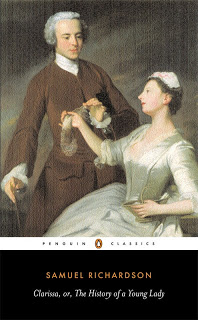
- American Pastoral by Philip Roth. I didn’t know that much about Roth when I added this to my list. Now I hear he’s kind of a gross old man who talks about his penis a lot. SOUNDS FASCINATING.
- Tristram Shandy by Laurence Sterne – Long. Abandoned years ago. Too dense. Scary. But also awesome.
- Clarissa by Samuel Richardson – Long. Sounds dense. But one of those “have to read it” books.
- Stoner by John Williams – Not my sort of book at all, but added based on a rave review.
- Mrs. Dalloway by Virginia Woolf – I’ve been poisoned against Mrs. D by 101 Books! Continue reading
A Reading Soundtrack
Not that I actually listen to music while reading (who does that?) but I love finding and imagining connections between songs and books. Here are some soundtrack suggestions for my recent reads.
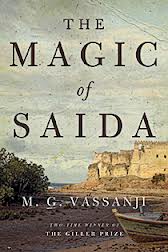

The Book: The Magic of Saida by M.G. Vassanji
The Song: Fatima by K’Naan
Anyone who listens to CBC Radio 2 probably got their fill of K’Naan during the last World Cup, but he’s got other incredible songs. I was singing this in the car (pity my children) when it hit me, just how closely the narratives of these two works match up. We have – childhood love, Arabic and Swahili languages, children displaced by the whims of adults, adults displaced by the whims of government, and a man who goes to North America, leaving the girl behind in Africa, probably in harm’s way. The book and the song are both romantic and tragic.
I fell in love with my neighbors daughter
I wanted to protect and support her
Never mind I’m just 12 and a quarter
I had dreams beyond our border.

The Book: The Cat’s Table by Michael Ondaatje
The Song: Wild Country by Wake Owl
I’m in love with this song. I’m in love with this book. Both are just dreamy, in the “I wanna stare at you all day” sense, and in terms of the style and imagery. To me, both are about memory and fate, and how lives and hearts becomes intertwined.
What will become of the truth when we keep it in
things we don’t remember when they ask us when
we did the things that we learned we shouldn’t do again
what wasn’t learned from mistakes, we will make them
The Book: Frances and Bernard by Carlene Bauer
The Songs: Madness by Muse
This book devastated me. The kind of whirlwind romance that would take place over weeks or months today plays out over years, in letters between two writers. Love is shown to be beautiful, infuriating, and ultimately destructive. This is romance for grown ups. As for the song, my three year old says “It’s the song you like, mama” when this plays on the radio. Again, pity the children’s poor ears, because I belt this one out like nobody’s business.
Come to me
Just in a dream.
Come on and rescue me.
Yes I know, I can be wrong,
Maybe I’m too headstrong.
Our love is madness.

The Book: Moby Dick by Herman Melville
The Song: People Got A Lotta Nerve by Neko Case
The awesome power of nature and man’s unwillingness to acknowledge it as such. I just started Moby Dick, but I think this might play into it…
You know
They call them “killer” whales
But you seem surprised
When it pinned you down to the bottom of the tank
Where you can’t turn around
It took half your leg, and both your lungs
And I craved I ate hearts of sharks
I know you know, that I’m a man, man, man
Man, man, man eater
But still you’re surprised-prised-prised when I eat ya
 Reading in Bed
