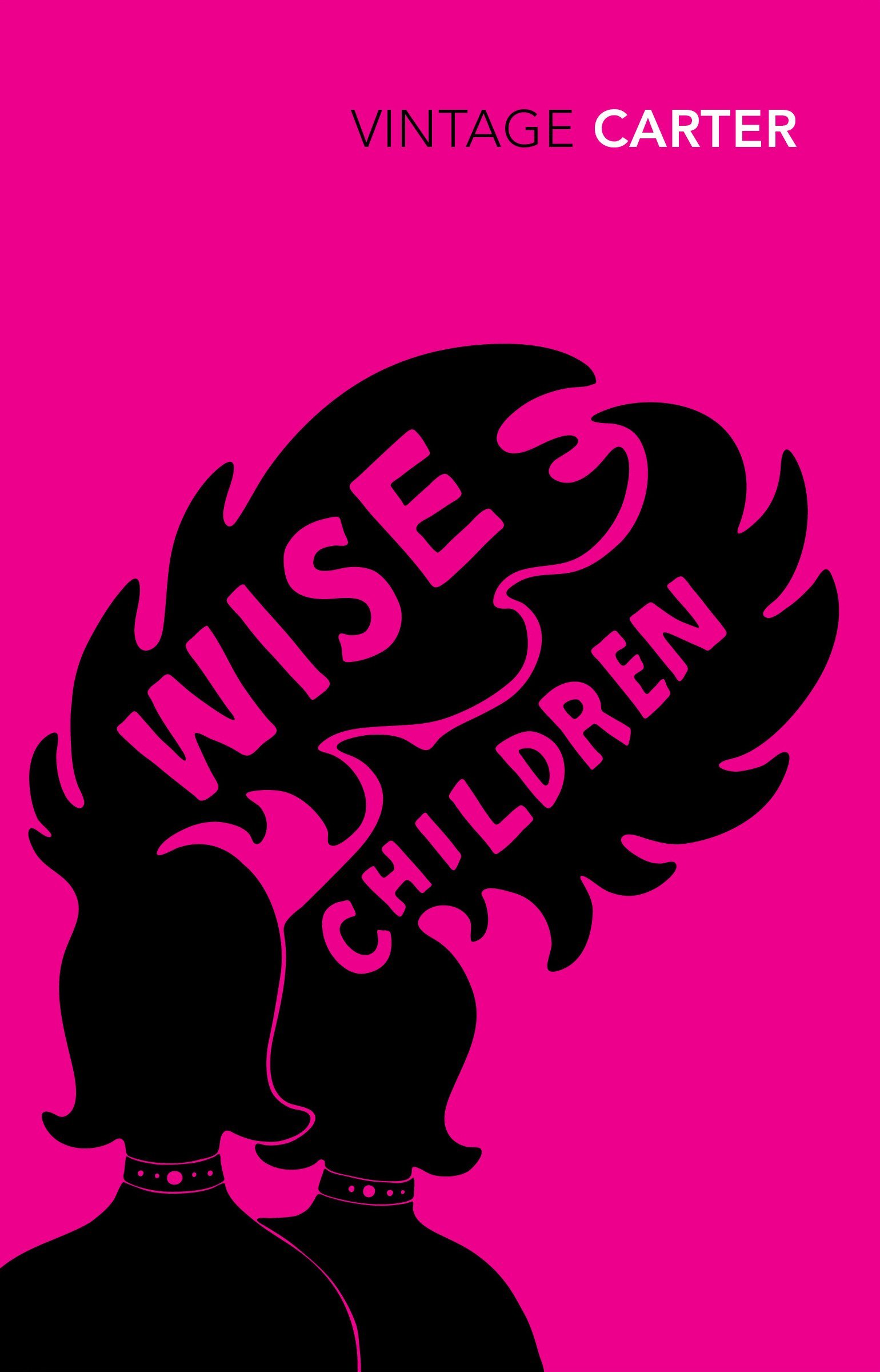
Wise Children is #173 on the 1,001 Books You Must Read Before You Die list.See the whole list and my progress here.This summer, I’m reading from the list for my 20 Books of Summer challenge, and instead of straight reviews, I’m going to compare the 1,001 Books write-ups with my own impressions.
In a nice contrast with the first of these comparisons, I completely agree with 1,001 Books contributor Anna Foca that Wise Children is a “joyously exuberant unraveling of purity, legitimacy, and other cultural fantasies” and that it “gleefully documents the comic hybridizing forces of worlds colliding”. I honestly don’t know that I can put it better than that.
The Fox is #724 on the 1,001 Books You Must Read Before You Die list.See the whole list and my progress here.This summer, I’m reading from the list for my 20 Books of Summer challenge, and instead of straight reviews, I’m going to compare the 1,001 Books write ups with my own impressions.
The Fox is a borderline novella, 86 pages in my wide-margined and illustrated edition. The 1,001 Books write-up begins by contrasting the length of this book with Lawrence’s major works, calling it “too brief and too self-contained” to include much more than plot. I can’t argue that it’s brief, though I would argue that there’s plenty of the “symbolism and mysticism” the reviewer found lacking, right where you’d expect it – the titular fox, who poaches chickens from two women running a small farm, is transposed onto the returning WWI solider who disrupts their solitary life:
“But to March he was the fox. Whether is was the thrusting forward of his head, or the glisten of the fine whitish hairs on the ruddy cheek-bones, or the bright, keen eyes, that can never be said: but the boy was to her the fox, and she could not see him otherwise.”
“The book is always better than the movie” is right up there with “life’s too short to read books you don’t like” when it comes to embarrassing bookish sayings. The latter is subjective, but the former is asserted as a universally-acknowledged truth. The main gripe with film adaptations of beloved books is that they aren’t scene-for-scene re-creations, but why should they be? Different media, different techniques, and often, different audiences.
And in fact, several movies ARE better than the books, particularly when the plot is the point. A plot-heavy, thrilling story is often better told in a visual, fast-moving format. Like, say, Jurassic Park or The Bourne Identity? This isn’t a hill for me to die on, as I don’t read many thrillers (I’ve read neither of the above, I’ve just heard that Jurassic Park the novel is bad, and can’t imagine Bourne without Matt Damon), but it makes intuitive sense that some movies are better than the books upon which they’re based.
THAT SAID.
One of the most thrilling stories I’ve read in recent years was adapted into a movie last year, and while the movie is enjoyable, I urge you to read the book, whether before the movie, after, or even instead of.
“Calm with Horses” is a novella among short stories in Colin Barrett’s collection Young Skins. About 80 pages long, it reads like a novel, in that it’s a fully contained universe. It’s also a tightly-plotted story full of violence and reversals of fortune that seems ripe for a movie adaptation. The movie is, well, different. Upon first viewing, I told Rachel this felt like a different story with the same characters. After a second viewing, it feels like different characters in the same circumstances; the story takes a different turn because the characters react to those circumstances differently.
I didn’t read the book or film summary before starting this review, but they actually illuminate a lot of what went wrong in the adaptation. The book summary tell us about “Arm, a young and desperate criminal whose destiny is shaped when he and his partner, Dympna, fail to carry out a job” and, referring to the collection as a whole, the “local voice [that] delineates the grittiness of Irish society; unforgettable characters whose psychological complexities and unspoken yearnings are rendered through silence, humor, and violence.” In contrast, the movie tells us that “ex-boxer Douglas `Arm’ Armstrong has become the feared enforcer for the drug-dealing Devers family, whilst also trying to be a good father to his autistic five-year-old son, Jack.” It’s that “trying to be a good father” that already tells us there’s going to fewer “psychological complexities” and believe me, everyone’s yearnings are spoken.
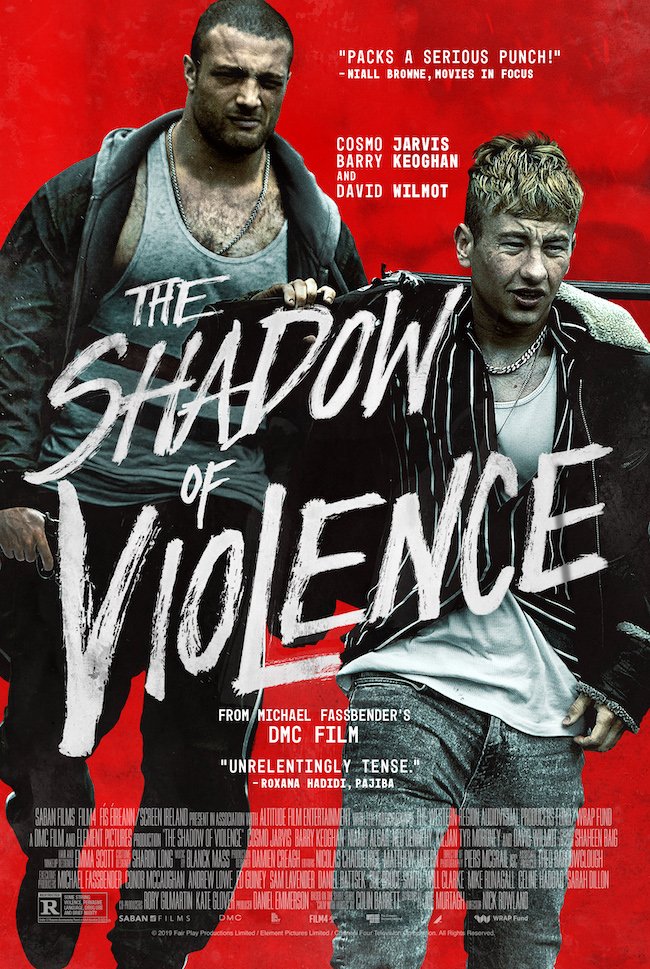
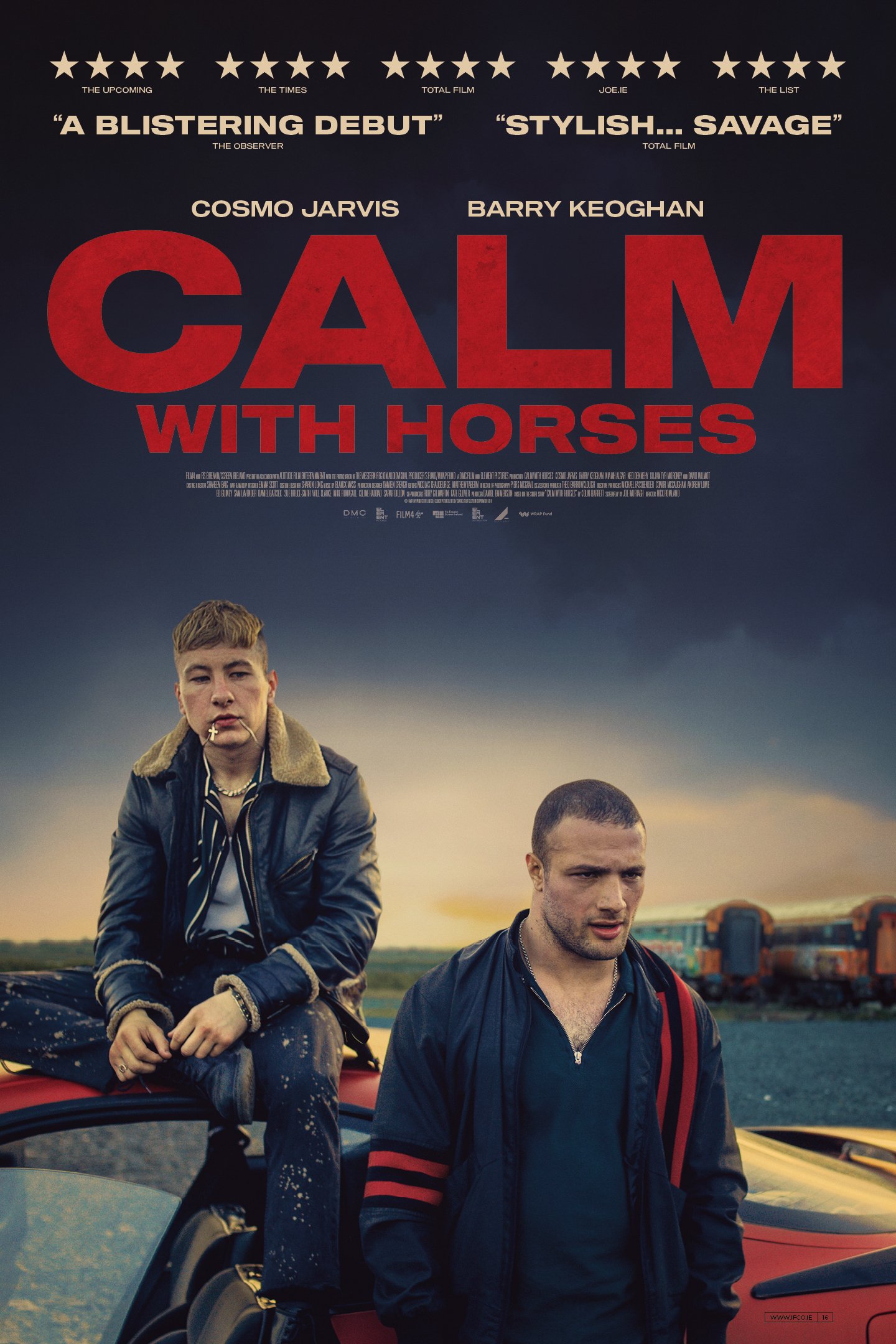
The first bad sign I became aware of was the title change for the North American market. “Calm with Horses” has that “cellar door” quality, it just feels good to say. “The Shadow of Violence” on the other hand, sounds like a generic crime movie. Which this is not. Or shouldn’t be. Even the movie posters have a distinctly different feel:
Or, let’s be realistic, 10 books of summer if I’m lucky. Last year I made a stack of twenty books, read ten (eventually), and reviewed four (the last review appearing in December). Let’s see how my late pandemic brain does compared to my early pandemic brain, I guess?
If you’re not familiar with this event, Cathy of 746 Books is our host and it’s as simple as it sounds. You have from June 1 through September 1 to read and review your books, but there’s lots of flexibility in terms of quantity, substitutions, and the definition of “summer” (good thing, we have snow in the forecast!)
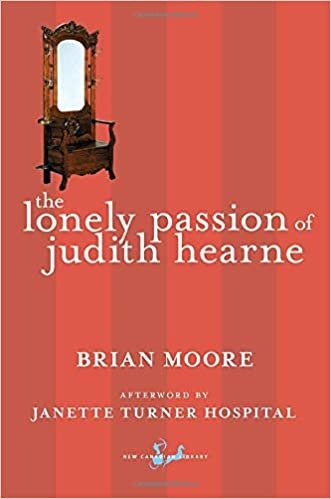
This event is being hosted by Cathy of 746 Books, who is known for celebrating all things literary and Irish. Moore’s Irish connections are always jarring to me, as he’s well known as a Canadian author here. In reality, he was a wanderer, living in many places in Europe and North America, and spent more time in the United States than anywhere. So I guess it’s not that odd that I read a “New Canadian Library” edition of The Lonely Passion of Judith Hearne, a book about Ireland, with an afterword by Australian writer Janette Turner Hospital. Actually, Hospital lived in Ontario for thirty years, later moving to the States, sharing a claim on Canadian identity and a nomadic spirit with Moore.
Hospital uses that connection, and familiarity with being “from away”, to bring forth themes of displacement in her brief afterword to this edition. Miss Hearne lives a very circumscribed life in Belfast, but Hospital shows us that she actually goes on an epic journey, including romance, hope, dashed expectations, and a crisis of faith. The afterword was illuminating, but to me the more interesting themes were those of hunger, desire, and rage – or, you know, passion – and specifically the rage of the middle aged woman. These themes reminded me of Jean Rhys’s writing, so I wasn’t surprised to learn that the same editor who shepherded Wide Sargasso Sea into the world, Diana Athill, was a champion of this book.
Miss Hearne’s dreary bedsit put me in mind of Good Morning, Midnight‘s heroine Sasha’s awful hotel rooms. Both characters are without family, of little means, near starving, drink to excess and fall prey to depraved men. If anything, Sasha had less hope than Miss Hearne, lacking an object for her anger (other than herself), with no church to storm and no one to ask for forgiveness. Sasha had only lately fallen on hard times, while Miss Hearne had been sidelined her whole life, first by her tyrannical Aunt, and then by poverty. In The Lonely Passion, we see a woman who has been made invisible her whole life finally demand to be seen.
I have mixed feelings about tags, but I love that this one is straightforward and book focused (none of that “name a book that has an orange tea cup on the cover” or whatever), and I was tagged by the lovely Naty, so here we are!
Give at least one recommendation for each of the prompts below
If you don’t have a recommendation, talk about a book you want to read
Tag your friends
I will additionally challenge myself to mention recently read books, or at least, ones I haven’t talked about much.
A book about friendship
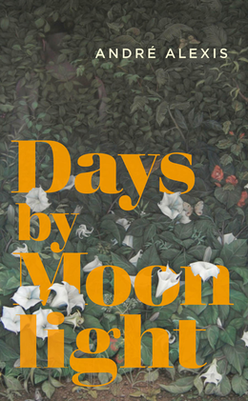
Days by Moonlight by André Alexis is a roadtrip novel about unlikely friends. A troubled young man accompanies an older friend of his deceased parents on a quest to find a reclusive poet, and their travels through Ontario take them to some weird places. I was about to call it a fever dream of a novel, when I remembered their destination ends up being a town called Feversham. Alexis is the type of author who can pull this off.
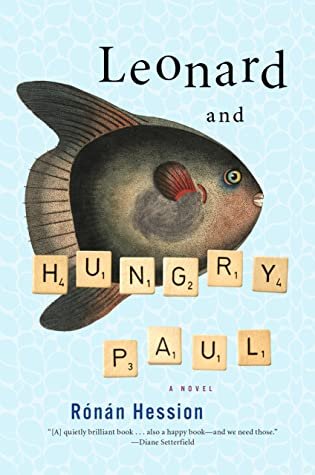
I didn’t plan to read this book for Reading Ireland Month 2021, it just worked out that way. I might even squeak in during the appropriate week, as March 1st through 7th is dedicated to Contemporary Irish Novels. Which this certainly is. Though it didn’t feel that way while reading; it seemed rather timeless and placeless. I can’t tell if Leonard and Hungry Paul live in a big city or a small town, let alone whether they actually live in Ireland or in the UK. References to “lollipop ladies” and “sweets” only give me a very general idea, geographically. Leonard’s open-concept workplace feels pretty urban, but then, the Chamber of Commerce holding a contest is a big event that everyone’s talking about, which feels painfully small-town. As for contemporariness, the contest in question involves inventing a new way to sign off emails, so we’re squarely in the 21st century, and people have phones, but no one spends much time online. And I suspect that guys like Leonard and Hungry Paul would probably be at least somewhat, if not Extremely, Online.
Or perhaps not. Leonard and Hungry Paul are, to varying degrees, operating outside of society. So perhaps it makes sense that we don’t know exactly where and when they are situated, as they probably don’t feel too grounded in their particular time and place either. The plot, such as it is, follows the thirty-something friends as they make tentative steps into society, one in the expected way (a new romance) and one… not (it involves mimes).
This month marks ten years since I started Reading in Bed, with the less-than-SMART goal of reading the 1,001 Books You Must Read Before You Die. Assigning no numerical goal or timeline, it was neither Specific nor Timely, but the blog was conceived as a way to Measure my progress. How Achievable or Realistic it was I will leave for you to judge.
I didn’t know what I was doing. I didn’t know what a “book blog” was. I didn’t know what an ARC was. I didn’t know about tags, or Top Ten Tuesday, or what “YA” meant. I was a reader without a community or a culture.
Forays into Bookstagram, Booktube, podcasting, and formal book reviewing were fun, but not my thing. I kept coming back to the blog. And so did some of you. Thank you so much. I’m not a stats person, but it’s nice to know someone’s reading.
If you’re new here, or just want to accompany me down memory lane, here’s a Reading in Bed starter pack, with your favs and mine.
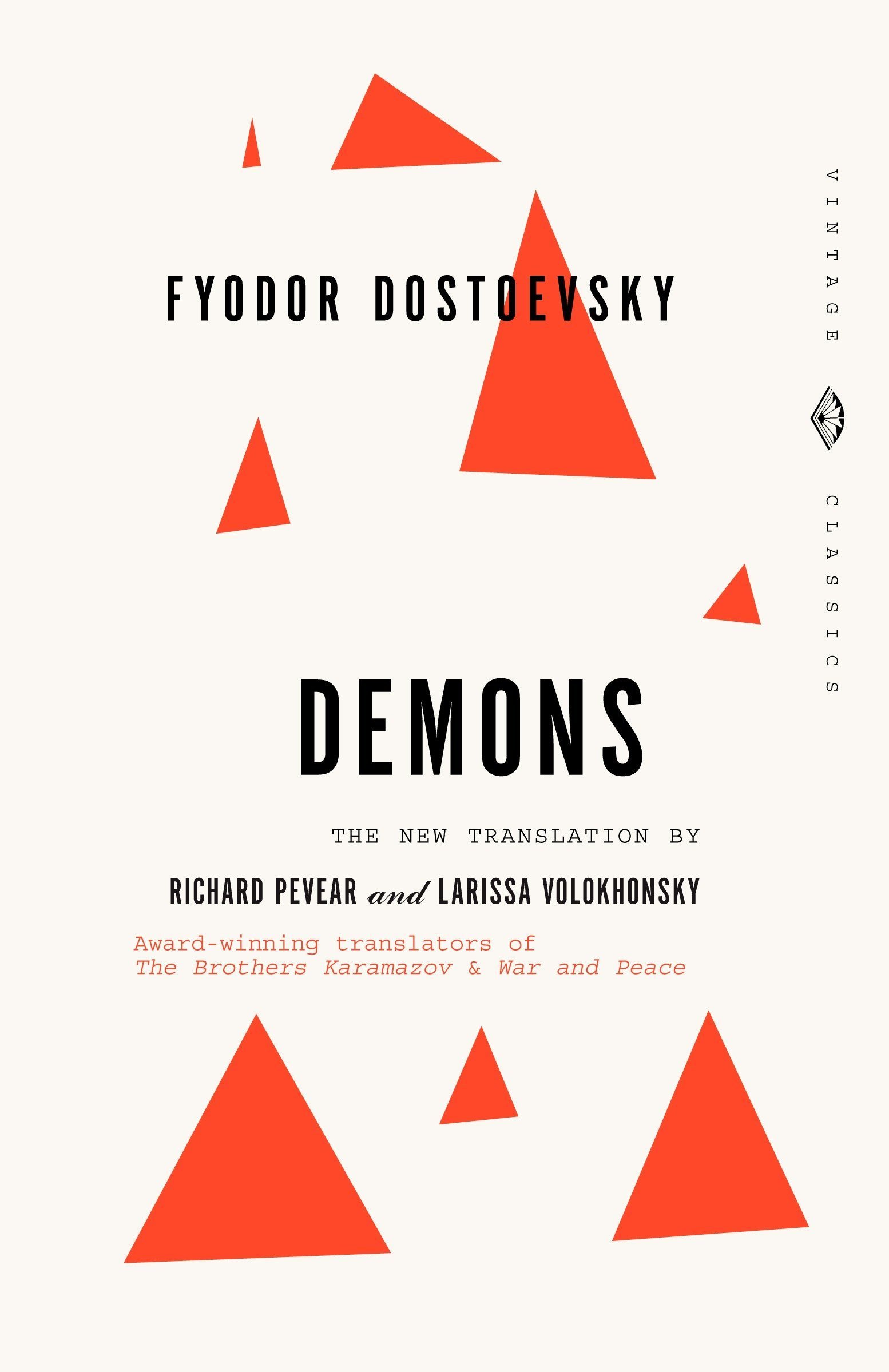
After reading my seventh Dostoyevsky novel, I realized I still don’t really understand his writing. Not at first, and not on my own, anyway. Luckily, classic novels usually come with an introduction. I ended up perusing three introductions to Demons (I like to check out different translations, and later decided to borrow an edition to read on my phone). Here’s a quick guide, to help you choose an edition that works for you.
Just don’t ask me to recommend the best translation. I read about 80% of Demons in the Maguire translation, which was great until I came across a typo, and about 20% in the Pevear and Volokhonsky. I don’t get the P&V hate, though they are awfully fond of using formal and old-fashioned language (in the very first sentence, they use “hitherato” where Maguire used “until then”.)
Let me begin by apologizing for using “much” where I should have used “many,” but it’s a play on Michael Pollan’s “Eat food. Mostly Plants. Not too much.” thing, so I’m letting it go.
And yes, Pollan’s advice would probably make a better 2021 goal for me, but alas, this isn’t a food blog.
Here are my plans for 2021, a little more than 10% of the way through.









 Reading in Bed