When Books Hit Home

I have a couple of reviews in my queue that I don’t know how to begin because the books affected me so personally. Do I use the review to talk about what happened to me? Or do I hang back and let the book take the spotlight? Do I even want to talk about this stuff on the blog?

Then I remembered that other book bloggers must have dealt with this kind of thing before. Actually, I know they have. So, in true book-blogger fashion, I thought I’d put this out there as a discussion topic. I would love to hear what books have hit home for you (if you feel comfortable), and how you feel about them as a reader and as a blogger.

Hit Hard vs. Hit Home
I’m a pretty passionate reader. Books hit me hard all the time. They make me cry, make me laugh, and make me consider things in new way. Hitting home is a little different. A book hits home when something about the subject matter or character directly relates to my life, usually something difficult. In addition to the usual emotional response (crying – I’m a crier!) when I read one of these books I often feel a little panicky at first, especially if I wasn’t prepared. Then I feel the way teenagers feel when they’re listening to music and almost believe their favourite singer is singing right TO them. And if the book is good, I feel an awesome catharsis when I’m done reading.

What Hits Home for You?
Pregnancy and especially pregnancy loss are subjects that hit home for me. Maybe that’s not surprising, since I’ve been pregnant and/or breastfeeding for nearly five years now (wow) but it’s my first pregnancy, which began and ended sixteen years ago this summer, when I was sixteen, that I both love and hate to remember when I’m reading. No one knows what to say to someone who loses a pregnancy they didn’t want in the first place, so reading about similar experiences is probably the closest I’ve come to dealing with it.

RosinaI happened to read a couple books this summer that dealt with teenage pregnancy and loss:

  • Bumped and Thumped by Megan McCafferty: This YA series is set in a dystopian near-future world where a virus causes widespread infertility among adults. Teenagers are left to do the breeding, and while it starts out as sort of a patriotic duty to get “bumped” and give your baby up for adoption, soon it becomes a for-profit and corrupt business. The authors nails the narcissism and innocence of the girls and presents a future that is frightening because it’s too close to reality where teen pregnancy is simultaneously shamed and glamourized (Teen Mom, anyone?)
  • Rosina, The Midwife by Jessica Kluthe: This is a non-fiction book about the author’s great-grandmother. I knew I was in for some pregnancy/birth story lines, but nothing prepared me for the author’s stark portrayal of her own loss. I was completely gutted. There are a lot of parallels between my story and hers and I’m so used to NOT talking about it that it was shocking to see it just out there on the page, for anyone to see.

A few more great books about teen pregnancy and loss:The Birth House Ami McKay

  • The Grapes of Wrath  by John Steinbeck (Rosasharn might be the prototype for all the other teen moms mentioned here)
  • The Crimson Petal and the White by Michel Faber
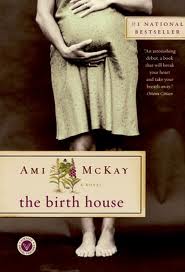
  • The Birth House by Ami McKay
  • Slammerkin by Emma Donoghue

Seeking out Books that Hit Home
So these books tend to be pretty intense and rewarding reading experiences, yet I don’t actively seek them out. Pregnancy and birth are pretty universal subjects, and are so laden with symbolism and meaning, that they’re pretty common and I tend to read enough of them by accident.  When I deliberately read something in this vein, that I know contains something about pregancy or infant loss, I have to make sure I don’t read two of the books close together (like I did this summer) because I need a bit of a break in between.

Reviewing Books that Hit Home
This is my real dilemma, and one I’m kind of solving by writing this post: is a book review an appropriate place to talk about your own life, particularly something heavy and traumatic? I like to make reviews “all about me” in a humorous way hesitate to do so when it’s something serious.

On the one hand, I think making it personal is important in book blogging. I read lots of professional reviewers, but their reviews are often a little sterile.  On the other hand, people who read book blogs are there to read about the books and maybe don’t want to hear about your problems. I remembered this tweet from Joyce Carol Oates (which I don’t agree with!)

One of the nice things about book blogs is that appropriateness doesn’t come into it the same way it would in a review in a magazine or newspaper. There’s no editorial board, and there no advertisers to offend (not on this blog, anyway.) It’s just you and the books. And hopefully an audience who doesn’t mind if you ramble on about yourself once in a while.

The Insistent Garden by Rosie Chard

The Insistent Garden by Rosie Chard

The Insistent Garden by Rosie Chard | Published in 2013 by NeWest Press | Paperback: 355 pages | Source: Advance reader copy from publisher

My rating: 3.5/5 stars

Goodreads

Synopsis:

Edith Stoker’s father is building a wall in their backyard. A very, very high wall–a brick bulwark in his obsessive war against their hated neighbour Edward Black.

It is 1969, and far away, preparations are being made for man to walk upon the moon. Meanwhile, in the Stokers’ shabby home in the East Midlands, Edith remains a virtual prisoner, with occasional visits from her grotesque and demanding Aunt Vivian serving as the only break in the routine.

But when shy, sheltered Edith begins to quietly cultivate a garden in the shadow of her father’s wall, she sets in motion events that might gain her independence… and bring her face to face with the mysterious Edward Black.

The Insistent Garden is, at first glance, a quiet, contained book, but it contains so much: Coming of age, sexual awakening, mental illness, poetry, and family secrets. Grab a blanket and a cup of tea – it’s a perfect read for the colder days ahead.

Edith’s life stalled when high school ended, and she lives in a household that seems to have stalled sometime in the 1940s – no TV, no washing machine, homemade clothes. While her friends move on to college, Edith is stuck at home caring for her father, who is obsessed with his next-door neighbour and spends all of his free time building a wall between their backyards. Her father’s sister is an evil-stepmother character who ruins at least one of Edith’s days each week with her overnight visits. Her father reads about the moon landing in the paper; the outside world may as well be the moon to Edith.

Edith is not literally stuck in the house. The door isn’t locked. She’s held back by fear: ostensibly of what might happen if her father were left to his own devices, but also of what might happen to her. This is all she knows and she’s been taught to fear outsiders.

Chard talks about the claustrophobia of the story in an interview (listen here) but I didn’t feel stifled. The story begins just as the cracks in Edith’s life are starting to show. She only needs to wander a few blocks from home before she starts bumping into a strange group of characters who work together in mysterious ways to reveal the truth about Edith’s long-dead mother, about her father’s obsession, and about her neighbour, Edward Black. Edith’s awakening takes place as the garden she plants in the shadow of her father’s wall takes root. Continue reading

Where Do You Sit on the Shelf?

In The Dilettantes, Alex Belmont agonizes over where his future novel will sit on the shelf in a bookstore:

His (as yet unwritten) book would inevitably be shelved immediately next to those of Saul Bellow. What self-respecting reader would look at the two of them, and then go with the untested, overwrought young punk?… Well, he thought, for every titan of literature, there are two lesser writers who will forever be remembered as their bookends.

I remembered this while I was at Audreys Books for the launch of The Dilettantes this past Saturday, and thought I’d see where my (unplanned, unwritten, unlikely) novel would sit. See if I have anything to be nervous about!

Here is where Laura Frey would sit at Audreys:

FreyBookshelf

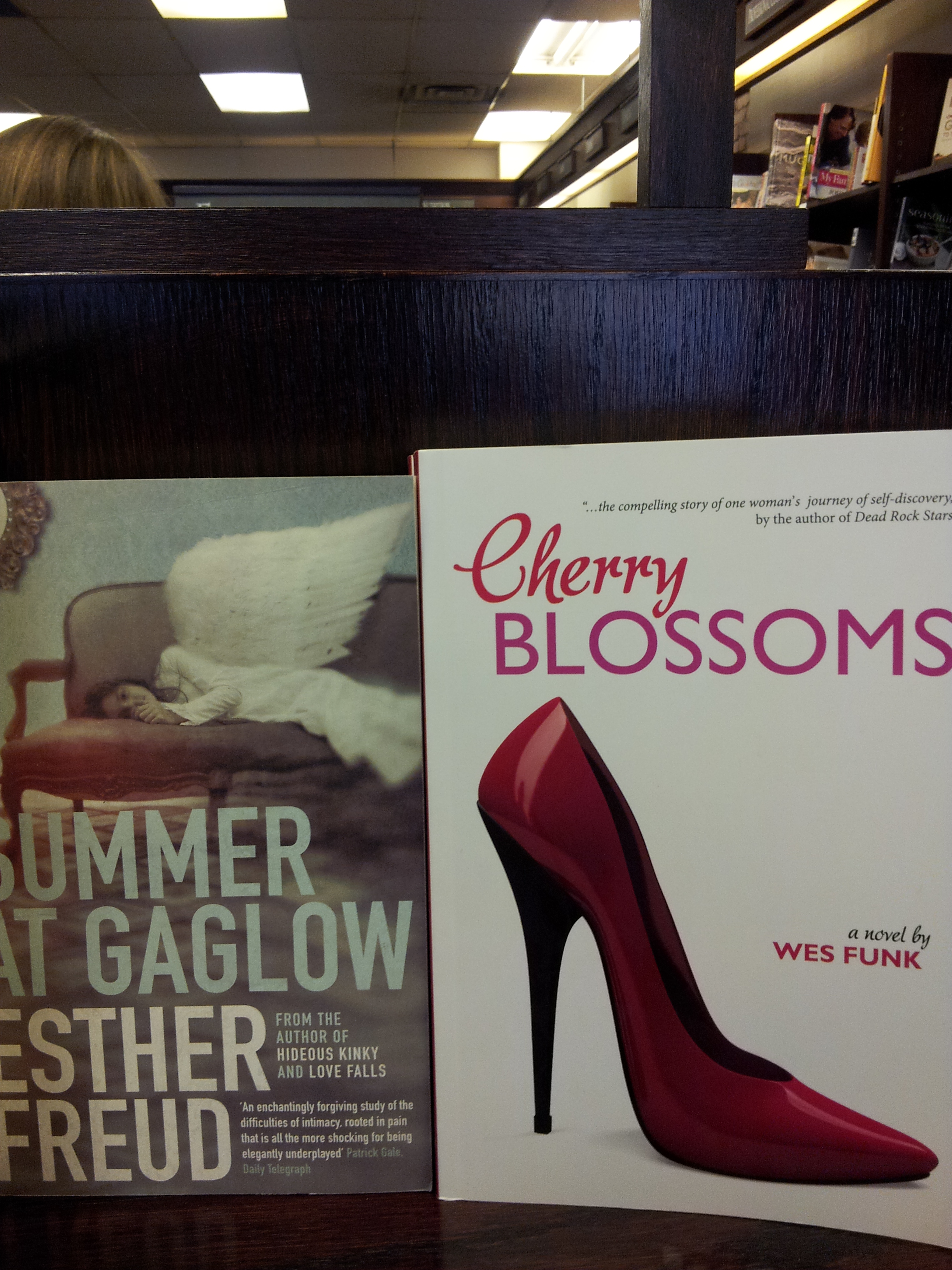
Summer at Gaglow by Esther Freud: Alternating between Sarah’s life and her grandmother’s childhood during the First World War, Summer at Gaglow unites four generations of an extraordinary family across the vast reaches of silence, place, loss, and time.

This actually sounds like a great read. I love WWI novels. Fun Fact – the author is the great-granddaughter of Sigmund Freud.

Cherry Blossoms by Wes Funk: …a wild ride – a poignant journey of one spirited woman’s search to find herself.

Apparently won an award for “steamiest read.” I have been on the lookout for erotica lately, but I think I’ll stick to Anais Nin.

After I took the first photo, I realized that if I ever wrote a book, I might write it under my maiden name, or hyphenated. Don’t know where that came from! Anyway, here’s where Laura Higgins(-Frey) would sit:

HigginsbookshelfA Devil is Waiting by Jack Higgins: The President is coming to London, but not to an entirely warm welcome. A fanatical mullah is offering a blessing to anyone who will assassinate the President, and though most London Muslims think the mullah has crossed the line, a few think otherwise.

So, political thriller? Not my bag. Higgins (which is a pseudonym) has written more than 70 books, which is just crazy!

Bookends by Liz Curtis Higgs: Emilie, a no-nonsense sort of woman, is determined to have her way. But Jonas is on a mission as well: He wants to hear Emilie laugh. Often.

This appears to be a Protestant romance and I really don’t have much more to say, except, that’s pretty crazy that “bookends” from The Dilettantes passage showed up, isn’t it?

Of these books, I might be nervous about rubbing shoulders with Ms Freud, but the others are wildly different for anything I would hypothetically write. Summer at Gaglow is going on the TBR, too.

Where would your book sit on the shelf?

The Dilettantes by Michael Hingston

dilettantes

The Dilettantes by Michael Hingston | Published in 2013 by Freehand Books | Paperback: 267 pages | Source: Review copy from publisher

My rating: 4/5 stars

Goodreads

Synopsis:

The Peak: a university student newspaper with a hard-hitting mix of inflammatory editorials, hastily thrown-together comics and reviews, and a news section run the only way self-taught journalists know how—sloppily.

Alex and Tracy are two of The Peak‘s editors, staring down graduation and struggling to keep the paper relevant to an increasingly indifferent student body. But trouble looms large when a big-money free daily comes to the west-coast campus, threatening to swallow what remains of their readership whole.

It’ll take the scoop of a lifetime to save their beloved campus rag. An exposé about the mysterious filmed-on-campus viral video? Some good old-fashioned libel? Or what about that fallen Hollywood star, the one who’s just announced he’s returning to Simon Fraser University to finish his degree?

I had all sorts of preconceived notions going into The Dilettantes. I thought I wouldn’t relate to it for various reasons, all of which were dumb and easily dismissed once I started reading. I think I was creating an elaborate defence mechanism, so if I didn’t like the book, I could be like “WELL it’s just because of X Y and Z” instead of having to say “I just didn’t like it,” which would be awkward because I will likely see the author at numerous literary events in Edmonton over the next few months. Luckily, I did like the book. A lot.

I thought it might be fun (…for me) to talk about all those excuses I came up with before reading the book, and how they were (mostly) overcome.

1. It’s about Millennials! Millennial are whiny and self-absorbed! I will strain something from rolling my eyes too much!

Depending who you ask, I’m a Gen-Xer by a margin of three months, or a Millennial by a margin of nine. Guess which one I choose to identify with? Yeah, I was only ten when Nevermind was released, but I spent my formative years without a cellphone or high speed internet. But here’s the thing: all “new adults” are whiny and self-absorbed. I mean, Catcher in the Rye, anyone? I wrote horrible poetry in a notebook when I was pretending to study, while these kids were probably posting to their Tumblrs or whatever. Big diff. The generational thing wasn’t an issue at all.

2. It’s about kids who actually went to class. And joined things, like newspapers.  I hated those people. And also sort of regret I wasn’t one of those people. It’s complicated.

I don’t read a lot of campus novels. Maybe part of the reason is my ambivalence about my own university career. I was a great student.  I just didn’t care about university, academically or socially. I didn’t make any friends. I certainly didn’t join any clubs. I went to the minimum number of classes I could get away with and didn’t contribute anything more than I had to. My energies, such as they were, were put towards clubbing and boys. This book made me feel at once nostalgic for something I never had, and relieved that I delayed the burden of giving a shit about stuff for a few more years. It also made me stop and evaluate a time in my life that was really difficult for me. When a book can make you do that, well, what more can you ask for? Continue reading

The Storytellers Book Club

[UPDATE: ECW Press has extended the contest deadline till December 31st. Plenty of time to review a few of these!]

The Storytellers Book Club is fascinating to me, because while it’s a blatant marketing ploy for Douglas Gibson’s book Stories about Storytellers, it’s also a great idea and very well executed (and remember, I work in marketing, so I have nothing against marketing ploys, blatant or otherwise.)

ECW Press gave me a copy of Stories about Storytellers by Douglas Gibson and The Watch That Ends the Night by Hugh MacLennan in exchange for writing this, so this is basically a sponsored post, but I am totally on board with the concept and think some of my CanLit-loving readers will be too.

So, here’s the deal. There’s a contest that’s valid up till the end of September, so if you want to get in on that, you best get reading.

Stories about StorytellersDouglas Gibson and Stories About Storytellers

Douglas Gibson is kind of a CanLit editor to the stars. He’s worked with big-name Canadian authors that even non-readers have heard of, and public figures like Pierre Trudeau. Here’s the synopsis of his book, Stories about Storytellers:

“I’ll kill him!” said Mavis Gallant. Pierre Trudeau almost did, leading him (“Run!”) into a whizzing stream of traffic that almost crushed both of them. Alistair MacLeod accused him of a “home invasion” to grab the manuscript of No Great Mischief. And Paul Martin denounced him to a laughing Ottawa crowd, saying, “If Shakespeare had had Doug Gibson as an editor, there would be no Shakespeare!”

On the other hand, Alice Munro credits him with keeping her writing short stories when the world demanded novels. Robertson Davies, with a nod to Dickens, gratefully called him “My Partner Frequent.” W.O. Mitchell summoned up a loving joke about him, on his deathbed.

Stories About Storytellers shares these tales and many more, as readers follow Doug Gibson through 40 years of editing and publishing some of Canada’s sharpest minds and greatest storytellers.

The CanLit Classics

Storytellers Book Club

Gibson has selected five CanLit Classics from Stories for The Storytellers Book Club:

Robertson Davies’ What’s Bred in the Bone
Hugh MacLennan’s The Watch That Ends the Night
Mavis Gallant’s Home Truths
Alistair MacLeod’s No Great Mischief
Alice Munro’s The Progress of Love

I’ve read none of these. No Great Mischief was on my radar, as is everything by Munro, but I hadn’t even heard of MacLennan or Gallant, and I’ve been wary of Davies since I read Fifth Business in high school. This list is enticing to me because it’s challenging and not totally obvious. I appreciate representing female authors in this list (almost half! Progress!) though I must point out that the ratio of female to male authors addressed in the Stories About Storytellers book is abyssmal, a fact that Munro talks about in the introduction. Continue reading

Rupert’s Land by Meredith Quartermain: Review and Author Q&A

Rupert's Land front cover

My rating: 4/5 stars

Published: September 1, 2013 by NeWest Press

Source: Review copy from the publisher

Synopsis:

At the height of the Great Depression, two Prairie children struggle with poverty and uncertainty. Surrounded by religion, law, and her authoritarian father, Cora Wagoner daydreams about what it would be like to abandon society altogether and join one of the Indian tribes she’s read so much about.

Saddened by struggles with Indian Agent restrictions, Hunter George wonders why his father doesn’t want him to go to the residential school. As he too faces drastic change, he keeps himself sane with his grandmother’s stories of Wîsahkecâhk.

As Cora and Hunter sojourn through a landscape of nuisance grounds and societal refuse, they come to realize that they exist in a land that is simultaneously moving beyond history and drowning in its excess.

I try to go with my gut when I rate books, but sometimes, I make a change after letting a book digest for a while. I gave Rupert’s Land three stars at first, but as you can see, I’ve upgraded my rating to four stars. In the week since I finished it, I often find myself thinking about the story, the characters, and the historical context. I keep thinking that I need to recommend this book to people. Doesn’t sound like three stars to me.

So why the middling rating to begin with? Quartermain uses a distinctive writing style that was hard for me to get lost in. I stayed just a bit removed that perfect reading state where you’re not thinking about the words as you read them, you’re just absorbing them. On further reflection, though, it’s not that there’s anything wrong with the writing. It’s more a matter of taste, or mood, I think. (I’ll spare you a tangent on star ratings and what they mean.)

The writing is poetic, relies of streams of consciousness from our main characters, and has some quirks, like made up compound words and a lack of punctuation. The latter actually didn’t bug me, but I know it does some people. You will find a smattering of Cree vocabulary as well – don’t worry, there’s a handy glossary in the back. I would compare the style  to Faulkner or even the little throw-away chapters in The Grapes of Wrath, you know, like the one where the men are at the car dealership and the reader “hears” the background noise and snippets of conversation.

To get a sense of what I mean, check out this scene, as heroine Cora is teased by her friend Netty for refusing to try on some lingerie:

You going to wear schoolgirl bloomers all your life? Netty leans against the door frame dropping one hip. A deep dimple creases soft white flesh overhanging the knickers. Golden fuzz coats her sturdy legs.

Rather do that than end up married to Bunk.

Rate you’re going, you’ll end up an old maid.

A fussy frump then. In her blue lisle stockings. Her face like a lastyear apple, a witch’s nose touching her witch’s chin. End up a schoolmarm with a stick body and claws for hands — children running away from her, boys making stink bombs and shooting spit balls at her A is for apple over and over on the blackboard until she died. But she’s not going to make herself all fluffy and cushy like Netty does.

Quartermain’s poetic language is grounded in some traditional CanLit territory, like the the depression-era prairie setting, the suffocating small town, and the outsiders up against the strict values of the establishment. But it’s the departures from the expected that make the story so rich. The two narrators aren’t at all who or what I expected them to be. Continue reading

Reading Roundup: Strange Summer and Frantic Fall

Strange things are afoot at Reading in Bed. I’ve noticed a couple of things since I finished reading Moby-Dick back in July:

  • I’m kind of addicted to read-alongs, as I signed up for another one immediately, this time for Margaret Atwood’s Oryx and Crake. And I’m signing up for yet another this month.
  • I keep stumbling on books that I connect with on a really profound and personal level. And I’m still trying to figure out how to review them without it becoming a weird confessional kind of exercise. They were: Bumped by Meaghan McCafferty, Rosina, The Midwife by Jessica Kluthe, and Love Letters of the Angels of Death by Jennifer Quist.
  • I read Fifty Shades of Grey and didn’t hate it with the fiery passion I thought I would. (I hated it, yes, but I didn’t HATE it, you know?)
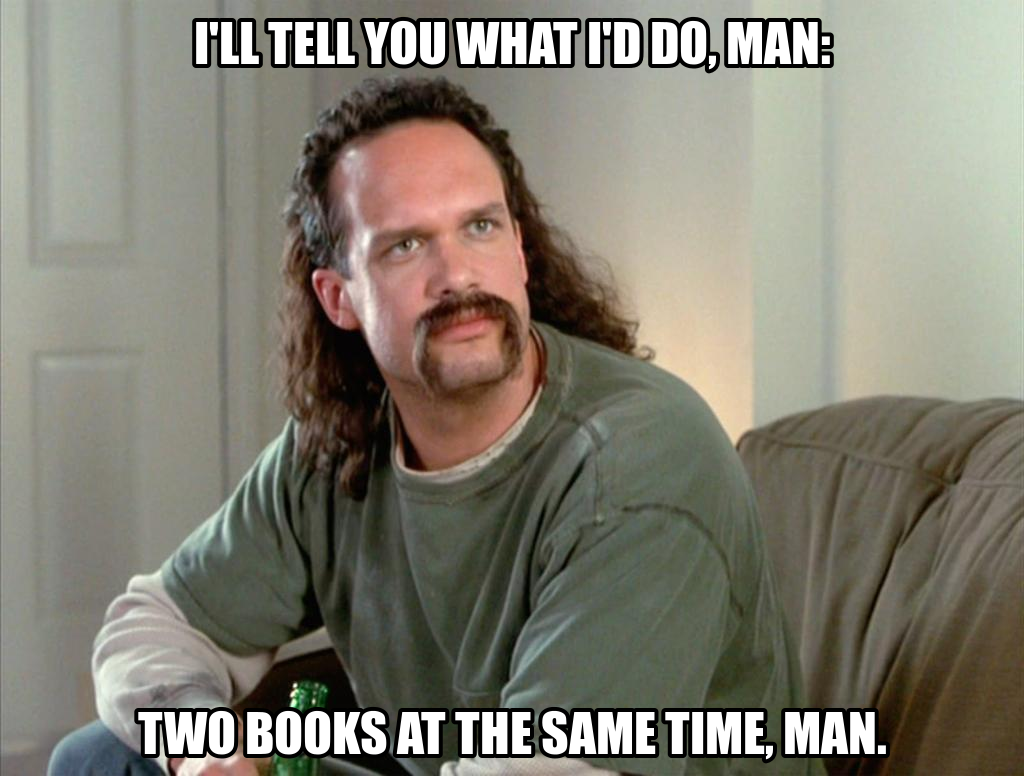
  • I’m reading, like, SUPER fast. Six months ago I was barely managing ten pages per day. Now I’m flying through books in four days, or less. My secret is that I’m reading multiple books at the same time. This is something I’ve NEVER done. I’ve always been a serial monogamer in romance and in books. It’s like reading Moby-Dick flipped a switch in my brain and now I can just go back and forth between books with ease.

Lawrence Office Space Meme

Anyway, these are all good things and I’m enjoying reading, and blogging, and chatting with other book bloggers, more than ever. In fact, after my social media break (social media free August, thanks Momaccounts) I logged on to Twitter and went on an unfollowing spree so that my timeline is now 80% book-related. Bloggers, authors, literary journals, and the like. And I love it.

Fall Plans

So things are great at the moment, but I must admit, I’m feeling a tad overwhelmed with all the stuff I have planned for Fall. Here’s a preview. Continue reading

Oryx and Crake Read-Along: Post Six (Part 13 – 15 Reaction)

image

For all the details on this read-along, head over to the sign up post on Reading in Winter.

Reading Parts 13-15 The shortest section, and after the shocker in part 12, maybe a little anti-climactic, I read this bit like a maniac, probably in the middle of the night, hoping to find out why.  Of course, I didn’t find out. The next morning, I bought The Year of the Flood. And yesterday, I finished Maddaddam, and so, the trilogy in it’s entirety. Full review of the whole shebang to come.

Part 13-15 Reaction

Poem: On revisiting this section, I noticed some nice symmetry in the table of contents. And when you think about it, the chapter titles kind of sound poetic, when read together. Don’t you think? Or is this a symptom of Atwood fangirling?

OryxCrakePoem

Continue reading

First (Wrong) Impressions by Krista D. Ball

First (Wrong) ImpressionsMy rating: 2.5/5 stars

Published: May 28th, 2013

Source: Review copy from the author

Synopsis:

Lizzy Bennet’s fundraising mission is to keep her homeless centre’s clients well-fed through a cold prairie winter. She meets the snobby and pompous William Darcy of Fitz & William Enterprises. While she’d never dare ask him for help, she can’t stop bumping into him — sometimes, quite literally. But when Lizzy’s campaign is cut short by the disappearance of her sixteen year old sister, William and his younger sister step in to help the woman they want to make part of their family. Inspired by Jane Austen’s classic, Pride and Prejudice, First (Wrong) Impressions is Lizzy’s quest for happiness, security, and love in the 21st century.

An important caveat to this review: this isn’t the type of book I would pick up on my own, so I was a little dubious from the get go. My long-term readers know I have certain… snobbish tendencies when it comes to literature, and the term “fan fiction” makes my skin crawl. Jane Austen fan fiction is an industry in it’s own right, moving out of the online shadows in recent years, with the success of mash ups like Pride and Prejudice and Zombies and more literary rewrites like Death Comes to Pemberly. I thought I would give this a whirl as part of Austen in August, and after chatting on Twitter, author Krista D. Ball kindly gave me a review copy.

First (Wrong) Impressions gave me a case of just that; it didn’t end up being exactly what I thought it would at the start, and that’s a good thing, because my first impression was a paint-by-number retread of the source material, plopping 18th century characters into 21st century settings. As I pushed forward, my defenses were broken down by Ball’s humourous one-liners and, eventually, by her creativity in using very modern scenarios to show us a new side of Elizabeth (Lizzy) Bennett. Continue reading

Oryx and Crake Read-Along: Post Five (Part 10 – 12 Reaction)

image

For all the details on this read-along, head over to the sign up post on Reading in Winter.

Reading Parts 10-12

I’m struggling to write about this section without spoilers – there are a couple major developments, and, while rereading in preparation for this post, I had a new thought that kind of blew my mind, but I can’t talk about it yet! So I’m going to take a different approach.

I am such a loser when I read, I often laugh, cry, gasp, put my hand over my mouth, or on my cheek, Home Alone style. Here are a few of my visceral reactions to this section:

Shudder: I still think Chickie Nobs win the prize, but there were a very passages that gave me the heebie jeebies:

Soon, said the artists, ignoring him, there would be nothing left but a series of long subterranean tubes covering the surface of the planet…People would creep along through this tubing, single file, stark naked, their only view the asshole of the one before them in line, their urine and excrement flowing down through vents in the floor, until there were randomly selected by a digitized mechanism, at which point they would be sucked up into a side tunnel, ground up, and fed to the other through a series of nipple shaped appendages on the inside of the tube.

That’s a little too Human Centipede for me.

Cringe: When Jimmy uses his dad’s turns of phrase, I cringe so hard. And wince. I’m embarrassed for him. I don’t know if he’s still parodying his parents, but his audience is gone. To his girlfriend Amanda, who has presumably not met dear old dad:

“I could join the ranks of the permanently unemployed. Or, hey, I could go on being a kept man, like now. Joke! Joke! Don’t kill me!” Continue reading