Novellas in November: Introduction

Thanks to Another Book Blog for hosting this event – go read the intro post!

This isn’t one of those events with a million rules (thank god) but I think I will hold myself accountable by doing a weekly post on Sunday night(ish) recapping what I’ve read.

As the title suggests, the idea is to read lots of novellas. Naturally, my first thought was “what’s the criteria for a novella?” and the answer is, there is no answer. Some people say under 50,000 words. Some say less than 40,000. It’s not that easy to find word counts, so I’m going with page numbers and calling it 150ish.

All important questions.

Pretty sure I’ve actually Googled each of these at one time or another

On to the books! I have a few more on my Goodreads list, but here are the novellas I’m most excited about.

thepearl

The Pearl by John Steinbeck (90 pages)
I read The Pearl in 8th grade English. I wasn’t that taken with it, and didn’t read Steinbeck again until I was in my late 20s. I need to revisit this book with adult eyes.

thesuicideshop

The Suicide Shop by Jane Teule (169 pages)
The premise, which is exactly what it sounds like, appeals to the former goth teen in me. A bargain at $2.95 on Kobo.

thetestamentofmary

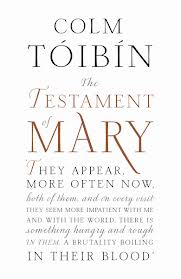
The Testament of Mary by Colm Toibin (96 pages)
Man Booker shortlisted, lots of buzz. Not shelling out $25 for the hardcover though. Library it is.

bonjourtristesse

Bonjour Tristesse by Francois Sagan (154 pages)
Bonjour Tristesse scandalised 1950’s France with its portrayal of teenager Cécile, a heroine who rejects conventional notions of love, marriage and family to choose her own sexual freedom.” You had me at scandalised.

memoriesof

Memories of my Melancholy Whores by Gabriel Garcia Marquez (115 pages)
Do I really need a reason? The title and the author aren’t enough?

I’ll be chatting novellas at #NovNov on twitter. Join in and feel free to suggest other novellas that are must-read!


Reading Roundup: October 2013

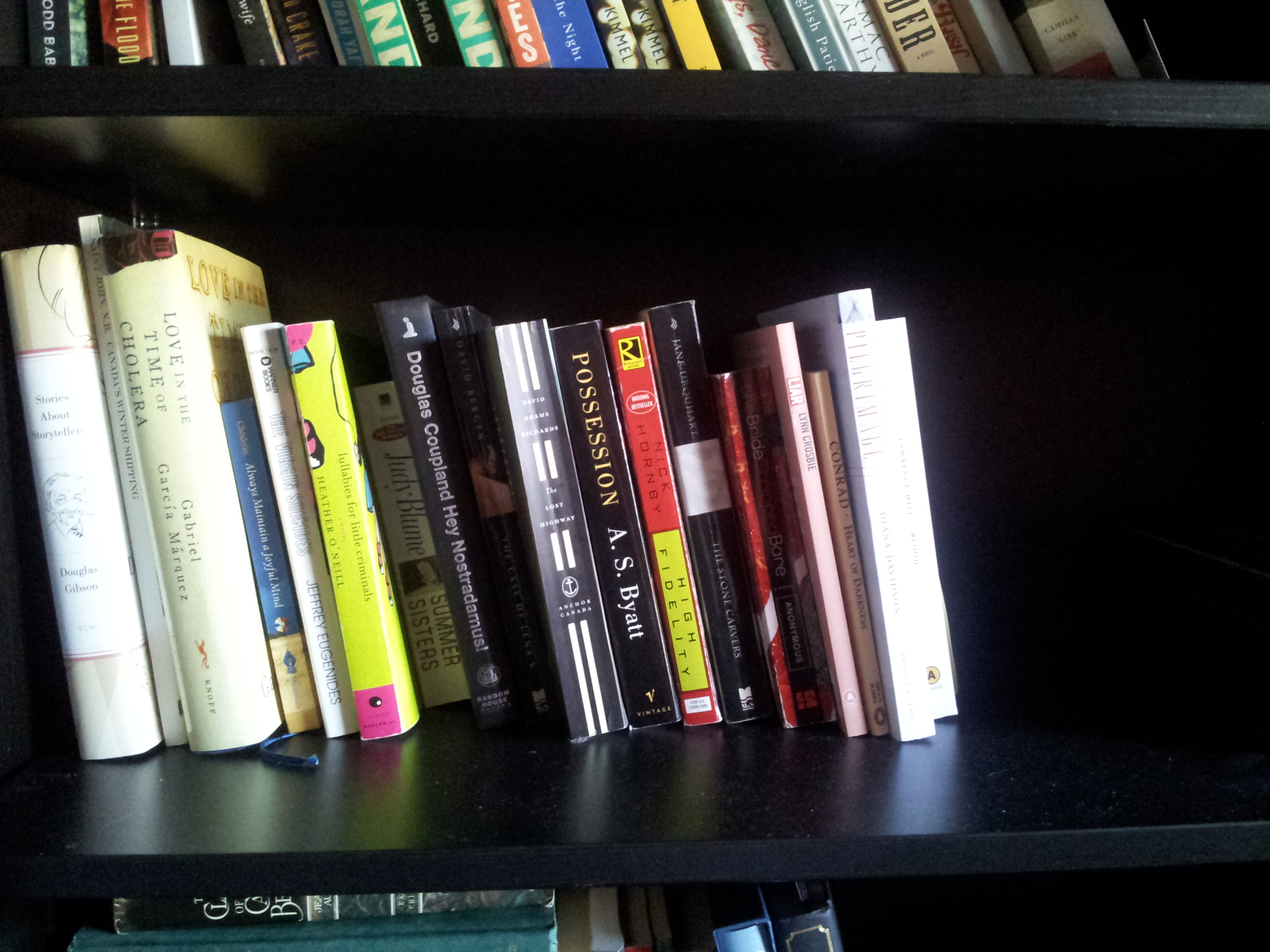
October was a little slow, reading and blogging-wise, but I got bookshelves! This is a big deal. I haven’t had bookshelves in my room for five years. My bedroom finally feels like home. No more #shelfies of shame for me! I’m not quite done arranging everything, but here’s a quick peek at some of my favourites:

Favs

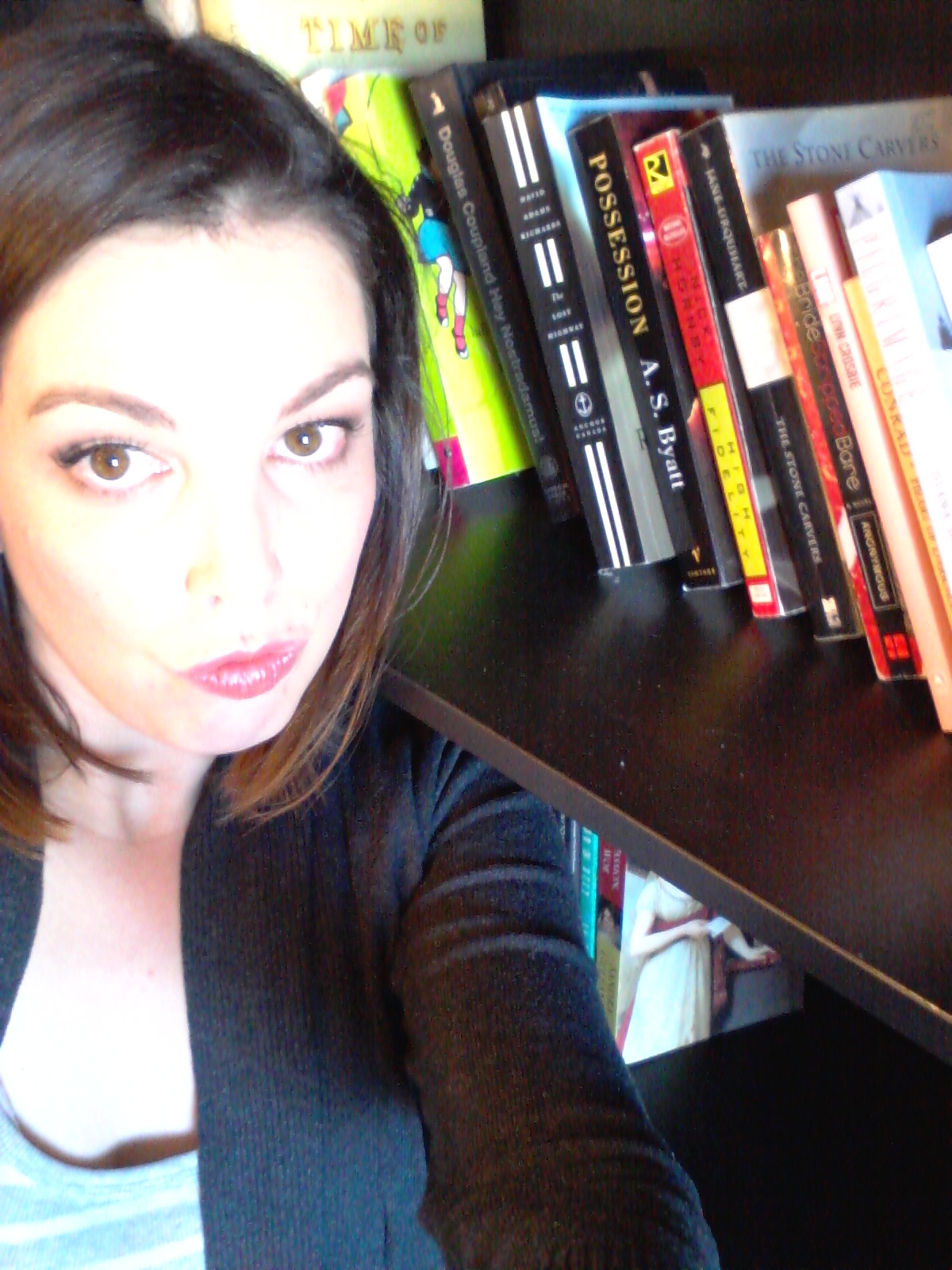
And the obligatory duck-faced, overexposed #shelfie:

ShelfieLaura

Book Events:

I met some very cool people this month:
Continue reading

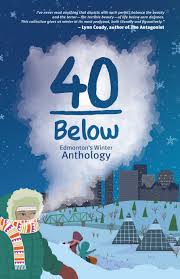
40 Below: Edmonton’s Winter Anthology edited by Jason Lee Norman

40 Below: Edmonton's Winter Anthology edited by Jason Lee Norman | Published in 2013 by Wufniks Press | Paperback: 205 pages | Source: Review copy from the editor

40 Below: Edmonton’s Winter Anthology edited by Jason Lee Norman | Published in 2013 by Wufniks Press | Paperback: 205 pages | Source: Review copy from the editor

My rating: 4/5 stars
Goodreads

Synopsis:

40 Below is Edmonton’s Winter Anthology. Stories, poems, and essays about or inspired by winter in Edmonton.

Like many (most?) book bloggers, I have some writerly ambitions of my own. Last winter, I spent the tail end of my maternity leave picking away at a submission for the 40 Below anthology. There’s nothing like a new baby and a two-year-old to make you feel the isolation of an Edmonton winter, so my story wasn’t particularly positive. Nor was it particularly good. Earier this year I received a very nice, personalized rejection email from editor Jason Lee Norman (author of Americas, my review here.) I have absolutely no hard feelings (it was pretty bad) and really enjoyed the whole process of writing and revising. If nothing else, it gave me something to do at 2am other than the usual dead-eyed scrolling through Twitter.

I was excited to find out who did make the cut. It’s a who’s who of Edmonton writers, including a whole bunch who’ve been reviewed here on Reading in Bed: Michael Hingston, Jessica Kluthe, Diana Davisdon, and Jennifer Quist. Not that it’s all #yegwrites establishment. There are plenty of authors I’ve never heard of, and even a couple of kids. Variety is the strong point of the collection. With that in mind, here are a few of my picks:

  • Story that I related to on a personal level: Sirens by Diana Davidson. It actually resulted in a Twitter therapy session as two other Edmonton book bloggers and I read it around the same time. They both happen to be pregnant, and Davidson’s story is about a first-time mother struggling with postpartum depression in the dead of winter. I brought my first baby home in literal 40 Below weather and went through postpartum depression too. Davidson gets it just right and I was shaking at the end.
  • Favourite very short story, I’m talking 9 sentences: Moon Calling by Don Perkins. Mostly for the last sentence: “But that moment of the infant embracing its own future ripeness, that’s the moon that calls.” You have to read the other eight, trust me.
  • Story that’s really a parenting lesson: A Winter Lesson by Alan Schietzsch. That lesson? Go outside. Your kids don’t feel the cold.
  • Story that reminds you exactly of being a kid: Sandwich Season by Margaret MacPherson. Kids are weird and do weird things, just like in this story.
  • Story that I didn’t want to end: Conversation by Ky Perraun. I read it and then read it again because I need to know what happened!

This book is an obvious buy for anyone who is into the arts scene here in Edmonton, but I think it has some crossover appeal too. It’s actually a great gateway drug for people who don’t read short stories. The pieces tend to be very short, and the theme is very accessible, so it’s easy to dip in and out. It would be so cool if people in other Northern climates, or even those who don’t talk about wind chill for six month of the year, picked up this book. I’d love to read some non-local reactions. I also think it would make a great bathroom book and I mean that as a compliment.  I am very picky about what books are kept in my bathroom.

Oh and if you were wondering, my story was about my memories of New Years Eve 1997, when we got the first snow of the year and the temperature dropped from zero to minus twenty over the course of a few hours. I was out without a coat (because: teenager) and made a rash decision based on getting out of the cold that affected my life for years afterward. Maybe I’ll try to fix it up someday!

 I hear winter’s about to hit Edmonton this weekend. Should be plenty of snow on the ground for the two 40 Below launch events:

Thank you to the editor for sending me a review copy of this book!

PS: Reading in Winter reviewed it too. 

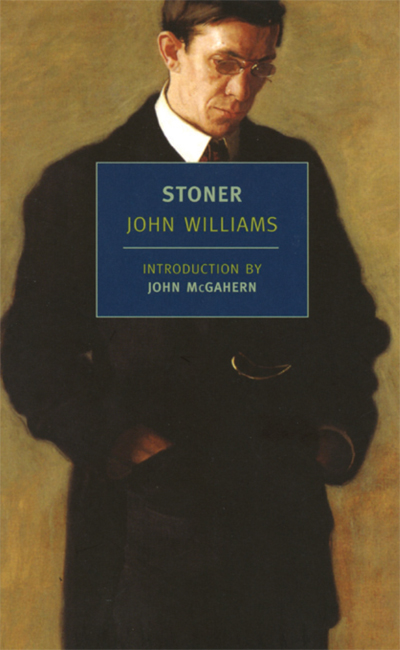
Stoner by John Williams

Stoner by John Edward Williams | Published in 2006 by NYRB (originally published in 1965) | Paperback: 278 pages | Source: Library

Stoner by John Williams | Published in 2006 by NYRB Classics (originally published in 1965) | Paperback: 278 pages |          Source: Library

My rating: 5/5 stars
Goodreads

Synopsis:

William Stoner is born at the end of the nineteenth century into a dirt-poor Missouri farming family. Sent to the state university to study agronomy, he instead falls in love with English literature and embraces a scholar’s life, so different from the hardscrabble existence he has known.

And yet as the years pass, Stoner encounters a succession of disappointments: marriage into a “proper” family estranges him from his parents; his career is stymied; his wife and daughter turn coldly away from him; a transforming experience of new love ends under threat of scandal. Driven ever deeper within himself, Stoner rediscovers the stoic silence of his forebears and confronts an essential solitude.

John Williams’s luminous and deeply moving novel is a work of quiet perfection. William Stoner emerges from it not only as an archetypal American, but as an unlikely existential hero, standing, like a figure in a painting by Edward Hopper, in stark relief against an unforgiving world.

Stoner must be the most famous “under appreciated” book around. It seems that everywhere I look, a blogger or a literary critic is entreating us to give this forgotten classic a chance. It was reprinted by the highly regarded NYRB Classics in 2006, and just a few months ago was endorsed by Ian MacEwan. But, it’s not on any of those top 100 or 1001 lists, and its Wikipedia page is just a tragedy. And it did, predictably, make an appearance on BookRiot’s Most Underrated Books list.

Stoner was my Classics Club Spin pick, and it was from my “dreading it” list. I was intimidated, as the bloggers talking it up were all really smart and I was afraid I would be in over my head; and I was managing expectations, because the last time I got all excited because of a bookish-internet frenzy I was let down.

Oh, and I could tell from the blurb that this was going to be one of those “poor little privileged white dude is bored, cheats on his wife but feels really bad and conflicted about it, wah wah, epiphany of some sort, the end” stories. So there was that. And it absolutely is one of those stories. But, once I got over myself and started reading, I quickly realized that, like most people’s real lives, you can present William Stoner’s life as a happy story or a sad story, depending how you look at it:

  1. The “Quit Whining, Privileged White Dude” version: Stoner doesn’t have to fight in either world war. He loves literature, and is able to study it then teach it. He attains tenure, and so isn’t really at risk of losing his livelihood during the depression. He marries the first girl he ever asks out. They have a daughter without having to try too hard (more on THAT later.) He has a torrid mid-life love affair, but his marriage survives. He lives a quiet life and dies surrounded by his family.
  2. The “I Feel Really Bad Now” version: Stoner grows up in abject poverty. He alienates his parents when he goes to University, and alienates his friends when he chooses not to enlist in WWI. He discovers a love of literature but his career is mired in petty politics and he never achieves any real recognition. He marries a deeply damaged woman who seems wholly incapable of love. He enjoys a close relationship with his daughter until his wife cruelly turns her against him. He finally finds a woman he can love and is forced to give her up. His never reconciles with his wife, and his daughter descends into alcoholism. He dies a protracted, painful death, having never resolved any of these issues. Continue reading

Readalong: Dragon Bound (Part Three)

dragonboundreadalongbutton-01 (1)

Why, god, why? Read this: Sign up post

I’m five days late with this post, which means no one will read it or comment on it, yet I’m up past my bedtime COMPELLED to sum up this experience. Not that I have much to say about the book. I’ll do my usual point form babbling below. It’s just that this book has made me question myself. Like Dragos, I feel that I don’t know myself anymore. Unlike Dragos, I will attempt to deal with this through writing rather than through kidnapping, murder, and boring, repetitive sex (who has the time, amiright?)

At various times in my blogging career, I’ve embraced, rejected, and mocked the “book snob” label, but overall, I’ve moved away from it. I’ve read articles about literary privilege and why adults read YA and I’ve challenged myself to read outside the classics/litfic genres. I’ve joined a book blogging community that really does embrace all kinds. My Edmonton crew of book bloggers have been instrumental in my attitude adjustment . I’ve been coming to the conclusion that snobdom in any form doesn’t really serve any purpose and usually just makes the snob look like a douchebag.

But. Continue reading

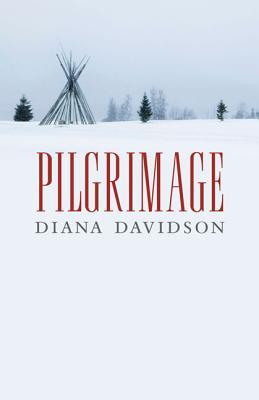
Pilgrimage by Diana Davidson

Pilgrimage by Diana Davidson | Published in 2013 by Brindle & Glass | Paperback: 288 pages | Source: Review copy from the author

Pilgrimage by Diana Davidson | Published in 2013 by Brindle & Glass | Paperback: 288 pages | Source: Review copy from the author

My rating: 3.5/5 stars
Goodreads

Synopsis:

Pilgrimage opens in the deep winter of 1891 on the Métis settlement of Lac St. Anne. Known as Manito Sakahigan in Cree, “Spirit Lake” has been renamed for the patron saint of childbirth. It is here that people journey in search of tradition, redemption, and miracles.

On this harsh and beautiful land, four interconnected people try to make a life in the colonial Northwest: Mahkesîs Cardinal, a young Métis girl pregnant by the Hudson Bay Company manager; Moira Murphy, an Irish Catholic house girl working for the Barretts; Georgina Barrett, the Anglo-Irish wife of the hbc manager who wishes for a child; and Gabriel Cardinal, Mahkesîs’ brother, who works on the Athabasca river and falls in love with Moira. Intertwined by family, desire, secrets, and violence, the characters live one tumultuous year on the Lac St. Anne settlement; a year that ends with a woman’s body abandoned in a well.

Set in a brilliant northern landscape, Pilgrimage is a moving debut novel about journeys, and women and men trying to survive the violent intimacy of a small place where two cultures intersect.

If you ever need a reminder of why access to reliable birth control is so important, read this book. Today, women go on the pill in adolescence and have IUDs inserted as soon as postpartum healing allows. We send our partners to be “snipped” or we go to the corner store and choose from an array of gimmicky condoms of dubious “for her pleasure” claims. One hundred years ago, women were at the mercy of their fertility or lack thereof. Or, more to the point, they were at the mercy of the men that might make them pregnant. Diana Davidson takes us back in time, but not far from home, to tell us about three women whose lives were changed by pregnancy. Continue reading

Preview: LitFest. Edmonton’s Nonfiction Festival

LitFest-2clr-cmyk-smallLitFest starts tomorrow! If you are thinking, “But Laura, it’s a nonfiction festival, and you barely read any nonfiction,” rest assured, LitFest organizers are pretty flexible about including authors who write all types of books, and, as a blogger, I can (maybe, almost) call myself a nonfiction writer too. Plus, I was fortunate enough to win tickets to a couple of events, so it’s a no-brainer! Here are the events I’m attending, and my top three picks for the rest of the festival.

I’m attending these events:

  1. ME ME ME! From the website: Finally. An event about the most important person in the world — YOU! Get your very own one-sentence biography from a professional author, have a photo shoot, and hear bits of brilliant memoir that will be featured later at LitFest.  Your host is the extraordinary Bridget Ryan. Oct. 16, 5:30 pm, at Bohemia.

    This is sorely needed, as my go-to pictures online are a blurry selfie and a picture from about four years ago. I’m also terrible at bios.

  1. via litfestalberta.com

    Lawrence HIll. via litfestalberta.com

    Writing in Blood: From the websiteA writer’s family is both rich source material and a minefield, especially when the material remains nonfiction instead of being transformed into fiction. This panel – Jenna Butler, Lawrence Hill and Jessica Kluthe, with moderator Elizabeth Withey – discusses their personal experiences, and offers their thoughts for others shaping a family memoir. Oct. 26, 2pm, Stanley Milner Theatre

    I’m reading Hill’s The Book of Negros right now and it’s blowing me away. I will be purchasing a paper copy so I can get it signed. I’m excited to see the other authors too. Jessica Kluthe, of course, wrote the powerful memoir Rosina the Midwife. I heard Jenna Butler read from her book of poetry, Seldom Seen Road, at the NeWest Press Spring Spectacular earlier this year. And I love Elizabeth Withey’s One Hundred Widows project – stories about earrings with no mates. Sounds weird but the execution is beautiful.

My picks of the other events:

  1. CLC Brown Bag Reading Series featuring Todd Babiak on Wednesday Oct. 23, and Lawrence Hill on Friday Oct. 25, both at noon, both in the student lounge at the Old Arts Building, University of Alberta. No explanation needed, right? It’s free and it’s two awesome authors! I hope to make it to one or both of these.
  2. Dan Savage. Oct. 21, 7pm, Winspear Centre. I used to read his column in Vue (or was it See?) along with Josey Vogels’ “My Messy Bedroom” while riding the bus to and from University, hoping that people didn’t think I was checking out the escort ads. I’d love to see Savage say “DTMF” in person.
  3. Digital Tools for Writers with Omar Mouallem, Saturday Oct. 26 at 10am, Stanley Milner Library. Really sad I’m going to miss this one.  Someone go and take notes, okay? It’s free!

See you there, #yegwrites peeps!

Readalong: Dragon Bound (Part Two)

dragonboundreadalongbutton-01 (1)

Why am I reading this? That’s question I’ve asked myself a few times. Be informed: Sign up post

I have been getting pretty personal on the blog lately. Here I go again! Rather than go snarky this week (which fellow read-alongers have got covered, and they do it so well,) I’m going to talk about the bits that made me uncomfortable.

My first couple of serious relationships were emotionally abusive. At the time, I would have said the same things Pia says about Dragos, “he’s controlling” or “he’s just really jealous,” and of course “it’s just because he loves me so much.” These “rules” are really familiar to me:

  • Pia isn’t allowed to go anywhere on her own. When the elf dude invites Pia to visit him, Dragos literally puts himself in front of her.
  • Pia isn’t allowed to have secrets. How many times does Dragos harp on knowing about her mom? She’s not allowed to have an inner life or anything that belongs to her – NOT EVEN HER OWN MEMORIES.
  • Pia is only allowed to have friends that Dragos pre-approves. She’s allowed to hang out with the sentries and Tricks. These are all people who are more loyal to Dragos than they are to her.
  • Until she isn’t. Even when the friends are pre-approved, if they like her *too* much, it’s not okay. The section cuts off just before Dragos flies off the handle because he catches her sparring with his bros (which he suggested she do!) This was the most triggering scene for me – remembering so many fights about who I was friends with, what I was doing with them, does this guy like you, did you sit beside him, did he touch you, on and on – and this was the “pre-approved” friends! Forget anyone I knew in the past.

I’ve been reading reviews on Goodreads and they’re full of women swooning over how Dragos is so “alpha” and “possessive” and “stalkerific” and I’m going to assume none of these women have been in an actual relationship like this, or else they’re still stuck in one, because it’s not fun, it’s not romantic, and it is abuse.

Okay. Let’s not end on a heavy note. The Good, The Bad, and The WTF worked pretty well last week, so let’s go:

samothrace

The Winged Victory of Samothrace

The Good

  • Pia “shutting down.” This was realistic – I like that she is portrayed as having limits and not being able to push through like some kind of super hero.
  • I liked the idea of the Elven Wafer thingies, except for the fact that they never come up again. Though I kept thinking of “they’re wafery thin!”
  • I appreciate that the first sex scene wasn’t the usual man-on-top penis-in-vagina sex for 2 minutes = multiple orgasms.
  • Enjoyed drunk-Pia and drunk-Tricks. I totally made a flow chart of who slept with who when I worked at the mall (Everyone with everyone. It was gross.)
  • This is one of the few passages I genuinely liked in terms of the actual writing: “An intact sister to the damaged Winged Victory of Samothrace, housed at the Louvre, the sculpture depicted a beautiful, powerful goddess with a stern face. She was draped in flowing robes, with her great wings swept high into the air behind her. She held a sword in one hand, while the other cupped her mouth as she called a battle cry to unseen troops. The statue was from ancient Greece, but the inscription in the modern pedestal was in Latin, and very simple. REGNARE. To reign.”

The Bad

  • Of course the goblins leave Pia and Dragos alone and unguarded. Of course.
  • Emo Dragos: “Maybe you will someday, just as soon as I understand myself.” Bitch please.
  • The creep factor. The fact that Dragos had all of her belongings moved into his penthouse is super disturbing. Later than day, he removes her clothes while she’s sleeping! NOPE NOT OKAY!
  • The obvious set up (for a sequel?) that Pia will become the head of PR for a multinational company. I’m sure her bartending experience will be really helpful there.
  • The sex scenes are boring as hell. What does it say about me when a dragon sex book is too vanilla for my liking? Seriously though, it’s like every romance/erotica I read is either WAY too boring (50 Shades, this one) or WAY WAY WAY over the line (The Claiming of Sleeping Beauty.) Is anyone writing sex scenes that are not totally boring but also not totally disgusting?

The WTF

  • There’s a lot of hissing when they have sex. Do dragons hiss? Because I’m picturing a cat hissing and it’s pretty hilarious.
  • Pia is super impressed by the vegan meal she gets even though it has no protein which is a major pet peeve of real actual vegans. Throw some beans or tofu in there, for god’s sake!
  • Presented without comment: “She looked into his eyes as she curved a hand around the broad mushroom head and stroked. “

Tune in next week for the merciful end.

MaddAddam Series by Margaret Atwood: A Reading Soundtrack

I am always late to the party.  I didn’t figure out that Twitter was good for more than traffic updates till 2011. I still haven’t watched the last season of Breaking Bad. And I almost never read “it” books when they are first published.

Time was on my side with MaddAddam, the finale in the series of the same name. Reading in Winter hosted a read-along in August, which gave me just enough time to squeeze in The Year of the Flood before MaddAddam hit the streets. I was on the Kobo bookstore before I got out of bed on August 27th, and was finished five days later.

FINALLY, I could talk about the book-flavour-of-the-week!  Except, I didn’t. The amount of press for this novel was huge, and I found myself overwhelmed with reviews and interviews and career retrospectives – I was speechless. What could I possibly say that wasn’t already being said and written and tweeted?

She was on the cover of a Costco flyer, for god's sake.

She was on the cover of a Costco flyer, for god’s sake.

I couldn’t take the pressure of reviewing such a high profile book. Maybe I’ll get around to a proper review of MaddAddam later. Till then, here’s a reading soundtrack. Continue reading

Readalong: Dragon Bound (Part One)

dragonboundreadalongbutton-01 (1)

It’s not too late to get in on this action: Sign up post

The most important thing to know about Dragon Bound is there is no *actual* dragon sex. Maybe this seems obvious, but in this post-Taken by the Triceratops world, I make no assumptions (for more on THAT, read Bad Lit Makes the World Go Round’s live-blog summary, NSF work, life, etc.)

No, our hero is a shape shifter, and thus far, he wears his human form when he wants to get down. Of course, his human form is “bronzed” and “massive” and “corded with strength” and six foot eight, to be precise. But you know men, haha, I bet he’s only six foot six! Oh and by the way, romance novel writers, height and dick size are not as correlated as you’d have us believe (Source: A Legit Scientific Study, “Guys I Have Slept With, 1997-Present.”)

Size-issues aside, I don’t hate the book so far. I don’t love it, either, but I’m enjoying the read-along more or less. Dragon Bound is likely benefiting being compared – fairly or not – to the only romance/erotica novels I’ve read of late: Fifty Shades of Grey and The Claiming of Sleeping Beauty. Both those gems feature underage virgin heroines (yes yes Ana is ostensibly 21 but come on, mentally she is about 13) who fall in insta-love with alpha-male types and feature sex scenes that are monotonous and of dubious consent at best. Dragon Bound‘s Pia at least displays some awareness of her sexuality in a non-giggling-teenager way, without having to attribute it to an “inner goddess.” Continue reading