Tagged: CanLit
Battle of the Books, Write Reads Edition: Fifteen Dogs vs. If I Fall, If I Die
If you didn’t get your fill of book battles from Canada Reads or the Tournament of Books, here’s one where you can have your say: help me choose which book to feature on Write Reads podcast in May! Yes, I’m guest hosting again. Check me out talking about Emma Donoghue’s Frog Music last year.
It’s new release month, so the contenders are both Canadian novels released in 2015 and they’re both new authors to me: Fifteen Dogs by André Alexis or If I Fall, If I Die by Michael Christie.
Click here if you’re ready to vote.
If you’re not sure, let’s take a closer look at the contenders:
The synopses
From Goodreads:
Fifteen Dogs:
— I wonder, said Hermes, what it would be like if animals had human intelligence.
— I’ll wager a year’s servitude, answered Apollo, that animals – any animal you like – would be even more unhappy than humans are, if they were given human intelligence.
And so it begins: a bet between the gods Hermes and Apollo leads them to grant human consciousness and language to a group of dogs overnighting at a Toronto veterinary clinic. Suddenly capable of more complex thought, the pack is torn between those who resist the new ways of thinking, preferring the old ‘dog’ ways, and those who embrace the change. The gods watch from above as the dogs venture into their newly unfamiliar world, as they become divided among themselves, as each struggles with new thoughts and feelings. Wily Benjy moves from home to home, Prince becomes a poet, and Majnoun forges a relationship with a kind couple that stops even the Fates in their tracks.
If I Fall, If I Die:
Will has never been to the outside, at least not since he can remember. And he has certainly never gotten to know anyone other than his mother, a fiercely loving yet wildly eccentric agoraphobe who drowns in panic at the thought of opening the front door. Their little world comprises only the rooms in their home, each named for various exotic locales and filled with Will’s art projects. Soon the confines of his world close in on Will. Despite his mother’s protestations, Will ventures outside clad in a protective helmet and braces himself for danger. He eventually meets and befriends Jonah, a quiet boy who introduces Will to skateboarding. Will welcomes his new world with enthusiasm, his fears fading and his body hardening with each new bump, scrape, and fall. But life quickly gets complicated. When a local boy goes missing, Will and Jonah want to uncover what happened. They embark on an extraordinary adventure that pulls Will far from the confines of his closed-off world and into the throes of early adulthood and the dangers that everyday life offers.
The covers


The blurbs
Fifteen Dogs: Montreal Gazette, Kirkus, Publishers Weekly – all the big players. But new media is in on it too; my fav Book Rioter Amanda Nelson wants to read it “pretty hard.”
If I Fall, If I Die: Impressive list of authors: Karen Russell, Philipp Meyer, David Gilbert, Patrick deWitt. Lots of skateboarding analogies: “This is a bruiser of a tale, one you will feel in your shins and your solar plexus.”
The authors
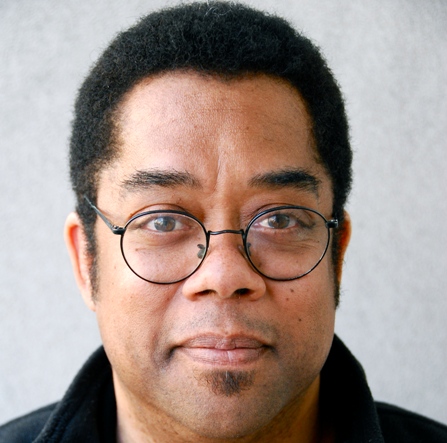
via cbc.ca
Publisher’s bio: André Alexis was born in Trinidad and grew up in Canada. His debut novel, Childhood, won the Books in Canada First Novel Award, the Trillium Book Award, and was shortlisted for the Giller Prize and the Writers’ Trust Fiction Prize. His other previous books include Asylum, Beauty and Sadness, Ingrid & the Wolf and, most recently, Pastoral, which was also nominated for the Rogers Writers’ Trust Fiction Prize and was named a Globe and Mail Top 100 book of 2014.
(NB: Alexis had a feud with David “No Girls Allowed” Gilmour last year.)
 Publisher’s bio: Michael Christie‘s debut book of fiction, The Beggar’s Garden, was longlisted for the Scotiabank Giller Prize, a finalist for the Writers’ Trust Prize for Fiction, and won the Vancouver Book Award. Prior to earning an MFA from the University of British Columbia, he was a sponsored skateboarder and travelled throughout the world skateboarding and writing for skateboard magazines. Born in Thunder Bay, he now lives on Galiano Island with his wife and two sons. If I Fall, If I Die is his first novel.
(NB: Christie writes about parenting, too. Also he is devastatingly handsome. #AuthorCrushAlert)
The reviews
Fifteen Dogs: 4.61 rating on Goodreads, but only 18 ratings, as this book isn’t out till April 14. Naomi at Consumed by Ink says, “Fifteen Dogs is the most creative and unique book I have read in a long time. It was funny, smart, inventive, moving, thought-provoking, and I didn’t want to put it down.”
If I Fall, If I Die: 3.40 rating on Goodreads, with a decent 600 ratings. Karen of One More Page says, “If I Fall, If I Die has layers upon layers to be dissected, analyzed, and loved. It was a pleasure to read a book that was able to capture so many voices so accurately with such beautiful prose and emotion. This is a book you won’t want to miss in 2015.”
Confused yet? Make your choice by next Tuesday and hear me, Tania and Kirtles break it down for you next month. May the best book win!
Patrick deWitt: Notes on a reading
Patrick deWitt wrote his first novel, Ablutions, in the form of second-person notes-to-self. The subtitle of that book is “Notes on a novel.” I took notes during deWitt’s Macewan Book of the Year appearance and tried to recreate the form. Here are my “Notes on a reading.”

Discuss the regulars. You arrive just after the #CanLit Crew, comprised of several bloggers and YouTubers who are all ten years younger than you. You discover this in the course of a conversation about what everyone was doing in 2008. Apparently you were the only one getting married and not attending university, or junior high. This special moment was caught on video. Of course you skipped ahead to find your own entrance and it’s around the 4:30 mark.
You finally meet Natalie of The Wandering Bibliophile as well, but sadly this is not captured on video.
Discuss the award. The Sisters Brothers is Macewan’s Book of the Year – Macewan being a University here in Edmonton, for those not in the know. You like this award because it’s kind of random – any books published in the last five years are eligible, and they take nominations from anyone. And rather than a stuffy ceremony, they make the author work for it – they must attend classes, answer student questions, and do a reading/interview for the public. You attended Macewan back when this award was just getting started but you didn’t go to any of the events, even though one of your favourite authors was there – David Adams Richard – because back then, you just read books, you didn’t talk about them or understand why anyone would want to hang out with authors or other readers. You were unhappy and meeting other people who loved the things you loved probably would have helped. Better late than never.
You wrote about your first Macewan Book of the Year experience here.
Discuss the reading. You are disappointed when an author chooses to read from the very beginning of their book. It seems too obvious. You were not disappointed when deWitt did this, for a couple of reasons. One was the sign language interpreters. You have never seen someone sign a story before. You taught both of your children sign language and can ask for “more milk” or let someone know you have to poop, but that’s about it. You did know that sign language involves more than just the hands. You knew facial expression, posture, and the whole body get involved. Hands can’t move fast enough to convey everything. The interpreters are more like performers. From poor Tub the horse plodding along, to the hilarious description of a drunken Hermann Kermit Warm, the interpreters are very much in contrast to deWitt’s deadpan delivery. The other reason was that in hearing and seeing the first few pages of the book again, you realize the whole of the book is contained in the first five pages. The entire set up of the plot. The tension between the two brothers. The kinda-magical-realism of hearing a horse’s thoughts. And this line: “…and I lay in the dark thinking about the difficulties of family, how crazy and crooked the stories of a bloodline can be.” That’s some Tolstoy-level, “All happy families are alike; each unhappy family is unhappy in its own way” shit. It was this first section of the novel that initially made you put it down. After hearing deWitt read it, you think it’s one of the most brilliant opening chapters ever.

Discuss gender roles. You think Elizabeth Withey of Frock Around the Clock (among other things) brought up the fact that this is a very “male” novel, in the course of her interview. It is. In kind of a DFW way. This is a story about men. Women are around because someone’s gotta be the love interest/prostitute/witch/mother figure. You’re not that bothered. You know exactly where to go for a feminine perspective on the old west.
Discuss luck. Prospecting for gold aside, this is very much a story about luck, as Withey reminds us. Curses and irony and karma – luck sums it up. As they say the word luck again and again, you remember watching hockey with your dad. When the Oilers scored (this was many years ago, mind) on a lucky shot, dad always said “You gotta be good to be lucky.” You always replied, “You gotta be lucky to be good.” That’s the trick with The Sisters Brothers – who’s lucky and who’s good?
Discuss the book signing. You are not one of those “look at me being awkward with authors” people. You are as awkward with authors as you are with everyone else. Which is to say – somewhat. You are not ready. The line moves much faster that you expect. Suddenly, you are standing in front of Patrick deWitt. You hand The Sisters Brothers over and ask him to make it out to Laura and he seems a little hesitant. He does not personalize the second book. You tell him a story about how an American friend who described him as “an author who needs more recognition” and isn’t that funny? Given his fame here in Canada. He acknowledges that things are different in the States. Why not move home, asks Jason, more nervous than you are. If it wasn’t for my son, I might, he says. You swoon. Inwardly.

You skip the St. Patrick’s Day after party in favour of the grocery store and bed by 10:00 pm.
2014 Year in Review #1: The Stats
Are we sick of year in review posts yet? No? I really enjoyed doing multiple, detailed posts last year, but Bookstravaganza took up most of my December so I’m gonna keep things simple this time round. Stats today, best and worst books tomorrow. And maybe top literary crushes (okay, definitely top literary crushes!)
Books Read

- Books read in 2014: 64 (up from 52 last year)
I thought I might hit 75 this year, but it was not to be. Without the Novellas in November and Bookstravaganza boosts, I would have ended up around 52, just like last year. I can live with that!
About the Author
- 58% female (down from 67% last year)
- 19% person of colour (up from 12% last year)
- 55% Canadian (up from 42% last year) 22% American 16% British and 1 each: Argentinian, French, Irish, Russian, Guadeloupean.
- Only two Edmonton-area authors this year.
I put a bit of effort into reading more authors of colour this year, and I guess nearly 20% is alright – it’s tough to know, honestly. With gender I’m going for parity, but what’s parity with race? 20% is pretty representative of our population here in Edmonton, but if you expand to Canada, or North America, or world wide, your target would be very different. So my goal with regards to authors of colour next year is to review more of them. That’s where my power as a blogger lies. Some of the best books I read this year were by authors of colour, and I didn’t review them. More on THAT tomorrow.
Genres and Lists

- 19% classics (down from 35%), 53% contemporary lit fic (up from 48%), 9% non fiction (up from 6%), and a handful of YA, poetry, erotica, romance, and historical fiction.
- 8 1001 Books for a total of 123 read
- I’m kind of defunct on The Classics Club. I erased my list because it wasn’t speaking to me anymore. The idea, though, was to read 50 classics in five years, and I read 12 classics this year, so I’m on track.
Ratings
- 13% were rated five stars (down from 19%), 45% were four stars, 30% were three stars, 13% were two stars, and thankfully, I did not read a single one-star book this year because I decided not to continue with the Fifty Shades trilogy. I will totally see the movie though. For research! And stuff.
Compared to the average Goodreads rating…
- I rated 27 books higher. The most underrated book was Villette, which I rated a 5, compared to average 3.72 rating. How dare you, people who rated this book less than a 5! It’s perfection!
- I rated 37 books lower. The most overrated book was Me Before You, which I rated a 2, compared to average 4.31 rating. Apologies to Kristilyn and Brie, who are probably not my friends anymore.
Blog Stats
- 23,000 page views in 2014, up from 17,000 in 2013 and next to nothing in 2011 and 2012. Thank you 🙂

photo via etsy.com
- Most viewed post of 2014: The Fault in Our Stars: Use Your (Literary) Allusion. Man, you people love John Green!
- Most viewed post that was actually written this year: The Top 5 Alternatives to Traditional Book Clubs. Hope you all found something that works for you!
- Least successful posts in 2014: My reading soundtrack posts. Well, too bad, they are my favourite to write so I’m gonna keep doing them.
Stay tuned for more 2014 year in review, hopefully before it becomes ridiculously late in the current year!
Spat the Dummy by Ed Macdonald: An Interview with The Bible Pimp (review + author Q&A)

My rating: 4/5 stars
Goodreads
Synopsis:
Spat Ryan has demons. They haunt him by day and share his drink at night. Raised in Montreal by a bagman for the Irish mob, Spat has fictionalized or ignored chunks of his life too painful to recall. A chance meeting with an old friend of his father’s in a bar exposes the dark secret they’ve both been harboring, the secret that has shaped and defined Spat’s tumultuous life. Newly divorced and out of control, his decision to tell all and release himself from the past unleashes a storm of change in both his internal and external life.
I usually put my disclaimers at the end of a review, but this is a special case. I did not receive a review copy of this book, and I’ve never met the author, but he is known to me for two important reasons. First, his brother married my mom’s sister. If “uncle-in-law” was a thing, he would be mine. Second, he is THE BIBLE PIMP:
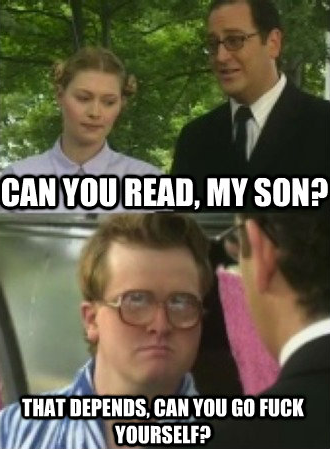
Ed Macdonald appears in Trailer Park Boys as The Bible Pimp. via quickmeme.com
The Bible Pimp was one of my favourite episodes of Trailer Park Boys, even before I knew about the family connection. It’s a hilarious episode, but it’s a little different because Ricky and Julian win. They expose The Bible Pimp as a scam artist, and get to watch someone else get hauled off to jail for once. Julian was in love with the Bible Pimp’s accomplice, though, and as she’s taken away, she sneers at him, “Fuck you, you greasy trailer park boy.” His face falls, and it’s one of the sadder moments of the show. For just a moment, all the Freedom 35 stuff falls away. He knows he’ll never be anything but a trailer park boy. I think it’s significant that it’s one of the only (maybe THE only) times the phrase “trailer park boy” appears in the series.
Sorry to those who didn’t come here for in-depth analysis of Trailer Park Boys. I’m going somewhere with this. The theme of escaping the past, and of become something else, or something more, than you were born into, is part of Spat’s story. Continue reading
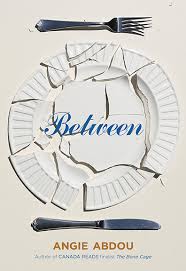
Fear and Loathing in Suburbia: Between by Angie Abdou
My rating: 4/5 stars
Goodreads
Synopsis:
Vero and her husband Shane have moved out of the sweet suite above his parents’ garage and found themselves smack in the middle of adulthood―two kids, two cars, two jobs. They are not coping well. In response to their looming domestic breakdown, Vero and Shane get live-in help with their sons―a woman from the Philippines named Ligaya (which means happiness), whom the boys call LiLi. Vero justifies LiLi’s role in their home by insisting that she is part of their family, and she goes to great lengths in order to ease her conscience. But differences persist; Vero grapples with her overextended role as a mother and struggles to keep her marriage passionate, while LiLi silently bears the burden of a secret she left behind at home.
Before I even started Between, there was a lot at stake. A story about a working mom of two, written by a working mom of two, set in contemporary Canada, raises my expectations. I want to see myself. I want to learn something about myself. I don’t want to feel misrepresented. I wonder if brooding middle-aged men feel this way about all the stories about/by brooding middle-aged men? Don’t answer that.
The synopsis of Between put me in mind of I Don’t Know How She Does It by Allison Pearson, a bit of a groundbreaker in the “two kids, two cars, two jobs” domestic novel. Now, I read IDKHSDI when I was 22, and had no clue about marriage, children, or work, for that matter. And I hated it. I found the main character insufferable and didn ‘t relate to her at all. I still think she was ridiculous for trying to disguise store-bought cupcakes as homemade, to keep up with the supermoms at pre-school. It was a lot of that, and “getting ahead” at work, and it fell flat. I didn’t care.
Unlike Pearson’s upwardly-mobile heroine, Vero is not particularly ambitious. To be ambitious, she’d have to have a goal. It’s hard to be goal-oriented when you’re chasing 1 and 3 year old boys, working, and dealing with your spouse and their dysfunctional family. Vero is in survival mode. Now that, I get.
Vero’s marriage isn’t exactly failing, it’s just plodding along like marriages with young kids tend to do. Someone gives Vero advice to the effect that couples with children under three should not be allowed to divorce. You’re not in your right mind. You haven’t slept in years. If you’re not a good partner it’s probably because you don’t have anything left to give.
They’re both delirious from lack of sleep. His words come to Vero as if spoken underwater, wavy and weak, parts of them floating away. She can’t tell whether the problem is his voice or her ears.
Abdou makes it tough to like Vero and Shane. They’re an awful representation of modern Canadian life, all consumerism and self-imposed stress, and so lacking in self-awareness, it makes you (ok, me) wonder: am like that too? I was reminded of Blind Spot, in which I related to a character who was revealed to be kind of terrible.
Ligaya, on the other hand, is easier to like. She’s overcome a lot to get to Canada, and has a tragic secret. Her Canadian life is kind of like that of a teenager – when she’s not caring for Vero and Shane’s children, she’s holed up in her room, or giggling with her girlfriend and trying on makeup. But 27-year-old Ligaya is more grown up than 42-year-olds Vero and Shane. She sees through their bullshit immediately.
The woman who meets Ligaya at the luggage carousel speaks no more of wealth than trees and rocks. She grabs at Ligaya’s hand, squeezes her fingers hard, and pulls Ligaya so close to her body that Ligaya hears herself squeak.
Wealth does not pull, Ligaya things. Money never needs.
The Dreaded Three (Point Five) Star Review: Blind Spot by Laurence Miall
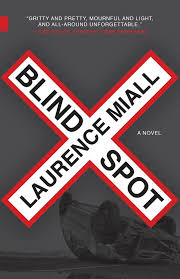
My rating: 3.5/5 stars
Goodreads
Synopsis:
When his parents’ car is hit by a train, Luke, a failed actor, returns to his Edmonton hometown to attend their funeral, wrap up their affairs, and prepare their house to be sold off. But while all others around him grieve, Luke remains detached, striking up a relationship with a woman in a neighbouring house… and stumbling across evidence that his mother may have engaged in a longstanding extramarital affair herself.
I overthink book ratings. I work in marketing, so I think about the implications of a three versus a four start review, particularly for the indie or small press author. I design consumer surveys, so I know how finicky rating scales are, and I know about the biases that creep into a rating, no matter how objective you think you are.
I have plenty of my own quirks: I’m stingy with my five-star ratings. I’m a fan of the half-star (damn you, Goodreads) and often change my mind after an initial rating. And a three star rating, like I’ve given Blind Spot? Ugh, I hate a three star rating. It’s so wishy-washy. It’s a safe, “I liked it, it didn’t blow me away, but I don’t hate it” kind of rating. And while those statements do apply to this novel, I’m also still thinking about it weeks later, which isn’t wishy washy at all.
I’ve been thinking about ratings lately. How I arrive at them, what they mean, and are they fair. Check out this blog post (and my comment) on Follies Past for more on that. In the meantime, here are some things I think about when rating a novel, and how Blind Spot stacked up.
1. The basics
This one’s pretty simple: does the book have enough going for it in terms of plot, character, and style to avoid a one-star rating? I can usually tell after the first chapter. I read a preview of Blind Spot‘s first chapter and was intrigued enough to add it to be TBR list (and to request a review copy.) It presents an Artful Dodger-and-Oliver type scenario, where the streetwise older kid gets the younger kid to do his dirty work, with predictably disastrous results. It’s set in 1990s Edmonton, a very familiar place and time for me to read about bad kids smoking and getting in trouble.
I felt an immediate and uncomfortable identification with Luke. I was doing the same kind of things, in 1990s Edmonton, just a few neighbourhoods over. Miall’s straightforward writing style makes it easy to get into the story, and it fits with Luke’s character; he also seems to be a very straightforward kid trying to fit in and be cool. When we jump to Luke in his early 30s, things aren’t as straightforward – he’s got his parent’s suspicious death to deal with, on top of a failing career and empty relationship.
2. Emotional response
Five stars doesn’t mean a book is perfect; it’s usually tied to an emotional reaction on my part. I rated The Cat’s Table five stars, despite not liking an entire section of the book, and despite suspecting it wasn’t Ondaatje’s best work. I quite simply fell in love with a sentence and that was that.
Here’s where my rating for Blind Spot gets tricky. I didn’t laugh, cry, or hurl. I didn’t underline any sentences because they were beautiful. I did grow to hate Luke, after identifying with him in the beginning, though. I’m trying to figure out why I hate Luke so much. He is a major dick to his sister, indifferent to his nieces and nephews, and does that thing where you dump someone by cheating on them and waiting for them to find out and dump you. All bad, but maybe not deserving of fiery hate. I actually found myself speaking aloud at times: “Are you for real,” and “You are awful,” and several times just “ugh.”
Luke is not a sympathetic character that you’ll fall in love with. You won’t root for him. You won’t put him on your “Top Ten Fictional Characters I’d Like to Have Lunch With” list. He embodies white, upper middle class male privilege and is just so lacking in self-awareness. Oh, and he’s really really ridiculously good looking, too! I don’t know why that makes it worse, but it does!
So – I didn’t have the “this book changed my life” emotional response that earns 5 stars, but I definitely had a response.
3. Would I recommend it?
Having eliminated one and five star ratings, I think about whether I would recommend it (and to who) to figure out where it lays between two and four stars. In market research, we put a lot of stock in likelihood to recommend. It makes sense; it not only predicts what people like, but what they will share and advocate and create buzz for.
I would recommended Blind Spot, so I know I’m on the 3 or 4 stars side of things. I’m about to recommend it to the author of a novel called Spat the Dummy, which you will read about here soon, because it also features an “anti-hero” but the treatment is so different. In Spat, the hero does horrible things and is bent on self-destruction, but you feel for him. You want him to get better, to be better. In Blind Spot, Luke also seems determined to ruin himself. But I didn’t want Luke to win or get better. I wanted some comeuppance! So this is a “if you liked this, try this” type of recommendation too; I just happened to read these books side by side but I was glad I did. It made me realize how unconventional this story really is. It’s easy to sympathise with an anti-hero you think you can fix. Luke seems beyond help, somehow.
On the other hand, I wouldn’t recommend Blind Spot to everyone. The writing is minimalist, so if you’re in the mood for poetic or lyrical, I wouldn’t start here. If you can’t handle an unlikeable main character – definitely not. And I’m not sure if I would recommend this for a “light” read – it’s blurbed that way on the cover, but I didn’t find it that light. Easy to follow, yes, but I think of “light” reads as having some kind of happy ending, or redemption, or hope – the ending of Blind Spot is very, very bleak and left me unsatisfied.
4. Am I still thinking about it?
I was leaning towards three stars. In fact, I began this review by writing “3/5 stars.” But I’m adding the .5 because for a simple story and a simple character, there’s a lot to think about. Why is Luke the way he is? Is it something about his parents? His unsatisfied mother or his absent father? Is he an alcoholic? Mentally ill? A product of a shallow society? Why can’t this young, handsome, financially secure guy can’t get his shit together, and if he can’t, what hope is there for the rest of us?
I mentioned the unsatisfying ending. After finishing, I had all sorts of questions. I immediately flipped to the front of the book, looking for a clue, and in this passage, I found something. We’re back with bad-boy Joel and 11 year old Luke:
I still longed to have his unflinching confidence. No one had ever raised him; no one looked out for him. Joel looked out for himself.
I wanted that self-reliance.
Now, so many years later, I’ve arrived.
I no longer think of this particular three-star rating as wishy-washy. Maybe it’s ambivalent. As anyone who’s watched Girl, Interrupted as many times as I have knows, ambivalent doesn’t mean you don’t care, it means you’re torn between two things. I’m torn between hating of Luke and admiring the consistency and commitment Miall brought to his character, not for a second trying redeem him. I’m torn between wishing the ending had been more hopeful, more damning, more something, and realizing that it was not supposed to be satisfying. That isn’t the point.

What, you thought I’d get through a review without making a 90s pop culture reference?
So yeah, three stars: I liked it. I didn’t hate it. I didn’t blow me away. But I’m definitely going to watch for Miall’s next novel, because it just might.
Thank you to NeWest Press for the review copy! The book launch is tonight, Friday, September 5th, 7:00 p.m. at The Black Dog on Whyte.
This is becoming a common addendum: Please go read Another Book Blog’s review, in which he took the best blog post title, and read his interview with Laurence Miall, in which he took all the good questions. *shakes fist*
Fall 2014 Preview Part One: Most Anticipated Books
Watch for Part Two: Literary Events next week!
If you follow literary publications like Publishers Weekly, Quill and Quire, or 49th Shelf you’ve probably noticed a bunch of “Most Anticipated Fall Books” lists lately. I find these lists really overwhelming! There are tons of books and they don’t seem to be listed in any kind of order. Here’s my attempt to impose some order on the situation. Geographically, anyway. This is also a handy preview of what you’ll see reviewed here on Reading in Bed over the next little while.
Disclosure: I received reviews copies of most of the Canadian books. Also, I’m panicking about writing all these reviews.
Edmonton Authors


Last year, I wondered if it was normal to have SO MANY Edmonton authors launching SO MANY great books all at once, and indeed, it may have been an anomaly. I had a hard time finding books to list here. I assume everyone’s just working on their next novel. Actually, I know Todd Babiak is working on a sequel to Come Barbarians and Jennifer Quist finally named her next novel, but hasn’t revealed the title just yet. No pressure guys (just kidding, lots of pressure!)
- The only Edmonton book I am certain to review is Blind Spot by Laurence Miall. I’ve already read it and I’m trying to figure out whether I liked it or not! I’m not one to dismiss a novel because of an unlikable character, but man, this guy is unlikeable. Check out Another Book Blog’s review while I sort out my feelings. The book launch is September 5th at The Black Dog, which features prominently in the book!
- Every Blade of Grass by Thomas Wharton is eco-lit (which I don’t always love) and epistolary (which I usually do love,) but I kind of want to read his first novel, Icefields, first. The librarian who sold it to me at the library book sale was SO EXCITED about it.
- Lightfinder by Aaron Paquette is a YA novel, but I’m feeling the need to shake things up a bit. Sometimes YA is just the ticket.
- Edited to add: Northeast by Wendy McGrath, a rare novel because it is written by someone who lives in Edmonton, and is actually set in Edmonton! It’s about a working class family in the 1960s and I have heard McGrath’s writing described as more like a poem than prose; I am really curious about this book and the first in the series, Santa Rosa.
Canadian Authors



- I devoured Between by Angie Abdou while I was slogging my way through Outlander. Actually, I devoured a number of books while forcing myself to read Outlander. That could be it’s own post. Anyway, this book forced me to relate to an unlikeable character and it was uncomfortable and shocking and dark, and these are all compliments! Review to come and book launch September 12 in St. Albert and September 13 in Edmonton (7:00 p.m. at Audreys, see you there).
- I got a review copy of Man by Kim Thuy in ebook format, but I bought the hardcover anyway, because
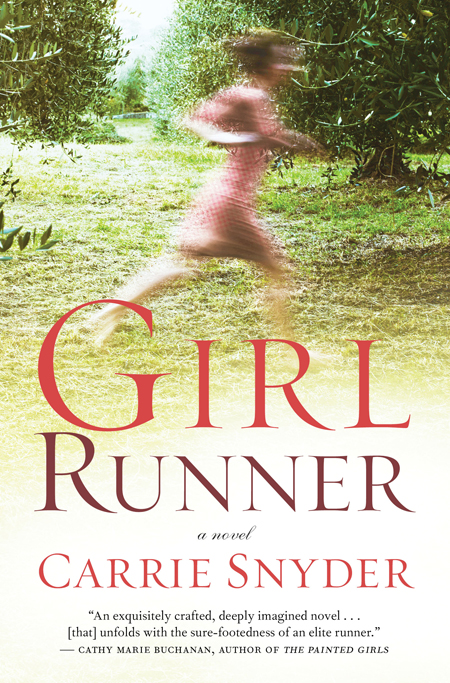
I’m crazyit’s beautiful. It’s a novella that’s almost written in verse and it’s unlike anything I’ve read. I’m just getting started so check out Hello Hemlock‘s review while I finish up. - Did you know SportLit is a thing? The things you learn on Twitter. In Girl Runner, author, blogger, and The M Word contributor Carrie Snyder writes about a woman at the end of her life remembering the days when she could run.
- I feel like Sweetland by Michael Crummey has been out for a while. because of all the hype, but it was just released so I’ll call it a fall book. I love island settings, so this story of a dying community in Newfoundland should do just fine.
- Between Clay and Dust by Musharraf Ali Farooqi was published in India a couple years back to great acclaim and is being published in Canada this year by Freehand books. I’ve heard it’s like a classic, like a fable, like a myth – ok, sign me up!
- Detachment by Maurice Mierau provides a little non-fiction balance to this list. It’s an adoption memoir written from a father’s perspective – a perspective I’ve been missing from the parenting books I’ve reviewed of late.
World Wide


- Colorless Tsukuru Tazaki and His Years of Pilgrimage by Haruki Marukami (Japan) because I’m not immune to hype. Also, look at this review by The Heavy Blanks. Just look at it. It’s perfect.
- A Girl Is a Half-Formed Thing by Eimear McBride (Ireland). The good reviews make me want to read it. The bad reviews make me want to read it. Just give it to me already!
- The Wallcreeper by Nell Zink (US). A wildcard pick. It’s blurbed by Jonathan Franzen and this bit of the synopsis tells me why: “Life becomes complicated with affairs, birding, and eco-terrorism.” That’s classic Franzen. It’ll either be great or have great snark potential.
Classics



Yes, I do plan to read a few! I might have to do a Classics Club spin or something. I was thisclose to jumping on the #readWP (that’s War and Peace) bandwagon but the first page was mostly French and I just wasn’t in the mood. What to do?
- Suck it up and read War and Peace?
- Shirley and/or The Professor by Charlotte Bronte? I could finish off my outstanding Bronte novels this year…
- Remains of the Day is pretty hot right now…
What are you most excited to read and review this fall?
The Shore Girl by Fran Kimmel

My rating: 4/5 stars
Goodreads
Synopsis:
Rebee Shore’s life is fragmented. She’s forever on the move, ricocheting around Alberta, guided less than capably by her dysfunctional mother Elizabeth. “The Shore Girl” follows Rebee from her toddler to her teen years as she grapples with her mother’s fears and addictions, and her own desire for a normal life. Through a series of narrators–family, friends, teachers, strangers, and Rebee herself–her family’s dark past, and the core of her mother’s despair, are slowly revealed
The first sentence in the synopsis is bang on. Rebee Shore’s life is fragmented. So was my reading experience. So is this review.
I’ve been paralyzed for six months in writing this review. The reasons are uninteresting, but most come down to the fact that I don’t quite know what to make of the book. I enjoyed it, but my reactions were a little strange. Like how I didn’t cry while reading, despite many tragic circumstances, but cried suddenly and heartily upon finishing the last page. Because I was going to miss the characters? Because I had a bad feeling about the main character, Rebee? I think it was supposed to be a optimistic ending, but I had this sinking feeling…
I can tell you now that I’m all grown up, that I don’t need a mother to keep me safe. That might be a lie.
After Alice by Karen Hofmann

After Alice by Karen Hofmann | Published in 2014 by NeWest Press| Source: Review copy from the publisher
My rating: 4/5 stars
Goodreads
Synopsis:
Having escaped the place in her youth, retired professor Sidonie von Taler returns to her ancestral Okanagan valley orchards still very much in the shadow of her deceased older sister Alice.
As she sifts through the detritus of her family history, Sidonie is haunted by memories of trauma and triumph in equal measure, and must reconcile past and present while reconnecting with the people she left behind.
Karen Hofmann’s debut novel blends a poetic sensibility with issues of land stewardship, social stratification and colonialism. Her eye for period detail and characterization is reminiscent of Margaret Atwood’s “The Blind Assassin” or Margaret Laurence’s “The Stone Angel,” while her lyrical realization of bygone B.C. pastoralia recalls the work of George Bowering.
The blurb is right: After Alice reminded me of The Stone Angel, big time. This is good, because TSA is one of my favourite books, but it’s also bad, because nothing can really measure up. Eventually, I realized there are enough differences here for After Alice to stand on its own, majorly influenced by Laurence, perhaps, but not derivative.
Where The Stone Angel fascinated me with it portrayal of aging – of a woman aging, specifically, and reverting back to childhood impulsiveness and petulance – After Alice frightened me. Hagar was 90, an age one may or may not reach, but Sidonie is in her 60s, and her stubbornness, her ambivalence towards her nephews and nieces (which reminded me of Hagar’s hate-on for Martin,) the creeping suspicion that she had mattered too little, had left no mark – is too close for comfort.
Sidonie’s retreat to her abandoned childhood home and subsequent illness are very reminiscent of Hagar’s journey into the wilderness. It may just be a coincidence, but I recently read yet another book with the “aging woman wanders into wildness, is stranded, and reflects on life” thing (Malarky, review forthcoming.) Is this becoming a cliche? It is effective though.
There are also shades of The Grapes of Wrath in the plight of the seasonal workers, both necessary and marginal. The reverse colonization, where Japanese labourers are brought in, during Sidonie’s childhood, is contrasted with present-day gentrification.
After Alice isn’t just about aging and pastoral scenes. It’s about importance of relationships, or sometimes, the lack of importance. I was struck by how few words are given to the recounting of Sidonie’s married years. The fact that Sidonie’s married life wasn’t central to her story was unexpected and I don’t know what that says about me, but it certainly conveys that Sidonie is an unconventional character given her age and background.
Hofmann is really effective in revealing the ambivalence in close blood relations – siblings, children, cousins. The sisters, Alice and Sidonie, especially. After sniping at each other in a way that is horribly recognizable, Alice lets her guard down for just a moment and Sidonie realized she doesn’t know her sister anymore:
“I pity you,” Sidonie says… “because you’re married to Buck, who, everyone knows, is a drunk and a bum, and you’ll always be poor and have black eyes and get fat.”
And then Alice opens her mouth in a sort of grin that is also a snarl, a rictus, and Sidonie sees what Alice has been hiding with her hand, her tight-lipped speech. Both of Alice’s upper eyeteeth are gone, pulled out, and dark spaces agape. Alice is missing teeth. How has this happened?
I was also fascinated by Alice as a mother, disgusted with her deaf child Claire; and how Sidonie related to Claire after Alice was gone, and then, in the present day, how Sidonie placed so many hopes on Claire’s child, teenager Justin. The portrayal of Justin and his two teenage cousins was great. They are at times sulky, entitled and “emo” but then suddenly caring and resourceful. The kids gave this book a hopeful tone that I welcomed, after the slow revealing of Alice’s death and Sidonie’s childhood trauma.
That slow reveal is so well done. Hofmann tells a story over many generations and places and not only makes it coherent, but makes you want, no, need to know more. Not a lot happens in the present, but after the halfway point, actually, right around the point of that excerpt, I needed to know. What happened to Alice? To Sidonie? Who was to blame? How did they seemingly end up trading fates?
After Alice has the makings of a CanLit classic, with complex characters, heavy themes done with a light touch, and expert pacing. Did I mention that this is Karen Hofmann’s first novel? I can’t wait to see what she does next.
Thank you to NeWest Press for the review copy!
For an amazing review of After Alice, check out Pickle Me This.
2014 Preview: Diversity, CanLit, Classics, and Second Chances
I’m still catching up on 2013 reviews, but 2014 reading is well underway. Here’s what you can expect this year on Reading in Bed.
Diversity!
I am pretty dismayed that off all the books I read last year, only 12% were by authors of colour. Here are some of my current and planned reads that will help tip me over 25% this year:


- The Orenda by Joseph Boyden. It’s my current read and HOLY CRAP IS IT GOOD.
- The Bridge of the Beyond by Simone Schwarz-Bart. nybooks.com says: “This is an intoxicating tale of love and wonder, mothers and daughters, spiritual values and the grim legacy of slavery on the French Antillean island of Guadeloupe.” Yeah. Plus, that cover.
- Inside Out: Reflections on a Life So Far by Evelyn Lau. An excuse to write about how Lau’s first memoir, Runaway, changed my life.
- Six Metres of Pavement by Farzana Doctor. My favourite calendar girl in Bare it for Books.
Follow book blogger Leonicka for lots of resources on diversity in Canadian literature. She’s going all out and reading 85% authors of colour this year!
Local Authors!
My next local read will likely be Come Barbarians by Todd Babiak. As for new #yegwrites stuff, so far I’m looking forward to Marina Endicott‘s fourth novel, Falling for Hugh and Laurence Miall‘s debut novel Blind Spot.
Here’s a great roundup of Edmonton books in 2014.
CanLit!
Apart from the Edmonton stuff, here’s my most anticipated CanLit:
- Frog Music by Emma Donoghue. She’s got a way with titles. I loved Room and Slammerkin, so my expectations are high.
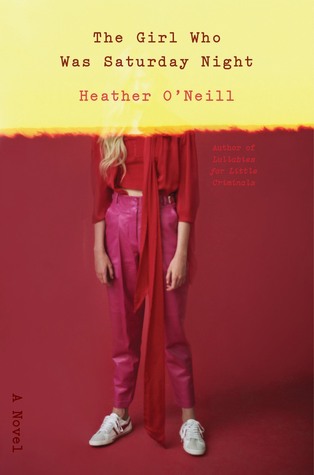
- The Girl Who Was Saturday Night by Heather O’Neill. I’ve been waiting eight years for O’Neill to write another book. Bring it on!
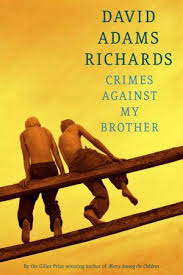
- Crime Against My Brother by David Adams Richards. Apparently brings the main character of Mercy Among the Children back – one of my favourite books of all time.
I will also solider on with the Storytellers Book Club challenge. It helps that I won a set of all five books in their contest last year!
Classics!
I haven’t forgotten about The Classics Club! In fact, I’m right on pace. I chose 50 books to read over five years, and approaching the one year mark, I’ve read eleven.
I’m also contemplating Behold the Star’s Russian Literature Challenge. Krisitlyn of Reading in Winter gave me War and Peace for Christmas, plus I hear reading Chekhov can improve your life.
Back from the DNF



I might set this one up as a challenge hosted here on the blog. I’ve abandoned a few books over the years, and this is the year I give them another shot. I’m including books that I straight up DNF’d (did not finish) and books that I finished, but didn’t really appreciate, often because I read them too young. Here is a sampling, with my excuses for not finishing in the first place. Watch for an introductory post soon (and if anyone wants to help me design a button, that would be cool…)
- Tristram Shandy by Laurence Sterne: Pregnancy brain
- Tinker Tailor Solider Spy by John LeCarre: Baby brain
- The English Patient by Michael Ondaatje: Too young. Attempted at 22 or so and got really lost.
- The House of Sand and Fog by Andre Dubuois III: Too young. Read at age 20.
- Fifth Business by Robertson Davies: Too young. Forced to read in high school, I hated it. Read a description of it recently and it sounds AMAZING.
This sounds like a lot of books, but I’m leaving room for random books, recommendations, read-alongs, and review books; you know, the four Rs.
Obligatory end-of-post question: what are YOU planning to read this year?
 Reading in Bed
