Category: Reading in Edmonton
Follies Past by Melanie Kerr: Review and Author Q&A

My rating: 3.5/5 stars
Goodreads
Synopsis:
Taking its facts from Austen’s own words, Follies Past opens almost a year before the opening of Pride and Prejudice itself, at Pemberley, at Christmas. Fourteen-year-old Georgiana has just been taken from school and is preparing to transfer to London in the spring. It follows Georgiana to London, to Ramsgate and into the arms of the charming and infamous Mr. Wickham.
Remember last year when I did Austen in August and decided that even though Austen is Awesome, she kind of wasn’t for me (with the exception of Persuasion because let’s face it, Captain Wentworth is for everybody?) It’s a credit to Ms. Kerr’s persuasiveness (sorry) that I decided to read Follies Past. I didn’t want to set myself up for a disappointing read, or deal with the awkwardness of a writing a bad review of a local, self-published book. But over the course of a few weeks’ email correspondence, she wore me down. I picked up the ebook and girded myself.
It wasn’t just Kerr’s salesmanship (thought it was impressive) that convinced me. She created a series of wonderfully overwrought book trailers that are far more entertaining than those of best selling authors. And she blogs. Her blog is neither in your face promotion nor dubious writing tips; rather, it’s an interesting and educational look at what goes into writing a historical novel and publishing it yourself. Kerr’s expertise in the Regency era comes through in her fiction, but her blog really drives it home. My favourite posts are those about about peculiarities of Regency language, but she also rants about misuse of “beg the question,” one of my pet peeves.
What about the book?
Right! The best thing about Follies Past is that the writing style comes oh-so-close to Austen, it feels completely natural and not at all like that “put a Zombie on it” brand of adaptation. Kerr’s wit isn’t quite as razor sharp, but that’s like saying you are slightly worse at playing piano that Mozart. I don’t know about you, but I read Austen for the sick burns more than the romance, and there are plenty here. Speaking of romance, here’s our hero contemplating marriage with Caroline: Continue reading
Library Book Sale Haul and Life Lessons
How did I call myself “bookish” for so many years, when I’d never shopped a library book sale? Okay, I never call myself bookish, but I have felt a vague sense of incompleteness. I finally went a few weeks ago with my colleague and cube-neighbour Christina. Have I mentioned that I have a bookish office mate? She’s into YA, which is perfect, because we didn’t fight over books.

The Haul
1. Eleanor Rigby by Douglas Coupland: Because it’s Douglas Coupland. I admit I’m finding his Roots clothing/daily slogan thing a little tiring, but, I will always love him.
2. The Flying Troutmans by Miriam Toews: Because All My Puny Sorrows is way to hyped for me to read it right now, and my dad’s wife recommended it to me. We’re visiting them next month, so it’ll give us something non-controversial to talk about!
3. In the Skin of a Lion by Michael Ondaatje: Because I love him.
4. Away by Jane Urquhart: Because Urquart created a playlist for the book, which is kind of my thing. Prosperina by Martha Wainright made me cry.
5. When God was a Rabbit by Sarah Winman: Because I like the title.
6. The Sisters Brothers by Patrick DeWitt: Because everyone I know who’s read it orders me to read it. Immediately.
7. The Toss of a Lemon by Padma Viswanathan: Because of this review by friend-of-Reading-in-Bed Jennifer Quist.
8. We Were the Mulvaneys by Joyce Carol Oates: Because she is coming to Edmonton in November and I need something for her to sign. Also she has the best/worst/most absurd Twitter persona.
9. Icefields by Thomas Wharton (not pictured): Classic CanLit. The librarian who sold it was so excited for me.
The Life Lessons
1. Like many a newbie, I imagine, I went in all “I’ll just pick up a few books. One or two.” No. You’ll get ten or more. I put a few back because I had nowhere to put them. Come prepared. The true pros bring those little pull-along grocery carts. They’ve really made advances in the design of those since I delivered flyers in the 90s. I saw some that looked more like luggage.

This shopper is employing a two-part strategy: backpack + man to carry books.
2. If you see a book you might be interested in, grab it. If you change your mind, you can put it back. I hesitated over The Signature of All Things in pristine hardcover, went back maybe three minutes later, gone.
3. You don’t have to go early. The line ups are for the DVDs.
4. Plan a separate day for kids’ stuff. There were so many books and dvds, but I didn’t have time or carrying capacity after I’d been through the adult stuff. Sorry kids!
5. Go more than once. They continually update the stock.I went twice in the same day and saw some of the same people on round two. Those were the pros with the grocery carts. They are hardcore.
The Edmonton Public Library’s next Books 2 Buy event is on August 15-17. I’ll be there!
For good measure, here is my neighbour’s book haul, which resides in her filing cabinet because she couldn’t carry it home. Yeah, I think we’ll get along just fine.

The Shore Girl by Fran Kimmel

My rating: 4/5 stars
Goodreads
Synopsis:
Rebee Shore’s life is fragmented. She’s forever on the move, ricocheting around Alberta, guided less than capably by her dysfunctional mother Elizabeth. “The Shore Girl” follows Rebee from her toddler to her teen years as she grapples with her mother’s fears and addictions, and her own desire for a normal life. Through a series of narrators–family, friends, teachers, strangers, and Rebee herself–her family’s dark past, and the core of her mother’s despair, are slowly revealed
The first sentence in the synopsis is bang on. Rebee Shore’s life is fragmented. So was my reading experience. So is this review.
I’ve been paralyzed for six months in writing this review. The reasons are uninteresting, but most come down to the fact that I don’t quite know what to make of the book. I enjoyed it, but my reactions were a little strange. Like how I didn’t cry while reading, despite many tragic circumstances, but cried suddenly and heartily upon finishing the last page. Because I was going to miss the characters? Because I had a bad feeling about the main character, Rebee? I think it was supposed to be a optimistic ending, but I had this sinking feeling…
I can tell you now that I’m all grown up, that I don’t need a mother to keep me safe. That might be a lie.
Alberta Readers’ Choice Award: You have the power

Sponsored by the Edmonton Public Library, the Edmonton Public Library Alberta Readers’ Choice Award is awarded annually for the best fiction or narrative non-fiction written by an Alberta author. The $10,000 award – presented annually by the Edmonton Public Library and one of Alberta’s richest literary prizes – recognized the exceptional writing talent in Alberta and encourages readers to support Alberta authors.
I considered applying to sit on the jury for the Alberta Readers’ Choice Award this year, but was intimidated by the amount of reading I’d have to do. I shouldn’t have been; I’d already read five of the longlisted ten (chosen by library staff across Alberta) and of the shortlist (decided by the jury,) I’ve read three of five, and own another. Ah well. I’ll have to be satisfied with the power of my vote. Regular joes like us decide who wins, and the winner gets a novelty-sized cheque for $10,000.
The Alberta Readers’ Choice Award Final Five are:
- Almost a Great Escape by Tyler Trafford
- Come Barbarians by Todd Babiak (my review)
- Pilgrimage by Diana Davidson (my review)
- The Dilettantes by Michael Hingston (my review)
- The Unfinished Child by Theresa Shea
Vote here. Voting is open for the whole month of May. Only one vote for person, so no annoying “vote everyday!” social media blitzes.
Today, I’m off to my local library branch, Jasper Place, to hear the four Edmonton-based authors read from their shortlisted books. We’ll also hear from readers, which is a cool twist! Check it out at 1:30 p.m. today, May 24th.
Last year’s winner was Frank Kimmel, for The Shore Girl, which is still on my to-review list (it’s great.) Check out Another Book Blog’s review and interview. I met Fran at a reading last year, and someone asked her what she spent that novelty-sized cheque on, which was a little rude if you ask me! Fran said she would spend it on upgrading her technology. The $10,000 prize would certainly be enough to get some sweet gear.
For me, the best Alberta book of 2013 wasn’t even on the longlist – Love Letters of the Angels of Death by Jennifer Quist. Roost by Ali Bryan was an oversight too. I don’t know if it’s proper etiquette to say who I voted for, but I’m nosy and I want to know who you are voting for, so here goes. I voted for the book that surprised me the most and brought me the most joy as a reader: The Dilettantes.
Which book has your vote?
Book Club Confidential: Frog Music and Astray by Emma Donoghue
I enjoyed writing a meta-review of Come Barbarians so much that I thought I’d do another. Sadly, I did not get to drink wine with Ms. Donoghue, but I read her two most recent books, Astray and Frog Music, with others, and with interesting results.
I’m trying to challenge myself a bit this year. Attending an IRL book club with people I don’t know was one of those challenges, and I did it with Astray. Recording a podcast thing wasn’t in the plans, but it worked well with Frog Music, forcing me to be spontaneous where I’m usually heavily edited.
Frog Music

My rating: 4 stars
Goodreads
The Book Club: Write Reads
First, listen to to my thoughts on Write Reads! I guest hosted the May “new release” podcast and chose Frog Music. I haven’t listed yet because I’m scared I’ll hate my voice. No offense to my sister since we have the exact same voice.
I was super nervous about recording the podcast. My review-writing process is usually days, sometimes weeks long, and often begins months after I’ve read a book. Now, I’m supposed to read a book and just… say what I thought about it? What if I say something dumb? Or think of something better to say later? Both those things happened but the unpredictability of the podcast format is what makes it awesome.
It helped that the hosts, Tania and Kirt, are themselves quite awesome. I know Tania from a former life in which I was a (recreational) belly dancer and met Kirt for the first time that same day, and I was afraid it would be awkward – given the book, I knew the conversation would get pretty racy – but it was so great. I want to guest host again just so I have an excuse to hang out with them. I almost wish our after-podcast conversation had been recorded too. There’s nothing like debating what exactly constitutes double penetration with and old friend and a guy you just met. Or discussing the layout for an imagined Boys of Book Blogging calendar. I fear I’ve said too much!
The Book
I liked the book more than either Kirt or Tania. The balance between love and revulsion is what Donoghue does best, and she gets it so right: mother and child, prostitute and customer, friend and lover. If the podcast had been longer, I would have talked more about:
- Arthur and Ernest. Former partners on the trapeze, they are definitely more than friends, and the dynamic is fascinating. Each has their own female partner, but when Arthur nearly dies of smallpox, Ernest cares for him. I wanted to know more about these two.
- “Nursing out.” This concept of sending children away, to a “farm” or to a peasant woman, for the first months or even years of life, seems to be a fairly normal concept in 19th century France. It flies in the face of attachment theory that guides much of parenting trends today, and left Blanche woefully unprepared for motherhood – having been nursed out herself, and in a new country away from any female relatives or friends, how was she to know how to take take of P’tit?
- Blanche as the anti-fallen woman. I read a lot of classics, and a lot of female characters are either put on a pedestal, perfect wives and mothers, or, are cast out as fallen women. Blanch is neither. It’s telling that she may be the most confident female character I’ve ever read, and she exists in the 19th century. I hate the cliche of a “strong female lead” but she is, despite being, at times, a terrible wife, mother, friend, and lover, she overcomes. She keeps going. She learns and gets better.
- The end. I found the ending too happy, despite the death and mayhem. It was very hopeful. Then, of course, I read the afterword about what really happened to the model for Blanche and it was too sad. I’m hard to please.
I’ve read four of Donoghue’s books so far, and rate them all a solid four stars. Frog Music is probably my least favourite of the four, but that’s not to say it’s bad. The murder mystery stuff didn’t work that well for me. I wanted more character, more backstory, and yep, more sex scenes. She does them so well. I mean, here, from the disputed DP scene:
Blanche is the conduit, the river, the rope, the electrical current…she’s going to drink down every drop they’ve got, their spill one unbroken seam of gold through the shattering rock.
I recommend this to lovers of historical fiction, “strong” female leads (even if that phrase makes you cringe,) visceral writing, and the earlier Donoghue novel, Slammerkin.
Further reading on Frog Music:
- A review at Editorial Eyes, which says a lot of what I wanted to say in the podcast, more coherently!
- Donoghue’s soundtrack. Essential. I wish I found it while I was reading so I could really immerse myself in the sounds.
Astray

My rating: 4 stars
Goodreads
The Book Club: CanLit Book Club at Jasper Place Library
This book club is what it is thanks to its leader, librarian Lindy Pratch. Once I figured out that Lindy is a book blogger, it all made sense! She reads widely and prolifically, with a focus on CanLit.
The CanLit book club was born a couple of years ago, to relieve the pressure on an over-subscribed general book club over at Woodcroft Library. Lindy chooses all the books, which must be CanLit, and must have enough library copies for the 20ish members. The reading list is so diverse, with YA, mystery, historical fiction, short story collections, graphic novels, and more. Check out the full list of titles here, which includes Reading in Bed favs like The Cat’s Table and really-wanna-read books like The Sisters Brothers and Galore.
I was afraid that the people who attend a library book club would either be super cliquey, or that maybe they’d all have similar opinions, or, even worse, that they wouldn’t talk about the book, as I keep hearing is the case at book clubs. None of these were true. What they lack in demographic diversity (almost exclusively white women age 60+) they make up for in life experience, reading experience, and curiosity. Each meeting is an hour long and there’s always so much more I want to talk about!
If you’re in Edmonton, check it out on the fourth Wednesday of the month. The next book is Karma by Cathy Ostlere, which is just great, and we meet on May 28th at 7:00 p.m.
The Book
I loved Astray. I’m reading more short story collections that I ever have, and this one is at once so different from the typical Canadian short story, but so obviously Canadian.
I found the book clubbers were divided into those who like short stories and those who don’t; and those who liked the premise of Astray, and those who found it frustrating. I didn’t realize that some people are just not open to short stories, like, at all. As for the premise – Donoghue takes snippets of old news stories and imagines the outcomes, revealing the source material at the end of each story – I found it made for a more compelling read than the usual short story collection, which you can dip and and out of. I was so curious about what was real and what was invented that I was racing to the end.
The best comment from a book clubber was “There sure were a lot of gay people. There were just so many,” which you have to imagine delivered completely deadpan, zero indication whether this was a good thing or a bad thing. It’s true, and I guess this reader was not familiar with Donoghue’s previous work! She runs the gamut from cross dressers to women in trouble to a man and his elephant. Not surprising to me, as I know she can write a novel set in present day, mostly in one room, as well as she can write about a cast of characters in 19th century San Francisco.
My only complaint about Astray is I couldn’t tell what makes a snippet of info short story worthy vs. novel worthy. Frog Music was built on a similar premise, and there were some stories that I wish had become novels. “Counting the Days” in particular, a crushingly sad and super honest portrait of a marriage. In the reveal, we find out that the wife, having lost her husband just before her arrival in Canada from Ireland, with a pack of young children and nowhere to go, remarries quickly and has seven more children. I want to know how she meets her new husband, if she is haunted by her first husband, how the children adapt to their new situation – just more.
I recommend Astray to just about anyone. It may not change your mind if you’re anti-short story, but if you’re open to it, you won’t do much better.
So, looks like I need some new bookish/blogging challenges. How are you getting out of your comfort zone?
Come Barbarians by Todd Babiak: The Book, The Man, The Hummus
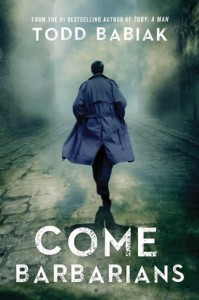 Come Barbarians languished on my shelves for months, despite the fact that I attended the book launch and was immersed in a rather impressive media campaign that included digital billboards and bus shelters (for a book! For a LOCAL book!) I was afraid of a couple of things:
- That I wouldn’t like it and would have an Awkward Moment with Todd on Twitter (that sounds like a terrible new comedy series or something)
- That I wouldn’t “get it” because it was compared to Le Carre, and the one time I tried to read Le Carre, I was like that person in the theatre who’s whispering, “Who’s that? Why are they doing that? What is happening?!”
- That I wouldn’t be able to stand reading about the death of a child the same age as my own. It’s a terrible cliche, but it’s true: the older my kids get, the harder it is for me to read anything about a child being killed or hurt, real or fictional.
I got a kick in the butt from #yegbookclub, a monthly Twitter chat dedicated to an Edmonton-authored book. Come Barbarians was the first selection, and I started reading the next day.
Around this time, I listened to an interview with Todd on The Next Chapter wherein he reminded me of his BOOK CLUB PROMISE (his caps, not mine,) including “magical” hummus and “ninja vacuuming” and I knew what I had to do. I rounded up a few of the Edmonton book bloggers and created an impromtu book club. On to the reviews!
The Book
4 out of 5 stars
Goodreads
In addition to the reservations listed above, I had a feeling Come Barbarians wasn’t the right place to start with Babiak’s work. Come Barbarians is a departure, a genre book, a political thriller; whereas his earlier stuff is (I understand) funny, smart, and literary. I’ve had my hand on Toby: A Man several times (That’s What She Said) but never took the plunge. It doesn’t really matter, though. A good book is a good book. I’m glad I read this one first. It was surprising and dark, action-packed and violent, but also contained and cerebral.
I feel like this one could have been called Kruse: A Man (though I’m glad it wasn’t) because despite the action and intrigue, it’s a character study and a mediation on what makes a “good” man. Is it being good at something? What if the thing you’re good at is basically beating the crap out of people? Is it loving your family? What if your family doesn’t love you back? What if you lose them anyway? What’s left after that’s all gone?
And if these types of questions bore you, there’s plenty of other stuff to get interested in, from martial arts to French politics and organized crime.
I thought this book would be different from what I usually read, and it was, but I found myself comparing it to an old favourite: Hotel New Hampshire by John Irving. Maybe it’s the (North) Americans in Europe, or the sudden turns of tragedy and violence. Actually, I know what it was. It was this line, as Kruse laments the loss of his daughter and his wife:
He would swim to Europe with them on his back.
It put me in mind of the death of the mom and Egg over the Atlantic, and also that repeated line, “Sorrow floats.” It also made me at once wistful (how romantic!) and cynical (easy to say now, bub.) That’s a lot of stuff going on for ten-word sentence.
The only parts of the book that didn’t work for me were the more outrageous scenes. One involves a vegetable peeler used in creative and disturbing ways, and one involves the shaming of a child abuser. Neither were necessary to my experience of the book, and neither did much for me. I feel like I should have been a lot more grossed out about the vegetable peeler thing, but mostly I was wondering where I could purchase such an efficient utensil. For vegetables, calm down!
So, don’t be afraid. Whether you’re a Le Carre fanatic or and Irving lover or neither of these, if you like moody, thoughtful writing, you’ll like this.
Other reviews worth reading:
Fellow book-clubber Tania of Write Reads
The original Edmonton Book Blogger Kristilyn of Reading in Winter
Laurence Miall (who has a Babiak-blurbed book coming out soon, incidentally)
The Book Club

Can you believe we forgot to take a picture? He pretty much looks like this but less intense.
After a little awkwardness and jitters (none of us had done the author-visit thing before) talking to Todd about his book and a million other things was totally natural. We talked about marital arts, acts of kindness, vegetable peelers, and growing up in LA (that’s Leduc, Alberta.) I was most surprised by how autobiographical this book was. I was most nervous about how to talk about the book critically with the author right there but it was no problem at all. He even asked us questions about how authors and publicists should pitch to bloggers, which is always a ripe topic!
The Wine
Part of Todd’s book club promise is to bring a wine from the region the book takes place in. He couldn’t find the exact one he wanted, but assured us the grapes were the same, whatever that means. It was so good that when I got home, I immediately emailed to find out the name of the wine. It was Bila Haut by Chapoutier. Todd sent me a detailed description of the region and the grapes, which didn’t mean much to me. Bottom line: The first glass tasted like a second glass. I picked it up for $16 at Liquor Select.
The Hummus
This pains me, but the hummus not only displayed limited magical qualities, but it needed more garlic. The texture was good but it wasn’t flavourful enough for me. Sorry Todd!
Watch for book two in the Christopher Kruse series sometime in 2015. Todd would not give us an exact date no matter how much we hounded him.
The next #yegbookclub selection is Waiting for Columbus by Thomas Trofimuk and it sounds amazing.
In my bed: March 2014
You know you’re in a blogging slump when: a monthly update becomes quarterly. At least I came up with a sassy new name?
Reading has trumped writing lately, and I blame all the wonderful books. In the first three months of 2014, I’ve read three five-star books, one that was ever so close, and many that rate a solid four-stars.
Recommended reading
I’ve read 17 books to date this year. Here are a few that I would recommend to almost anyone.
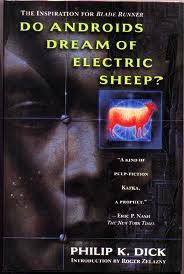



- Do Androids Dream of Electric Sheep by Philip K Dick. See my guest post over at ebookclassics and get ready to have your mind blown.
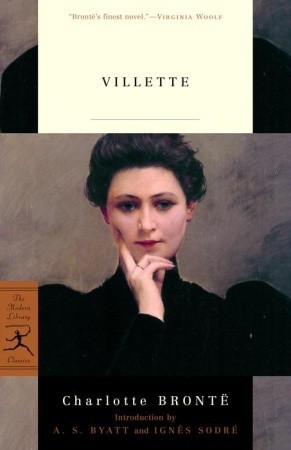
- Villette by Charlotte Bronte. Check out me Bronte fangirling here.
- The Orenda by Joseph Boyden. I knew this one was special after the first 15 pages and was a wreck after the last page. Review to come.
- Mad Hope by Heather Birrell. Seriously cannot wait to reread this when I review.
- The Bridge of Beyond by Simone Schwarz-Bart. My favourite of this year so far. As much for the translation as for the author’s work. It’s unbelievable that this was not written in English, because the language just soars.
Reading diverse
It was enlightening to count up the diversity (or lack thereof, sadly) in my reading last year, so I thought I’d track it more often in 2014. Of the 17 books I’ve read so far:
- 10 written by women
- 5 written by people of colour
- 3 written by Dead White Dudes (and just 1 by an Alive White Dude. Hi Todd!)
- 7 Canadian, 4 American, 4 British,1 Russian, and 1 Caribbean
So, still heavy on Canada/US/UK and heavy on white authors. A work in progress.
Reading local
I read some great local Edmonton books recently. Reviews for these are all to come.
- The Shore Girl by Fran Kimmel: Complex and satisfying.
- Follies Past by Melanie Kerr: Unexpected and authentic.
- Come Barbarians by Todd Babiak: A cross between Le Carre and Irving.
There are also some great recent and upcoming events in Edmonton:
- Sadly, Richard Wagamese (author of Indian Horse) couldn’t make it to the Macewan Book of the Year event, so it’s being rescheduled.
- I attended my very first CanLit Book Club at Jasper Place Library, and Indian Horse was the March pick. I think a full blog post is in order, but I’m so happy to have found this group! Our next book is Emma Donoghue’s Astray.
- This week, I’ll be staying up past my bedtime to attend Green Drinks: Local Literature. I’m not sure exactly what will go on, but I’ve been told it involved “literati,” possibly “glitterati,” and also high-fives. I will attempt to take selfies with the likes of Jason Lee Norman (Americas, 40 Below Project), Matt Bowes (NeWest Press), Diana Davidson (Pilgrimage), and Alexis Keilen (13, She Dreams in Red.) There are 24 tickets left as of 10:30 Monday night. Get on it!
What’s next on Reading in Bed


- Guest hosting on Write Reads: I haven’t been much into podcasts until I realized that my gym has free wifi and I can listen to them while I work out. I listened to Write Reads this week, and soon enough, I’ll be guest hosting with Tania and “Kirtles” (that’s what Tania calls him. I don’t know if I get to call him Kirtles right off the bat or not!) with my choice for Canadian New Release month: Emma Donoghue’s Frog Music.
- Reading for The Afterword Reading Society: The National Post books section came up with a quasi-book club of it’s own. Each week there’s a new book, and members can request a chance to read. 25 are picked and you get a review copy of the book and a set of questions to fill out. The results are summarized in the paper. I’ve been trying for months and finally got picked to read Dinaw Mengestu’s All Our Names. One of the questions asks, “what would you ask the author?” I had a real hard time coming up with something more intelligent than “why are you so awesome?” I’ll post all my answers on the blog soon.
- #1Tale2Cities Readalong: Dickens’ A Tale of Two Cities is the first readalong I’ve hosted since Moby-Dick. Watch for a sign up post soon! We’ll start reading on April 20th.
- Madame Bovary Readalong: I feel like living on the edge, so I’m signing up for this readalong the day before it starts. ebookclassics, Cedar Station, and a scandalous heroine? Yeah, I’m in. Sign up here, soon.
How about you, book bloggers and readers? Are you reading diverse or local or anything else we should know about?
CORRECTION: Top 6 Alternatives to Traditional Book Clubs
Continued from previous post...
 6. Write Reads Podcast
And bookish podcasts in general. It’s super embarrassing that I forgot to include Write Reads, not only because I know co-creator Tania in real life, but because I am appearing on the podcast in May!
The concept is pretty simple: Kurt and Tania choose a Canadian book each month according to a schedule and discuss. I love that their blog lists all the other books mentioned in each podcast, though it’s dangerous for an already overflowing TBR. And I love that they talk about books and authors I’ve never heard of. I mean, I consider myself fairly well read and current, but it’s like there’s this whole other world of CanLit out there that only they can give me access to.
Listeners can and do get involved in book selection, so there is an interactive element. And they write plenty of discussion posts in between podcasts, like this one about a disturbing trend of Canadian writers declining to set their books in Canada.
Here’s their latest podcast, about Nicole Lundrigan’s The Widow Tree. The March pick is Blood by Laurence Hill, which has been sitting on my shelf since October. I suggested that we read Emma Donoghue’s Frog Music in April and you can hear me babble about it sometime in May.
Wondering how I know Tania? Here’s a picture of us from about six years ago:
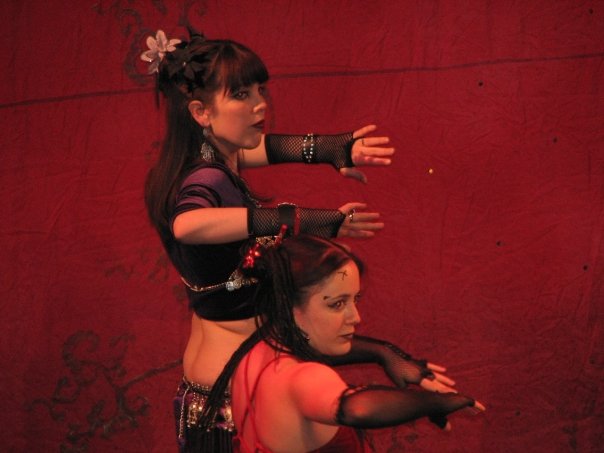 In addition to being awesomely bookish, Tania is also a belly dancer and instructor. I feel like you need a better look at our costumes:
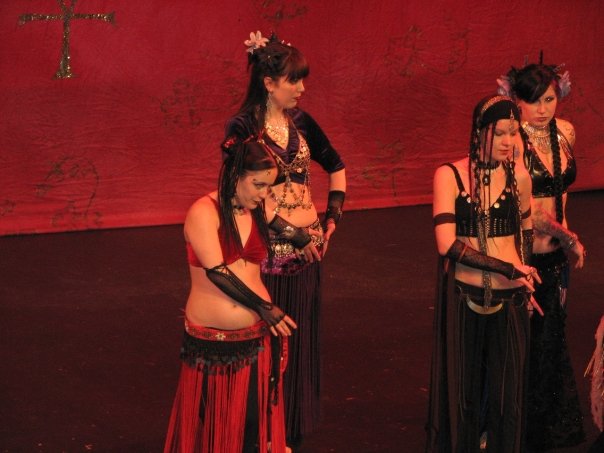
We will probably be more casually dressed when we record the Frog Music podcast, but you never know.
Anything else I forgot? Do you listen to any literary podcasts? Should I post more of my belly dance pictures?
Top Five Alternatives to Traditional Book Clubs
photo via etsy.com
I know those “what you think X is, what X actually is” memes are played out and dumb so forgive me:
What book clubs want you to think goes on at book club: Ladies, libations, and literary discussion. Basically this guy’s wet dream.
What you think actually goes on at book club: a bunch of 30-something ladies drink wine, eat snacks, and pretend to have read the book for a few minutes before moving on to more important subjects, like, I dunno, shoes or something.
What actually goes on at book club: I have no idea. I’ve never been to one.
I know traditional book clubs are still a thing. Several people I know (some in real life!) love them. But for those of you who are too lazy to clean your house and/or have trouble interacting with people IRL, there are SO MANY other options. In no particular order:
1. #YegBookClub
The idea for this post came courtesy of blogger Kristen Finlay, who came up with #YegBookClub. It’s very simple, which is why is works so well: each month, an Edmonton-authored book is chosen and a date and time for the chat is set. Read the book, use the hashtag during the chat, and connect with other readers. You can still drink wine and no one has to know that you’re wearing your stayin’-in leggings.
The inaugural #yegbookclub pick was Todd Babiak’s Come Barbarians. I found out about it too late and hadn’t read the book but had fun participating anyway. This will be a regular event for me from now on. I was inspired to start the book that same night (it’s fantastic so far.)
Oh, and the author participated, AND gave a hint about the next book in the series:
A Very Bronte Blog Post: Villette and A Bronte Burlesque
Do you have a favourite Bronte novel? If not, go read some of their stuff. It’s okay, I’ll wait.
The perceptive Rory at Fourth Street Review suggests that many readers identify strongly with either Jane Eyre (Charlotte) or Wuthering Heights (Emily), but not both. I’ve been a Wuthering Heights girl since I read it 17 years ago, but I’ve broadened my Bronte horizons of late: I read my first Anne book, Agnes Grey last fall, I read Charlotte’s Villette last month, and just recently saw a play based on the Bronte’s lives. I’m still Team Emily, but it’s time for me to give Charlotte her due: Villette is her masterpiece (sorry Jane fans) and she’s the most interesting of the siblings.
I didn’t even get around to reviewing Agnes Grey last year. It definitely had it’s moments, but the biggest impression it left was my wonder at how things were so different in Anne’s time; mostly in terms of the qualifications needed to educate children (be female, be unmarried, have a pulse?) Villette made me wonder about this stuff too, but I also felt the universality of Lucy’s situation. She could be anyone, at any time, not just a 19th century teacher, whereas Agnes was trapped in time. Indeed, if you have ever loved someone more than they love you, you’ll identify with Lucy Snowe.
Villette reminded me of a smaller-scope Middlemarch. Both novels are named for a city and are about the divisions between classes and sexes and have wonderful feminist perspectives. Middlemarch has much more going for it, from politics to academia to satire – so much, in fact, that I’m paralyzed to write a proper review. Villette is more of a character study – a convincing portrait of Lucy and her world. It’s a tragedy, and at times gothic and romantic. It’s odd in its construction – a straightforward narrative most of the time, but then, BAM, there’s a stream of consciousness account of Lucy’s severe depression. Or a delerious description of Lucy tripping out after being drugged. An anti-Catholic rant. A ghost nun. And so on.
Jane Eyre is great, but it just wasn’t this ambitious or this awesome. I made the mistake of finishing Villette over lunch time at work, and spent that afternoon in a state of bewilderment. I may have said “oh no she DIDN’T” aloud. It’s pretty much the opposite of the satisfying “Reader, I married him,” but to me, the ending was more satisfying for being so ambiguous.
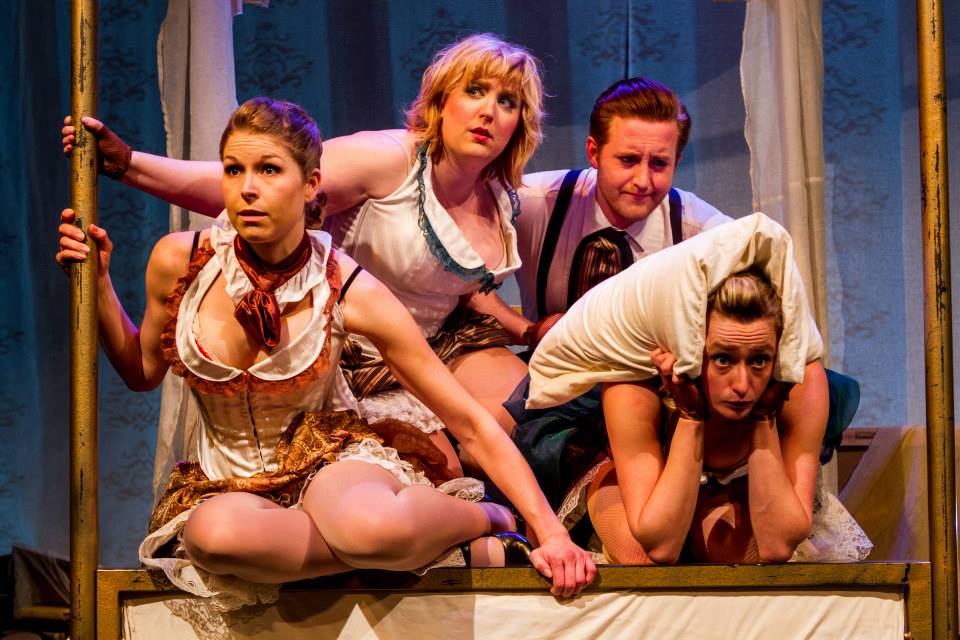
Send in the Girls in A Bronte Burlesque: Charlotte, Emily, Branwell, and Anne via https://www.facebook.com/sendinthegirls
Villette was the perfect preparation for seeing A Bronte Burlesque, a production of local theatre company Send in the Girls. Charlotte is the star, and we first meet her on her deathbed, her siblings having all died years earlier. Villette is never mentioned, and not often referenced (it’s all about Jane Eyre) but dying Charlotte, bitter and alone, put me in mind of Lucy Snow immediately.
In real life, Charlotte was newlywed and pregnant at her death, though this is never mentioned in the play. So, the story is manipulated, but what story isn’t? A Bronte Burlesque is confined to the insular world of the four Bronte siblings: Charlotte, Emily, Anne, and Branwell, the underachiever brother who I didn’t even know about till I saw the play.
It’s about exposing (get it?) the real Charlotte, how her ambition drove her to betray her siblings. She’s successful, but haunted by the past. Emily and Anne are laid bare as well – Anne and her jealousy, Emily and her depravity.
I had always wondered about Emily: how did she write so convincingly about obsession and loss, living such a short and isolated life? This play suggests that there was some Flowers in the Attic action going on up at Haworth, which made me question my teenage obsession with Wuthering Heights for a second before realizing this is a work of fiction about another work of fiction and every interpretation is as valid as the next – icky or not.
The burlesque element was fun, and worked well on a metaphorical level – you know, exposure, identity, femininity -but sometimes I would remember that they were supposed to be related and it got a a little weird. Or a lot weird. Seeing Emily throw herself at her own brother to the strains of Radiohead’s “Creep” was one of the more bizarre experiences of my life. This play was not exactly date night material.
The set, music and costumes were gorgeous. I was entertained and I gained a serious appreciation for Charlotte Bronte. And I simply love the fact that there’s a local theatre company doing something like this with literature and history! I never read biographies, but now I’m on the lookout for a good one – maybe Elizabeth Gaskell’s on Charlotte, or Daphne Du Maurier’s on Branwell.
Tell me, are you Team Emily or Team Charlotte? Is there a Team Anne? Branwell??
 Reading in Bed