Tagged: #NovNov
Small Boat by Vincent Delecroix, translated by Helen Stevenson

Welcome to Novellas in November 2025, in which I try to catch up on reviews by tackling the novellas I’ve read so far this year.
This novella stuck with me, not only because it is so good, but because my interpretation of it seems to be a rare one, and maybe a wrong one. So, to the extent that a philosophical novel based on true events which I may have interpreted incorrectly can be spoiled, beware of spoilers ahead.
Continue reading10 Books of Summer makes way for 1 Book of Fall
By any metric, summer is over. School’s in (and I have a high school student!), leaves are falling, and I have a disappointing tally of reviews from my 10 Books of Summer. But I have big plans for fall.
10 Books of Summer wrap up

- Less by Andrew Sean Greer: actually reviewed, and enjoyed!
- The Netanyahus by Joshua Cohen: finished, past deadline, and unlikely to review, given the effort that would take, for a book that most people read back in 2021. It’s worth a read though, if you’re holding out.
- Athena by John Banville: my least favourite of the Book of Evidence trilogy, but still a stand out. Might tackle The Sea next.
- Small Boat by Vincent Delacroix tr. Helen Stevenson: This book took me by surprise. Should have won the IBP, probably (I didn’t read the winner so I can’t really say).
- There’s a Monster Behind the Door by Gaëlle Bélem tr. Karen Fleetwood and Laëtitia Saint-Loubert: A strong start, but it kind of petered out in the end.
- Playing Hard by Peter Unwin (a review copy, a collection of essays about games and sports): Did not get to this. It’s a tough one; an author I enjoy writing about a subject I’m not terribly interested in.
- Don Quixote by Cervantes tr. Edith Grossman: See below
- Mornings Without Mii by Mayumi Inaba tr. Ginny Tapley Takemori: Finished in an airport, sobbed.
- Yoga by Emmanuel Carrère tr. John Lambert: actually reviewed, and enjoyed ripping it to shreds.
- On the Calculation of Volume II by Solvej Balle tr. Barbara Haveland: Reviewed and enjoyed. November 18th, pub date of the third book in English, cannot come fast enough (apologies to Tara, who would certainly prefer to get to the 19th.)
1 Book of Fall preview

If I am going to read one book this fall, it will be Don Quixote. I tried and failed a few times over the summer, getting no farther than the introduction* and first few chapters, but I’m on chapter 8 now and believe I am “locked in,” as my kids would say. So far, I am struck by how this novel, often touted as the *first* novel, is about someone who went crazy from reading too many novels (well, romances). In light of recent moral panics like this one, I am curious about when and how the act of reading fiction went from being indulgent and ruinous (see also: Northanger Abbey) to virtuous and edifying.
If you’ve read Don Quixote and have any tips or resources for me, please share!
NovNov to the rescue

What about all those books of summer that I didn’t properly review? Luckily, most of them are novellas and would qualify for my favourite alliterative book blog event, Novellas in November. I would really like to write about Small Boat, as I have a theory about it that is either so obvious that no one talks about it, or so out there that I will look like an idiot. Can’t wait to find out which. I also want to talk about Dua Lipa’s book club, and this was a recent pick, so a perfect way in.
A disappointing review tally, but I did read 8/10 and started one more. Onward!
*The introduction is by Harold Bloom, who features rather prominently in The Netanyahus, in a strange coincidence, or bookish serendipity!
Western Lane by Chetna Maroo
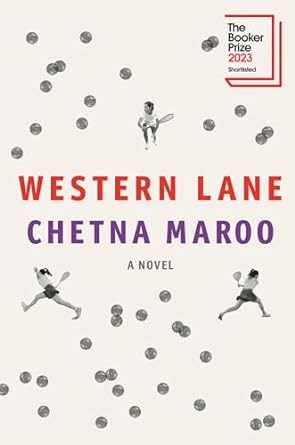
Maybe it’s because I’m off Twitter, but I haven’t seen too much discourse about the Booker prize this year. I’m thinking about the years in which people whined about too many debut authors, because this shortlisted book struck me as very “debut-y” – or maybe it’s just me.
Two trusted reviewers, the hosts of Novellas in November, who chose this book as a buddy read, don’t feel that way. Cathy found this story of a grieving eleven-year-old girl coping through a newfound love of squash, deep and satisfying:
“The narrative arc of Western Lane has all the staples of a standard Hollywood movie: rising from tragedy through sport, a romantic love interest and a thrilling climax of competition, but Maroo presents this recognisable story with a restraint and insight that elevates it beyond cliché.”
Rebecca found it illuminating in terms of “what is expected of young Gujarati women in England; on sisterhood and a bereaved family’s dynamic; but especially on what it is like to feel sealed off from life by grief”.
Rather than write a comment on their blogs about why I disagree, I thought I’d better review it myself. But I find that I can’t refute their points! The things I found trite or formulaic, they found “accessible with hidden depths” (that’s Rebecca.) I agree that the lack of “stylistic flair” (Rebecca again) is effective, and becomes a style of its own through repetition of certain metaphors. I just didn’t like the metaphors.
My issue isn’t with any individual scene, or the style, but with the structure of the book as a whole. I felt like I could see the plot outline underneath the finished product, like if I could go back to an earlier draft, I’d see a note: “insert squash metaphor here.” In fact, all eight chapters begin with a squash metaphor. They were well written, but to me, utterly obvious in what they were meant to convey about grief, and after the first few chapters I was sick of them.
Had the writing not been restrained (as per Cathy,) this could have been a disaster. In between sports metaphors and the family members alternatively falling into or resisting gender and birth order roles, there were quietly powerful moments, some even illuminating. I gasped at a pivotal moment, when the young protagonist makes a decision that seems out of character, but actually reveals a lot about how grief and family turmoil have affected her. But even this moment makes me feel like I can see a ghostly Google doc comment like “put an obstacle in the character’s way before she gets to the final battle.”
Cathy and Rebecca aren’t the only ones giving rave reviews. Canadian author David Chariandy calls Western Lane “a book of simmering intensities, reverberating silences, and exquisite literary timing.” This is an apt blurb, as his debut novella Brother touches on similar themes of grief, sibling relationships, and second generation immigrant experiences, with an overarching metaphor (music in his case). In my mind, Chariandy’s book was much stronger, as the structure wasn’t visible to me. Nothing felt repetitive or forced, and the musical metaphors, which I suppose were as obvious as the sports ones in Western Lane, were revealed at just the right moment to create a very emotional reading experience.
But as my mom says, there’s no accounting for taste. We’ll find out what the Booker judges think soon enough!
The Short End of the Sonnenallee by Thomas Brussig tr. Jonathan Franzen and Jenny Watson

Good news, everyone: my status as a Franzen completist is secure.
After finally achieving this status in late 2021, I unknowingly let it lapse for several months, after Franzen’s latest German translation was published in April of this year.
For reasons I cannot fathom, the Franzen tier ranking I published right at the end of 2021 has been my highest-performing blog post ever since. The stats page (like much else) on WordPress is pretty useless, no longer displaying many search terms or links or anything that would help me. Does anyone else know how to find out? Is a Franzen tier ranking really hitting some obscure SEO parameter?
Anyway, I updated the tier ranking, and as you might imagine, this one falls into the bottom tier along with Franzen’s other translation projects. Not to say they are bad, but they are not essential reading, in my view. I actually quite admire The Kraus Project. I just can’t, in good conscience, recommend it to anyone but a completist.
As for The Short End of the Sonnenallee, I sum it up in the tier ranking:
What if Spring Awakening was set in 1980s East Berlin, and the tone was “silly” rather than “tragic”? What if Franzen translated what is basically a YA novel, to add to his very mixed bag of translations? Read this novella to find out!
It is a rather silly book, about horny teens, but as Franzen points out in his introduction, that’s something of an accomplishment, given the very serious setting. These teens are living in the shadow of the Berlin Wall, harassed by guards and jeered at by gawkers from the West, with very limited possibilities for their futures. And I’m being a little silly myself when I call this YA. It is certainly concerned with youth, but we occasionally get glimpses into the post-reunification future. The parents and other adults, often played for laughs, have their moments too, as when Micha’s mother finds a Western passport of a much older woman, and attempts to make herself up to match the picture, but can’t follow through and actually leave. A running gag about asbestos is similarly played for laughs until it suddenly becomes serious.
The book didn’t really grab me. The tone was a bit too uneven, the focus a little too adolescent, but it is short and sweet, and great for Novellas in November. I’m also seriously thinking about a Purity reread, now knowing that Brussig inspired the section on 1980s East Germany. And that’s saying something, since Purity is only a B-tier book.
Novellas in November 2023 planning

Thank goodness we get a couple months off in between 20 Books of Summer and Novellas in November. I must have needed it, seeing as I’ve only posted once in the interim (so far). One year I’ll have the stamina to do Victober in between, but this year is not that year. Here are my plans:
The recent additions: These books are newly borrowed or acquired, and just happen to be under 200 pages. They also happen to all be in translation.
- Boulder by Eva Baltasar, translated by Julia Sanches. A straggler on my 2023 International Booker Prize reading list.
- The Nun by Denis Diderot, translated by Leonard Tancock. A 1001 Books pick that I may have already started…
- The Short End of the Sonnenallee by Thomas Brussig, translated by Jonathan Franzen and Jenny Watson. I need to maintain my Franzen completist status.
- The Drowned and the Saved by Primo Levi, translated by Raymond Rosenthal. Inspired by the title of a Law and Order episode, of all things, but might be a timely read.
The TBR: Recent additions to my ever-growing TBR – meaning I haven’t acquired these yet but would like to.
- A Month in the Country by J.L. Carr. I couldn’t begin to tell you have many times I’ve heard people sing the praises of this book. Here is the most recent.
- Offshore by Penelope Fitzgerald. This was in the “references” section of recent Giller and Booker nominee Study for Obedience, and that’s all I need to know.
- Night Walks by Charles Dickens. Based on this review; perhaps I’ll do a little Victobering after all.
The official group reads: Our hosts chose these books as the group reads this year. I approve.
- A Room of One’s Own by Virginia Woolf. I already owned this, in a bind up with Three Guineas. I probably haven’t read it in twenty years.
- Western Lane by Chetna Maroo. I bought this as a brand new hardcover, despite knowing little about it. Living on the edge!
Thank you as always to Cathy and Rebecca, who have posted their own, truly intimidating TBRs!
Novellas I Read in 2022 and am talking about in November #NovNov
Due to circumstances and reasons, I have not had a particularly fruitful reading or blogging year, especially since the summer, or early August to be precise. Properly participating in blogging events is too much for me right now, so please accept this lazy Novellas in November contribution. It’s my favourite blogging event and has a long and storied history. Shout out to Cathy and Rebecca for keeping the #NovNov train going!
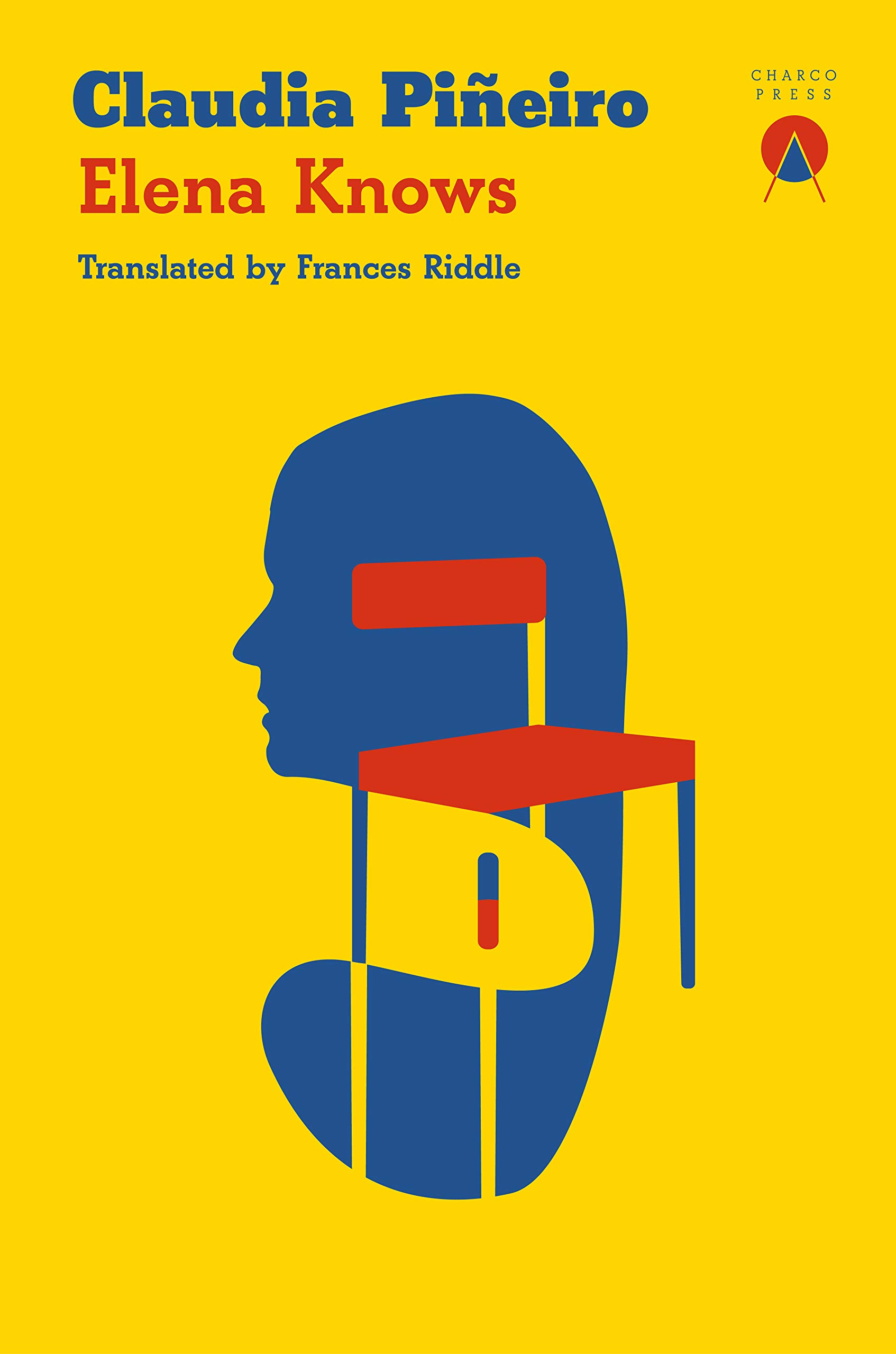


Elena Knows by Claudia Piñeiro, translated from Spanish by Frances Riddle, 173 pages
I liked but did not love this one. It got a bit message-y at the end. The messages were important and resonated with me (violence against women, abortion access, religion, aging, disability) but it was all very heavy-handed. I loved Elena and loved the depiction of tense moments with her daughter on their annual vacation. Their interactions were difficult to read, in a good way (think Rachel Cusk, Gwendoline Riley).
Cold Enough for Snow by Jessica Au, 144 pages
Another strained mother-daughter relationship, further strained by travel, this made almost no impression on me. Sometimes a book can be a little too sparse. I think this was also going for a Cusk or Riley kind of a thing, but didn’t quite make it.
Helpmeet by Naben Ruthnum, 94 pages
This little horror book has its moments but unfortunately I pictured the uh, creature, as Krang from Teenage Mutant Ninja Turtles. Also why are so many horror books about parasites, or something growing inside you that needs to get out…it’s all just pregnancy (remembers what it was like being pregnant and giving birth)… okay actually that does make sense.
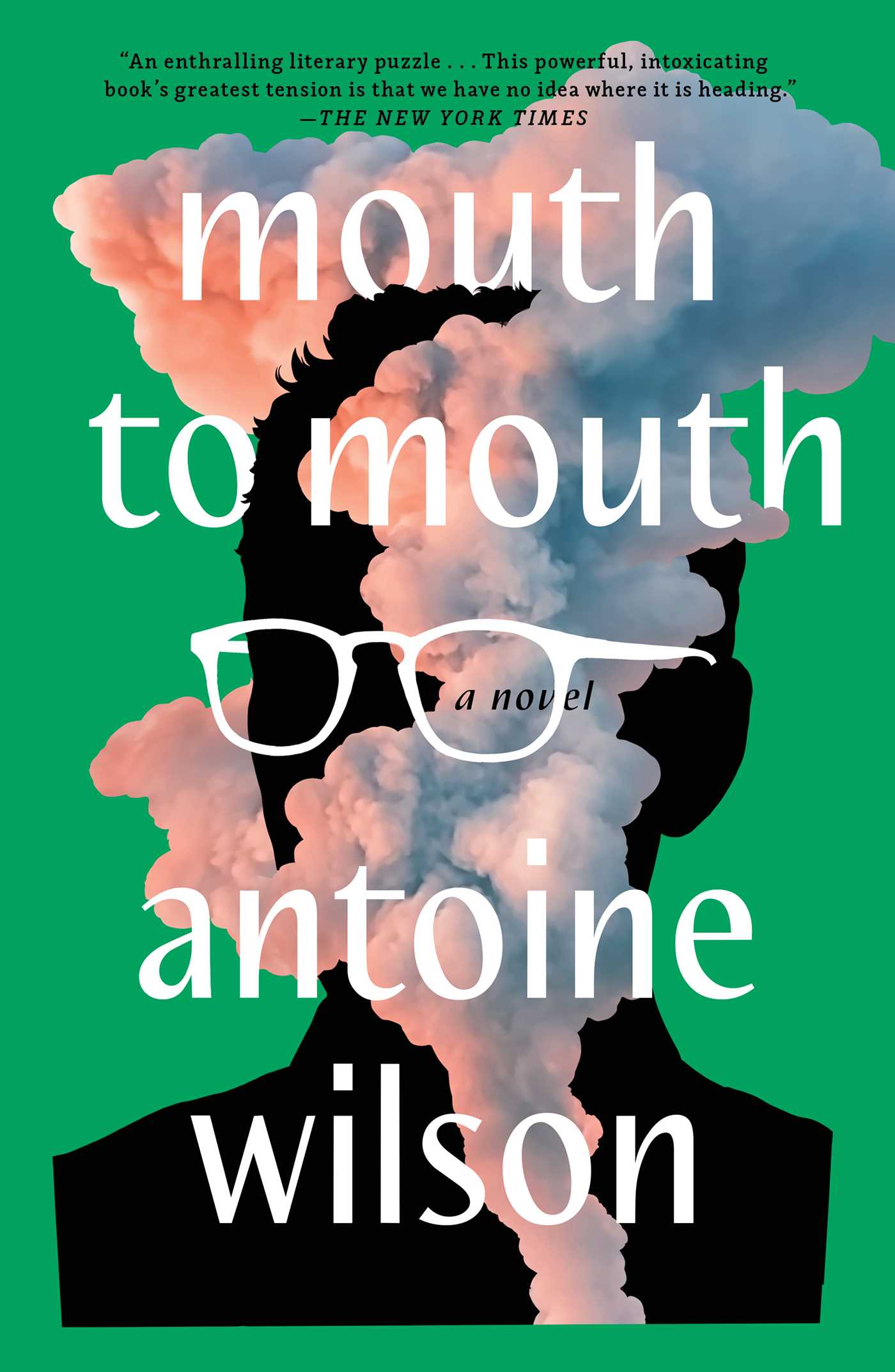
Mouth to Mouth by Antoine Wilson, 192 pages
You ever finish a book with a shocking or twisty ending, and immediately see how the whole book was building towards it, but question whether a whole book needed to be written for… that? I enjoyed reading this but was expecting it to build towards something a lot crazier. Very “so, there was a plot twist. That don’t impress-a me much.”
If I get my act together, I intend to try the buddy read for Novellas in November, Foster by Claire Keegan. It has a recent film adaptation, The Quiet Girl, perfect for my movie era, though I don’t know if I can actually view it in Canada yet.
Novellas in November: Ethan Frome by Edith Wharton

As always, I encourage you to read Cathy’s and Rebecca’s reviews. I’m down to the wire here so this will be a short comment on a short book that needs no introduction. This is the fourth and final #NovNov buddy read, and I’d like to thank hosts Cathy and Rebecca for doing a bang up job. The buddy reads were a great idea! Check out all the posts linked here.
Ethan Frome is sometimes seen as a departure from Wharton’s other works, though in the Everyman’s Library edition I read, Hermonie Lee makes a case for linking Ethan Frome, Summer, and Bunner Sisters in one volume, and not just because they’re short. They’re also about working-class heros and heroines. There’s none of the social climbing (and falling) that mark The Age of Innocence, The House of Mirth, and The Custom of the Country. Unrelenting poverty is the driving force of this story. Zeena and Mattie end up at the farm because they are both poor relations with nowhere else to go, and Ethan can’t leave even if he wanted to (and he sure does by the end) because he’s running the farm into the ground and couldn’t raise $50 if he tried (and he sure does try.)
It’s also about isolation and revenge. I was struck by the parallels between it and my all-time favourite book, Wuthering Heights. The framing device, the stark landscapes, the isolated house, the use of dialect, and most of all, the people, tied forever to the land and to a never-ending cycle of blame and regret.
The last line even echoes Wuthering Height’s iconic ending. I have a personal aversion to quoting last lines, but these are both so good, and I’m hardly spoiling anything. Feel free to stop here if you haven’t read one or both.
Continue readingNovellas in November: Territory of Light by Yuko Tsushima, translated by Geraldine Harcourt
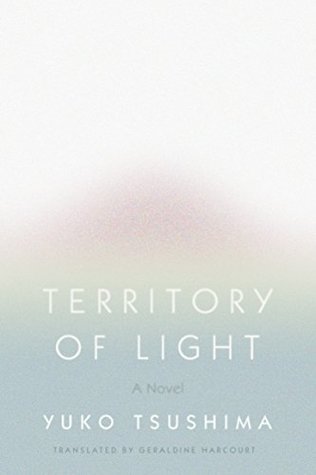
I expected this novella to land as lightly as the cover treatment – like diffuse and gentle morning light. It hit me more like a bright midday sun beam.
It’s a rare book that conveys the frustration, boredom, and drudgery of early motherhood without veering into gross-out humour or sentimentality. I don’t relate to any of the particulars of this story – I became a mother in another millennium, on another continent, and by the time my oldest was turning three, I already had another baby – but the parent-toddler struggles, at the park, at a festival, at daycare drop off, during middle of the night wake ups, are instantly recognizable.
Continue readingNovellas in November: The Story of My Life by Helen Keller
The Story of My Life is the short nonfiction pick for Novellas in November. As always, please refer to Cathy and Rebecca for more thorough reviews.

I was briefly obsessed with Helen Keller as a child. Is this still a phase girls go through in elementary school? There was one book in particular that I read over and over, maybe in grade three or four. I don’t know which book it was (plenty to choose from), but it wasn’t this one.
I was taken with Helen’s childhood: the illness that left her blind and deaf, the wild tantrums of her early years, and her sudden awakening to the world on the arrival of her teacher, Anne Sullivan. So taken that I “borrowed” a few phrases from whatever book I was reading and used them in an assignment, and got called out by my teacher. My memory is not as good as Helen’s, so I couldn’t tell you all the particulars, but I remember the phrase I used was something that ended in “she bolted from the room”. My teacher said it sounded like I copied it, which I did, but I was very indignant; isn’t it okay to learn a new way to say something, and use it somewhere else? I remember the feeling to this day.
Imagine my surprise when I learned that Helen Keller was also called out by a teacher for plagiarizing, and that it was a pivotal moment in her life.
Continue readingNovellas in November 2019 Round Up #1
Halfway through #NovNov ’19, I don’t have as much to show for it as in previous years. Blame it on the Ducks. It has been an eclectic reading month so far, with a dud, a local success, a backlash, and a reading hangover that has me reaching for nonfiction to clear my head.



 Reading in Bed