Hard Times by Charles Dickens

Hard Times is #888 on the 1001 Books You Must Read Before You Die list. See the whole list and my progress here. This summer, I’m reading from the list for my 20 Books of Summer challenge, and instead of straight reviews, I’m going to compare the 1001 Books write ups with my own impressions.

Hard Times is one of the lesser known Dickens novels. It’s been on my shelf for 10+ years, and I’ve started it more than once, without getting much farther than the schoolroom chapters, where the teacher is named “Mr. McChokemchild.” A library ebook helped me get past the small font in my Penguin Popular Classics edition, and I soon wondered why no one told me this book has so much more than school children. It’s a classic Victorian social novel, tackling class, unionization, alcohol abuse, gambling, infidelity, and more. It’s sort of a North and South, with more humour and less romance.

Well, someone did try to tell me. The 1001 Books Hard Times write up not only mentions Gaskell (in an unfavourable comparison) but the entry is right beside the entry for North and South, highlighting the fact that these stories were being serialized at pretty much the exact same time – what a time to be alive! You know, if you weren’t a factory worker… or a woman…

The write up also would have helped me make the connection to utilitarianism, a philosophy I’ve been interested in since reading The Brothers Karamazov (and since going down several rabbit holes related to the current crop of tech-bro philosophers who are rebranding it as Effective Altruism). This theme is first explored in this early classroom scenes – what is an education for? What’s the point of “wondering” when you can memorize facts?

The write up portrays Hard Times as a bit of an unfocused look at these various social issues, and I guess it is, but compared to Dickens’ known works like A Tale of Two Cities, I found this one more satisfying. It read faster (not only because it’s significantly shorter), the characters were more varied, and while some were one-dimensional “bad guys”, most had some depth and showed some growth, even some of the female characters. And it’s just very funny. The circus ringmaster, Mr. Sleary, with his lisp and his rolling glass eye, was played for comic relief, but he speaks the line that sums up the book:

‘People must be amuthed, Thquire, thomehow…they can’t be alwayth a working, nor yet they can’t be alwayth a learning. Make the betht of uth; not the wurth.’

Chapter VI

To me, that’s as good as “It is a far, far better thing that I do, than I have ever done; it is a far, far better rest that I go to than I have ever known” (though perhaps not as good as “the best of times” etc.) I’m glad I finally read this. For me, that’s four down, six to go for the 1001 Books-worthy Dickens novels.

1001 Books

International Booker Prize 2023 mini reviews

Here are my brief thoughts on the books I’ve read so far, and my plans heading into the home stretch. It’s been nice to get back into the IBP this year, after a half-hearted 2022, skipping 2021 entirely, and getting derailed after a strong start in March of 2020. Not all the books have been nice though!

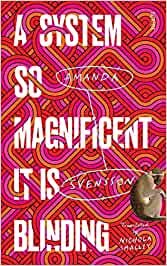
A System So Magnificent It Is Blinding by Amanda Svensson, translated from the Swedish by Nichola Smalley
This book is trying to be so many things, but ends up being a big old mess. I saw a reviewer compare Svensson to Franzen and yes, there are some similar themes around family, activism, and shadowy bureaucracy, but that’s not all there is to this book. Svennson adds: triplets! Babies switched at birth! Possible incest! Suicide! Cults! Monkeys! Infidelity! Depression! Eating disorders! Synesthesia! Child actresses! Peacock feathers! I’m sure I missed several recurring themes. All this stuff took attention away from the main family unit, which, Franzen would never.

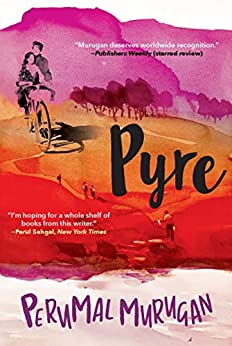
Pyre by Perumal Murugan, translated from the Tamil by Aniruddhan Vasudevan
I said what I needed to say in this post. This story was too opaque for me, so I felt a remove, but I would try more from the author, particularly The Story of a Goat.

The Birthday Party by Laurent Mauvignier, translated from the French by Daniel Levin Becker
People talk about this book like it’s a thriller but it’s a lot more… but also a lot less. More because of the complex language and extremely close narration, and less because when the story finally tips over from expectation and dread to action, it kind of falls apart. The meandering style works very well for revealing shocking parts of the character’s thought process and history, but a lot less well for shocking violence and split-second decisions. Then, the ending left me with more questions than answers, and not in a good way.

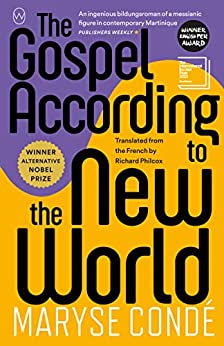
The Gospel According to the New World by Maryse Condé, translated from the French by Richard Philcox
I was hyped for this book because I’ve enjoyed both Caribbean literature and Bible retellings in the past. Then I read some reviews that said this was too close of a retelling, with not much new to say. That might be true, but, I loved it. At times funny and absurd, it was mostly just calming and meditative. Reading this felt like a respite from life. Which is sort of how my religious grandparents would talk about their faith, so, there’s that! Condé is a fascinating person, and I wish I could find an English translation of her Wuthering Heights retelling (which is the equivalent of the Bible for me).

On deck, I have copies of Is Mother Dead by Vigdis Hjorth, translated from the Norwegian by Charlotte Barslund, and Time Shelter by Georgi Gospodinov, translated from the Bulgarian by Angela Rodel out from the library. Is Mother Dead didn’t make the shortlist, but it’s a shorter (and beautiful, with full colour endpapers) book so I will try to get through it. I’ve read a few raves about Time Shelter. My copy of Boulder by Eva Baltasar, translated from the Catalan by Julia Sanches finally arrived, and I’m waiting on Whale by Cheon Myeong-kwan, translated from the Korean by Chi-Young Kim… and that’ll do it for me, unless something not listed here takes the prize, as I always like to read the winner!

How to read the 2023 International Booker Prize longlist in Canada

2023 will go down as the year everyone’s International Booker Prize predictions were wrong. I was surprised not to see Mieko Kawakami, Han Kang, Yōko Tawada, or Sayaka Murata, and I was so sure we’d see the new Can Xue, Barefoot Doctor, that I shelled out nearly $30 for the ebook!

I love this list though. It’s the most accessible one I’ve seen in years, meaning that even in Canada, you can read the whole longlist ahead of the prize being awarded, if you want to. You could buy half the longlist right now from Canadian retailers. You could buy the whole longlist from Blackwell’s for $332.77 CAD.

These insights and more are available in my annual spreadsheet. It includes a bit of demographic info, but mostly helps you figure out where to obtain these books in Canada for the best price. My sources are noted, but generally, Canadian cover prices are from Glass Bookshop, library availability refers to Edmonton Public Library, and UK editions are from Blackwell’s. All prices are in CAD and include shipping. I didn’t bother linking to publisher’s websites this time, because for once, it’s not necessary.

I’m happy to see a nice range of languages (Tamil, Bulgarian, Catalan, and Norwegian, in addition to the usual suspects – but notably, no Japanese!) and a nice range of ages (the youngest writer is 35-year-old Amanda Svensson, while the oldest, and the oldest ever to make the list, is 89-year-old Maryse Condé – or is she 86, as Wikipedia claims?) though it’s skewing a little older this year, and very heavy on Gen X writers (seven out of 13).

I got a lot of traction (i.e. almost 100 likes) on a tweet complaining about the “creative” way book prizes present their longlists. The International Booker Prize gave us the courtesy of a text-based list, but even then, you have to click through to see the authors and translator names, so for your convenience, here’s your plain-text, detailed longlist*:

  • Ninth Building by Zou Jingzhi, translated from the Chinese by Jeremy Tiang
  • A System So Magnificent It Is Blinding by Amanda Svensson, translated from the Swedish by Nichola Smalley
  • Still Born by Guadalupe Nettel, translated from the Spanish by Rosalind Harvey
  • Pyre by Perumal Murugan, translated from the Tamil by Aniruddhan Vasudevan
  • While We Were Dreaming by Clemens Meyer, translated from the German by Katy Derbyshire
  • The Birthday Party by Laurent Mauvignier, translated from the French by Daniel Levin Becker
  • Jimi Hendrix Live in Lviv by Andrey Kurkov, translated from the Russian by Reuben Woolley
  • Is Mother Dead by Vigdis Hjorth, translated from the Norwegian by Charlotte Barslund
  • Standing Heavy by GauZ’, translated from the French by Frank Wynne
  • Time Shelter by Georgi Gospodinov, translated from the Bulgarian by Angela Rodel
  • The Gospel According to the New World by Maryse Condé, translated from the French by Richard Philcox
  • Whale by Cheon Myeong-kwan, translated from the Korean by Chi-Young Kim
  • Boulder by Eva Baltasar, translated from the Catalan by Julia Sanches

And shout out to Bookstagrammer time4reading who posted her own simple list of books plus where to source them in Canada – she’s Toronto-based, so if your library or prefered bookstore is in TO, check her out.

As always, follow the IBP Shadow Panel for reviews and Eric Karl Anderson for a peek behind the scenes (he usually gets to go to the awards ceremony, I think!)

*Not seeing any official sources for the original languages so I took my best guess!

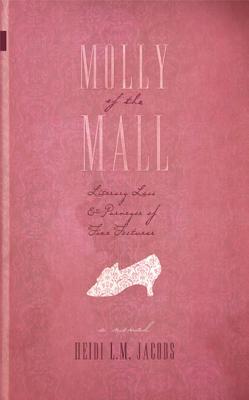
Molly of the Mall by Heidi L.M. Jacobs

Jane Austen-inspired novels are so numerous and varied that they form not just a distinct genre, but many subgenres. There are alternate points of view, prequels and sequels, genre crossovers, and modern retellings. Then there are novels that don’t adapt or retell or modernize, they simply appreciate. Molly of the Mall by Heidi L.M. Jacobs is one of these, and because it doesn’t hold too tightly to the source material, it is much more than another Austenesque novel. 

Molly is a satire, a campus novel, a bildungsroman, and a romance. It’s an appreciation of Austen, but also of Woolf, Eliot, the Brontës, Hardy, Burns, and Daniel Defoe, among many others (Molly is named after Defoe’s scandalous heroine Moll Flanders, one of many delightful literary character names.) It’s also a celebration of Edmonton as a literary city.

Molly MacGregor is an aspiring “authoress”, studying English at the University of Alberta and selling shoes at West Edmonton Mall circa 1995. This is the era of card catalogues in the library and captive peacocks in the Mall – a far cry from today’s Edmonton, and far from where Molly wants to be. She finds Edmonton too cold, too bleak, and too bland a place from which to realize her literary and romantic ambitions. She spends much of her time in imagined conversation with her favourite authors and heroines, primarily “Miss Austen.”

Austen heroines don’t always have the most useful romantic advice, though. Upon spying her crush, Molly wondered:

“What would Persuasion’s Anne Elliot do now”? but then realized she would nod cordially, and proceed walking down the Mall, using her sensible millinery to prevent meaningful eye contact with a man not formally introduced to her. This might be why I so rarely summon Persuasion in my daily life decisions.

Austen’s oft-quoted writing advice, that “three or four families in a Country Village is the very thing to work on,” isn’t much help either. Molly laments that “coming from Edmonton was strike one for an aspiring writer.”

But Edmonton books are just as varied and diverse as Austen-inspired books, and as relevant to Molly’s interests, covering campus life (Michael Hingston’s The Dilettantes), retail ennui (Shawna Lemay’s Rumi and the Red Handbag), and West Edmonton Mall itself (the title story of Dina Del Bucchia’s Don’t Tell Me What To Do). There are even Janites in Edmonton: Melanie Kerr wrote Pride and Prejudice prequel Follies Past, and Krista D. Ball puts Lizzie and Darcy modern-day McCauley in First (Wrong) Impressions.

None of these books had been published in 1995, though. To paraphrase Virginia Woolf, another of her literary confidants, Molly would have to write the great Edmonton novel herself.

Molly aspires to serious literature, with plans for a “watershed Canadian coming-of-age novel,” and a “historically accurate, gothic bodice-ripper set in Saskatchewan”, but this novel is a comedy. Molly’s modern-day woes and Regency-era sensibilities make for delightfully funny observations about subjects as diverse as academia, consumerism, and the dateability of Oasis’ Gallagher brothers. The Edmonton-specific details are a treat, and mall workers the world over will relate to the staff rivalries, tedious closing shifts, and ubiquitous Boney M. Christmas music.

The humour rarely misses, though Molly’s novelistic plans, complete with comparisons between classic literary tropes and their Canadian equivalents (Heroines and Heifers, Passions and Pastures) are really only funny the first couple of times. Much better are Molly’s flights of fancy about classic literature, such as this Middlemarch-inspired daydream:

Passing Mall Security, I imagined bursting, breathlessly, into their inner sanctum, declaring, “This is urgent! I must address the shoppers! No time to explain.” I imagine they’d scratch their matching shaved heads and then hand over the PA system mic. “Attention shoppers,” I would start, “I have been reading George Eliot’s Middlemarch non-stop for the past three weeks, and I must tell you this. After 593 pages, Will Ladislaw has just kissed Dorothea. What does this have to do with you? It has everything to do with you. This is literature’s finest kiss. Here, let me read it to you.”

All this satire is hung on a rather low-stakes romantic plot. Molly has many suitors, but they’re nearly interchangeable, except for the “turtleneck” (Molly’s term for her pretentious classmates) who makes unwanted advances and is never heard from again. One of her admirers is her own sister’s ex-boyfriend, but this is never addressed. This seems like a situation rife for conflict in a book that could have used more of it. 

The romance eventually comes to a neat conclusion, allowing the literary to take centre stage. Jacobs takes a real gamble in the last act, having Molly complete a year-end assignment on a “cheese poet” that is almost too outlandish, and too specifically Canadian, but she pulls it off. The details are best discovered by the reader, but it not only works as a comedic triumph, it also proves that Molly can indeed write from and about Edmonton, and that she doesn’t have to fall in with tired “nature and survival” CanLit tropes. A great Canadian novel can be about anything, even a shoe store in Phase III of West Edmonton Mall. It can even be funny.

2022 Year in review

Georges Croegaert, “Reading”, 1890 (source)

I read slightly fewer books this year (40) than the previous few, but given the fulfilment of my resolution to watch more movies (49, at least ten times more than any recent year, follow along on Letterboxd), I’d say I broke even.

I’ve heard it said that when it comes to resolutions and habits, it’s easier to stop something than to start; after all, what could be easier than not doing something? But it’s so much more fun to add more of what you love. That was my mindset this year, when I decided to add movies (back) into my life, which had unpredictable and wonderful consequences to say the least.

I’m not sure what I want to add in 2023. Writing, maybe? I didn’t post a single traditional book review this year. Much as I enjoy lighter and funnier writing about books, there’s something special about a real, formal book review. I recently discovered a review I wrote back in 2021, for a publication that never went forward (will post it here soon!) and remembered how much I like the close reading, the research, and the writing and rewriting process.

I also hosted a readalong for the first time in a few years, and while it was technically a bust (no one joined except my sister and brother in law!) it reminded me how much I love to immerse myself in a topic, and allow myself to follow various rabbit holes and threads.

Aside from books, I’m submitting a piece to a publication for the first time in a long time, about two subjects that are special to me: malls and food. I don’t really expect it to be accepted, but I’m getting the same buzz (and same frustration!) of over-researching and over-writing, in the hopes that I can pare it down into something readable.

So perhaps, if 2020 and 2021 were years of reading and survival, and 2022 was a year of pleasure and movies, 2023 can be all of those things and more, and I can write about them?

Anyway, here are my favourite books of the year and some light stats. I already wrote about my worst books of the year, a new tradition!

Top ten books of 2022

  • Convenience Store Woman by Sayaka Murata, translated by Ginny Tapley Takamori (my hold on Life Ceremony is due in soon, thank goodness)
  • Larry’s Party by Carol Shields
  • Hateship, Friendship, Courtship, Loveship, Marriage by Alice Munro
  • The Secret History by Donna Tartt (new book when???)
  • The Chiffon Trenches by Andre Leon Talley
  • The Books of Jacob by Olga Tokarcuk, translated by Jennifer Croft
  • Either/Or by Elif Batuman
  • Ducks: Two Years in the Oil Sands by Kate Beaton
  • Quartet by Jean Rhys
  • A tie, because these are really short stories and only books for marketing/reading goals purposes: Foster by Claire Keegan and The English Understand Wool by Helen DeWitt

Book of the year

And resurrecting another Reading in Bed tradition, I hereby name my book of the year to be Either/Or by Elif Batuman. Hilarious, sad, and meta, Either/Or is both a realistic reflection of life in the 90s and a glimpse of a world that could only belong to Selin. I’m not ready to leave her behind and I hope it’s not true that this is it; Selin has two more years of undergrad left and I demand a full tetralogy! I knew this would be my book of the year when I read a very valid criticism that had to do with an inaccurate reference to an episode of Sex and the City, the sort of thing that would usually drive me nuts, and immediately thought “nope, Elif is allowed to do what she wants!”

Stats

  • 25/40 woman and nonbinary authors (more than last year and well represented in my top ten)
  • 9/40 in translation (bit more than last year)
  • 12/40 Canadian, much stronger showing than last year

Nonfiction I read in 2022 and am talking about in November #NonFicNov

The same circumstances and reasons that prevented me from fully participating in Novellas in November meant I did not do the full Nonfiction November experience either, despite really enjoying it last year. I did read some though. Shout out to hosts What’s Nonfiction, Doing Dewey, Plucked from the Stacks, She Seeks Nonfiction, and The OC Book Girl for running extensive themes and challenges that offer something for everyone. Even a lazy blogger like me! Read on for brief reviews:

Continue reading

The Superfluous Brothers Karamazov Read-Along Part 3: Father Killer, Qu’est-ce que c’est?

If you find yourself in perplexity, go to the master post for the read-along schedule.

Reading Dostoyevsky can feel a bit like a Grandpa Simpson story at times. Back to the murder plot, please!

In Part 3, after some preliminaries with Alyosha, who is disillusioned when his hero Elder Zozima turns out to be just human after all (i.e. smelly), and after learning the phrase “to give an onion” (which was the style at the time) we finally get to Mitya’s money-making schemes, murder, and mayhem. When then kids say “last night was a movie”, I think they were talking about Mitya’s post-murder “spree” to Mokroye, complete with champagne, singing peasants, crooked card games, and white-girl-wasted Grushenka.

Speaking of disillusionment, I really felt for Grushenka when she realized the guy she had been pining for these past five years is… just a guy. With an annoying friend who won’t stop hanging around. It happens to the best of us.

In my scramble to catch up with the reading (don’t ask where I am in Part 4), I’ve been bouncing back and forth between the P&V and the McDuff translations, and was struck by a difference in what Grigory calls Mitya moments after the murder: P&V translate it as “Parricide!” while McDuff has him shout “Father-murderer!” This sums up the difference between the two translations, for me. P&V never hesitate to use an obscure or old fashioned word, but somehow, I think it works better than the awkwardly-hyphenated “father-killer”.

The latter chapters of Part 3 are a police procedural, with various officials questioning the drunk and disorderly crew at Mokroye. Things aren’t looking good for Mitya, and I don’t read murder mysteries much, so I can’t tell if the eventual court case will resolve itself the obvious way, or with a twist, or maybe not resolve at all.

This all reminds me of my favourite real-life parricide, Dennis Oland. If you’re not Canadian (and even if you are), you might have missed this story (I read about it in Shadow of a Doubt, a true crime book, in 2017). Prominent Saint John business man Richard Oland was violently murdered by his son Dennis in 2011… probably. All the evidence pointed to Dennis from the beginning, like Mitya, and Richard was not well liked, carried on with mistresses, and was known to be stingy, like Fyodor.  The book outlines in great detail how Dennis felt entitled to financial help from his dad – and how Richard was increasingly reluctant to give Dennis money. At the time of the murder, Dennis was sinking fast (he needed way more than Mitya’s 3000 roubles). There aren’t any brothers, and as far as I know there was no Grushenka between them, but both cases seem to point squarely at the son, with the exception of a few details. In fact, with the Olands, one of those details involves a door and whether it was open or closed – just like the gate at Fyodor’s house.

I get the feeling that the Karamazov case might end up like the Oland one – Dennis was convicted and went to jail, but was found not guilty on appeal. Officially, it’s resolved, but to this day I go back and forth between thinking he *must* have done it, and thinking there might be another explanation. I assume the Karamazov story will resolve too, but will we find out what truly happened?

(Another difference worth noting is that Dennis did not go on a “spree” after the murder. Security camera footage showed that he went grocery shopping, and, in true maritimer fashion, to Tim Hortons.)

Anyway, onward to Part 4, where we suddenly turn the story back to a bunch of school kids, for some reason. Dostoyevsky is trying my patience again!

The Superfluous Brothers Karamazov Read-Along Part 2: Was Dostoyevsky a longtermist?

If you find yourself in perplexity, go to the master post for the read-along schedule.

While feverishly reading Part II to keep this read-along on track, I took a Twitter break and stumbled upon this book review. The book is called What We Owe the Future by William MacAskill, a prominent “longtermist”, a philosophy associated with Elon Musk and other tech-bro luminaries. The quote that caught my eye was:

According to a study commissioned by MacAskill, however, even in the worst-case scenario—a nuclear war that kills 99 percent of us—society would likely survive. The future trillions would be safe. The same goes for climate change. MacAskill is upbeat about our chances of surviving seven degrees of warming or worse: “even with fifteen degrees of warming,” he contends, “the heat would not pass lethal limits for crops in most regions.

Longtermism says that ethical decisions should be made with the long-term future in mind. In application, this seems to mean using math and logic to discount the wellbeing of people who are alive today, prioritizing anything that makes it even slightly more likely future humans get to do things like colonize other planets, or upload their consciousnesses into a simulation (assuming we’re not already in one!)

MacAskill is saying that nuclear holocaust and climate disaster, and the horrendous suffering that ensue, aren’t that big a deal, as long as some humans survive and have “good enough” lives. 

As I went down this rabbit hole, I started seeing some connections to some of Dostoyevsky’s favourite themes, as one does.

  • Longtermism is based on utilitarianism, a philosophy that says right and wrong should be based on logical outcomes, as opposed to, say, religious doctrine. Dostoyevsky looks at utilitarianism in many of his novels, famously in Crime and Punishment. Raskolnikov tells himself that is was okay for him to murder the old pawnbroker because of the pain and suffering she caused, though a couple mental breakdowns later, he’s not so sure. 
  • Longtermism is also based on effective altruism, a much newer philosophy of the 2000s that suggests people use logical outcomes to figure out how to do the most good, and then do that. Using this framework, it’s okay to make money doing unethical things, if you donate some of it to good causes. This reminded me of how Dostoyevsky points out the hypocrisy inherent in a lot of charity in The Brothers Karamazov. For example, Zozima’s mentor donates the proceeds of his heinous murder-robbery to an almshouse “on purpose to ease his conscience regarding the theft.” 

To be very clear, in this era of “problematic authors”, Dostoyevsky was not exactly a proponent of utilitarianism, nor am I suggesting he’d be a proponent of effective altruism or longtermism, despite my click-bait title. I just can’t help but wonder [/Carrie Bradshaw voice] if he’d create a longtermist character if he were writing today. 

And maybe he sort of did, in Elder Zozima.

In Book 6, “The Russian Monk”, we hear Elder Zozima’s life story as interpreted by Alyosha. The parable “Can One Be the Judge of One’ Fellow Creatures? Of Faith to the End” first got me thinking about how Dostoyevsky would have had much to say about social media outrage cycles (and not for the first time), with the Elder advising us to stop doomscrolling and do something useful with our lives: 

“If the villainy of people arouses indignation and insurmountable grief in you, to the point that you desire to revenge yourself upon the villains, fear that feeling most of all; go at once and seek torments for yourself, as if you yourself were guilty of their villainy… you will understand that you, too, are guilty, for your might have shone to the villains, even like the only sinless One, but you did not. If you had shone, your light would lighted the way for others, and the one who did villainy would perhaps not have done so in your light. And even if you do shine, but see that people are not saved even with your light, remain steadfast, and do not doubt the power of heavenly light; believe that if they are not saved now, they will be saved later. And if they are not saved, their sons will be saved…your work is for the whole, your deed is for the future.

Pevear and Volokhonsky translation

Then it got me thinking about longtermism, and how it’s similar to to religious faith, even though the longtermists probably don’t see it that way. These guys are more Ivan than Alyosha. But religious and longtermist worldviews are both about sacrifice in the present for a future that may never come to pass.

And I can’t help noticing that these guys are all, well guys: the priests and monks demanding we sacrifice and be faithful, awaiting reward in heaven, and the philosophers demanding we put the interests of hypothetical, future people ahead of actual, living people (which, incidentally, sounds like a religious “pro-life” talking point).

It’s also pretty convenient that the Elders preach, but don’t have to deal with the messy business of living in society. Similarly, these overwhelmingly male philosophers want the future population to balloon into the “trillions”, but won’t be the ones carrying, giving birth to, or caring for all these babies (unless they’re quietly working on some sort of incubator pod in between rocket launches.)

Dostoyevsky died 135 years before “longtermism” became a thing, but he certainly thought about the future, how to do good, and how to determine right from wrong. Maybe longtermism is descendant of the nihilism, utilitarianism, and atheism he wrote about so astutely. Sadly, he didn’t live long enough to write a planned sequel to The Brothers Karamazov, let alone a novel satirizing Millennial philosophy bros. 

(For an even more critical overview of longtermism, check out this article, which, not surprisingly, ties longtermism to men’s rights advocacy, cryptocurrency, and eugenics. Ferris Bueller was right!)

The Superfluous Brothers Karamazov Read-Along Interlude: Nobody expects the Spanish Inquisition

And apparently, nobody expects their read-along to be derailed by summer vacation. I missed this Monday’s post on Part II due to travel, but I am done the reading, and have surprisingly little to say about Ivan’s Spanish Inquisition story, “The Grand Inquisitor”, despite it being the best-known part of The Brothers K, and thought to sum up its themes.

I’m more interested in talking about “The Russian Monk” chapter, where we learn the life story of the Elder Zozima – surprisingly, as it takes us away from the love triangles and murder aspects of the story.

So while I try to come up with something intelligent to say about that, and essentially bump the whole read-along schedule out by a week, talk amongst yourselves…

The Brothers Karamazov: A Superfluous Read-along

Brothers and sisters, are you ready?

Getting through summer 2022

Announcing the sixth Reading in Bed summer read-along, and the first one since 2018, when we went Full Monte. In the years before that, we read about whales, tales, the ton, and Napoleon. This year we turn to The Brothers Karamazov, which as far as I know, doesn’t include any of these elements, but with over 900 pages in my edition, it certainly could.

I call this a “superfluous” read-along for a few reasons:

  • As in the trope: The “superfluous man” is a common trope in Russian literature that I’ve wrote about before. It’s basically a Byronic hero, and was popularised in Russia by Dostoyevsky’s arch-enemy Turgenev. In a story of four brothers, I’m guessing at least one of them is a little superfluous. 
  • As in too much: There were so many Dostoyevsky read-alongs and events in 2021, because it was his bicentenary, that running one now does feel a little superfluous; but if you were also too busy doom-scrolling, now is the time!
  • As in unnecessary: Several bloggers have expressed ambivalence about reading Russian literature while Russia is invading Ukraine, notably the late Jenny Colvin of Reading Envy (see episode 243), but like her, I’ve come to the conclusion that reading about something is probably a pretty neutral endeavor.

In other words, this read-along is already a day late, a dollar short, and possibly in poor taste. And yet it somehow feels like just the right time to read The Brothers Karamazov.

I’ve been reading through Dostoyevsky’s catalogue for about the last ten years. I started with The Idiot, which I found rather challenging (let’s blame baby brain, for some reason I chose to read this when Henry was about four months old), then moved on to some shorter works (my favourite is still Notes From the Underground), then Crime and Punishment and Demons in recent years. If The Brothers Karamazov is a culmination of these major and minor works, it should include lots of religious and philosophical questions, family drama, political intrigue, and, of course, murder.

Schedule

I will attempt to post according to this schedule, broken down here into even smaller chunks for those who like to track their progress (I borrowed heavily from Rincey Reads to make this daily tracker):

This amounts to an average of about 36 pages per day, if you start reading August 1, though I encourage you to start early!

Editions

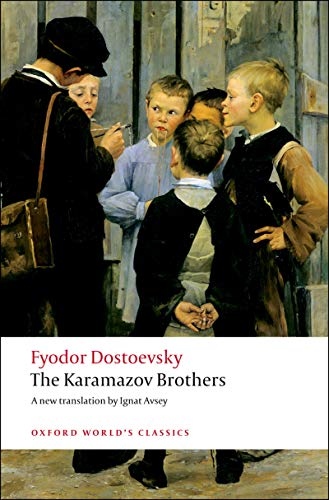
I chose the Penguin Classics edition, translated by David McDuff. I’d like to say I have strong evidence that this is the best translation, but really, I’d like it to match all my other Penguin Dostoyevskys! I will also purchase the bicentennial edition ebook, translated by Richard Pevear and Larissa Volokhonsky, because paper + ebook is my only hope with this aggressive schedule, and I like to compare different translations. I generally find P&V a little obscure in their wording choices but pretty easy once you’re used to it. I’ve heard mixed things about the Oxford World Classics edition, translated by Ignat Avsey, supposedly more readable but not overly faithful to the Russian.

Let’s get ready

Pick your edition, clear your schedule, and participate as much or as little as you like; as host, I will put weekly posts up and hope to chat with you in the comment section. You can post your own reflections on whatever platform you like. Twitter hashtags don’t usually take off for these things but let’s go with #TheBrothersK22.

Between now and August 1 I will share some resources and past read-alongs for inspiration, while clearing the decks to prepare for my favourite kind of summer reading: big, translated, and on the 1,001 Books list.