Readalong: Dragon Bound (Part Three)

dragonboundreadalongbutton-01 (1)

Why, god, why? Read this: Sign up post

I’m five days late with this post, which means no one will read it or comment on it, yet I’m up past my bedtime COMPELLED to sum up this experience. Not that I have much to say about the book. I’ll do my usual point form babbling below. It’s just that this book has made me question myself. Like Dragos, I feel that I don’t know myself anymore. Unlike Dragos, I will attempt to deal with this through writing rather than through kidnapping, murder, and boring, repetitive sex (who has the time, amiright?)

At various times in my blogging career, I’ve embraced, rejected, and mocked the “book snob” label, but overall, I’ve moved away from it. I’ve read articles about literary privilege and why adults read YA and I’ve challenged myself to read outside the classics/litfic genres. I’ve joined a book blogging community that really does embrace all kinds. My Edmonton crew of book bloggers have been instrumental in my attitude adjustment . I’ve been coming to the conclusion that snobdom in any form doesn’t really serve any purpose and usually just makes the snob look like a douchebag.

But. Continue reading

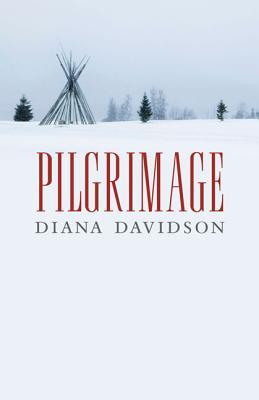
Pilgrimage by Diana Davidson

Pilgrimage by Diana Davidson | Published in 2013 by Brindle & Glass | Paperback: 288 pages | Source: Review copy from the author

Pilgrimage by Diana Davidson | Published in 2013 by Brindle & Glass | Paperback: 288 pages | Source: Review copy from the author

My rating: 3.5/5 stars
Goodreads

Synopsis:

Pilgrimage opens in the deep winter of 1891 on the Métis settlement of Lac St. Anne. Known as Manito Sakahigan in Cree, “Spirit Lake” has been renamed for the patron saint of childbirth. It is here that people journey in search of tradition, redemption, and miracles.

On this harsh and beautiful land, four interconnected people try to make a life in the colonial Northwest: Mahkesîs Cardinal, a young Métis girl pregnant by the Hudson Bay Company manager; Moira Murphy, an Irish Catholic house girl working for the Barretts; Georgina Barrett, the Anglo-Irish wife of the hbc manager who wishes for a child; and Gabriel Cardinal, Mahkesîs’ brother, who works on the Athabasca river and falls in love with Moira. Intertwined by family, desire, secrets, and violence, the characters live one tumultuous year on the Lac St. Anne settlement; a year that ends with a woman’s body abandoned in a well.

Set in a brilliant northern landscape, Pilgrimage is a moving debut novel about journeys, and women and men trying to survive the violent intimacy of a small place where two cultures intersect.

If you ever need a reminder of why access to reliable birth control is so important, read this book. Today, women go on the pill in adolescence and have IUDs inserted as soon as postpartum healing allows. We send our partners to be “snipped” or we go to the corner store and choose from an array of gimmicky condoms of dubious “for her pleasure” claims. One hundred years ago, women were at the mercy of their fertility or lack thereof. Or, more to the point, they were at the mercy of the men that might make them pregnant. Diana Davidson takes us back in time, but not far from home, to tell us about three women whose lives were changed by pregnancy. Continue reading

Preview: LitFest. Edmonton’s Nonfiction Festival

LitFest-2clr-cmyk-smallLitFest starts tomorrow! If you are thinking, “But Laura, it’s a nonfiction festival, and you barely read any nonfiction,” rest assured, LitFest organizers are pretty flexible about including authors who write all types of books, and, as a blogger, I can (maybe, almost) call myself a nonfiction writer too. Plus, I was fortunate enough to win tickets to a couple of events, so it’s a no-brainer! Here are the events I’m attending, and my top three picks for the rest of the festival.

I’m attending these events:

  1. ME ME ME! From the website: Finally. An event about the most important person in the world — YOU! Get your very own one-sentence biography from a professional author, have a photo shoot, and hear bits of brilliant memoir that will be featured later at LitFest.  Your host is the extraordinary Bridget Ryan. Oct. 16, 5:30 pm, at Bohemia.

    This is sorely needed, as my go-to pictures online are a blurry selfie and a picture from about four years ago. I’m also terrible at bios.

  1. via litfestalberta.com

    Lawrence HIll. via litfestalberta.com

    Writing in Blood: From the websiteA writer’s family is both rich source material and a minefield, especially when the material remains nonfiction instead of being transformed into fiction. This panel – Jenna Butler, Lawrence Hill and Jessica Kluthe, with moderator Elizabeth Withey – discusses their personal experiences, and offers their thoughts for others shaping a family memoir. Oct. 26, 2pm, Stanley Milner Theatre

    I’m reading Hill’s The Book of Negros right now and it’s blowing me away. I will be purchasing a paper copy so I can get it signed. I’m excited to see the other authors too. Jessica Kluthe, of course, wrote the powerful memoir Rosina the Midwife. I heard Jenna Butler read from her book of poetry, Seldom Seen Road, at the NeWest Press Spring Spectacular earlier this year. And I love Elizabeth Withey’s One Hundred Widows project – stories about earrings with no mates. Sounds weird but the execution is beautiful.

My picks of the other events:

  1. CLC Brown Bag Reading Series featuring Todd Babiak on Wednesday Oct. 23, and Lawrence Hill on Friday Oct. 25, both at noon, both in the student lounge at the Old Arts Building, University of Alberta. No explanation needed, right? It’s free and it’s two awesome authors! I hope to make it to one or both of these.
  2. Dan Savage. Oct. 21, 7pm, Winspear Centre. I used to read his column in Vue (or was it See?) along with Josey Vogels’ “My Messy Bedroom” while riding the bus to and from University, hoping that people didn’t think I was checking out the escort ads. I’d love to see Savage say “DTMF” in person.
  3. Digital Tools for Writers with Omar Mouallem, Saturday Oct. 26 at 10am, Stanley Milner Library. Really sad I’m going to miss this one.  Someone go and take notes, okay? It’s free!

See you there, #yegwrites peeps!

Readalong: Dragon Bound (Part Two)

dragonboundreadalongbutton-01 (1)

Why am I reading this? That’s question I’ve asked myself a few times. Be informed: Sign up post

I have been getting pretty personal on the blog lately. Here I go again! Rather than go snarky this week (which fellow read-alongers have got covered, and they do it so well,) I’m going to talk about the bits that made me uncomfortable.

My first couple of serious relationships were emotionally abusive. At the time, I would have said the same things Pia says about Dragos, “he’s controlling” or “he’s just really jealous,” and of course “it’s just because he loves me so much.” These “rules” are really familiar to me:

  • Pia isn’t allowed to go anywhere on her own. When the elf dude invites Pia to visit him, Dragos literally puts himself in front of her.
  • Pia isn’t allowed to have secrets. How many times does Dragos harp on knowing about her mom? She’s not allowed to have an inner life or anything that belongs to her – NOT EVEN HER OWN MEMORIES.
  • Pia is only allowed to have friends that Dragos pre-approves. She’s allowed to hang out with the sentries and Tricks. These are all people who are more loyal to Dragos than they are to her.
  • Until she isn’t. Even when the friends are pre-approved, if they like her *too* much, it’s not okay. The section cuts off just before Dragos flies off the handle because he catches her sparring with his bros (which he suggested she do!) This was the most triggering scene for me – remembering so many fights about who I was friends with, what I was doing with them, does this guy like you, did you sit beside him, did he touch you, on and on – and this was the “pre-approved” friends! Forget anyone I knew in the past.

I’ve been reading reviews on Goodreads and they’re full of women swooning over how Dragos is so “alpha” and “possessive” and “stalkerific” and I’m going to assume none of these women have been in an actual relationship like this, or else they’re still stuck in one, because it’s not fun, it’s not romantic, and it is abuse.

Okay. Let’s not end on a heavy note. The Good, The Bad, and The WTF worked pretty well last week, so let’s go:

samothrace

The Winged Victory of Samothrace

The Good

  • Pia “shutting down.” This was realistic – I like that she is portrayed as having limits and not being able to push through like some kind of super hero.
  • I liked the idea of the Elven Wafer thingies, except for the fact that they never come up again. Though I kept thinking of “they’re wafery thin!”
  • I appreciate that the first sex scene wasn’t the usual man-on-top penis-in-vagina sex for 2 minutes = multiple orgasms.
  • Enjoyed drunk-Pia and drunk-Tricks. I totally made a flow chart of who slept with who when I worked at the mall (Everyone with everyone. It was gross.)
  • This is one of the few passages I genuinely liked in terms of the actual writing: “An intact sister to the damaged Winged Victory of Samothrace, housed at the Louvre, the sculpture depicted a beautiful, powerful goddess with a stern face. She was draped in flowing robes, with her great wings swept high into the air behind her. She held a sword in one hand, while the other cupped her mouth as she called a battle cry to unseen troops. The statue was from ancient Greece, but the inscription in the modern pedestal was in Latin, and very simple. REGNARE. To reign.”

The Bad

  • Of course the goblins leave Pia and Dragos alone and unguarded. Of course.
  • Emo Dragos: “Maybe you will someday, just as soon as I understand myself.” Bitch please.
  • The creep factor. The fact that Dragos had all of her belongings moved into his penthouse is super disturbing. Later than day, he removes her clothes while she’s sleeping! NOPE NOT OKAY!
  • The obvious set up (for a sequel?) that Pia will become the head of PR for a multinational company. I’m sure her bartending experience will be really helpful there.
  • The sex scenes are boring as hell. What does it say about me when a dragon sex book is too vanilla for my liking? Seriously though, it’s like every romance/erotica I read is either WAY too boring (50 Shades, this one) or WAY WAY WAY over the line (The Claiming of Sleeping Beauty.) Is anyone writing sex scenes that are not totally boring but also not totally disgusting?

The WTF

  • There’s a lot of hissing when they have sex. Do dragons hiss? Because I’m picturing a cat hissing and it’s pretty hilarious.
  • Pia is super impressed by the vegan meal she gets even though it has no protein which is a major pet peeve of real actual vegans. Throw some beans or tofu in there, for god’s sake!
  • Presented without comment: “She looked into his eyes as she curved a hand around the broad mushroom head and stroked. “

Tune in next week for the merciful end.

MaddAddam Series by Margaret Atwood: A Reading Soundtrack

I am always late to the party.  I didn’t figure out that Twitter was good for more than traffic updates till 2011. I still haven’t watched the last season of Breaking Bad. And I almost never read “it” books when they are first published.

Time was on my side with MaddAddam, the finale in the series of the same name. Reading in Winter hosted a read-along in August, which gave me just enough time to squeeze in The Year of the Flood before MaddAddam hit the streets. I was on the Kobo bookstore before I got out of bed on August 27th, and was finished five days later.

FINALLY, I could talk about the book-flavour-of-the-week!  Except, I didn’t. The amount of press for this novel was huge, and I found myself overwhelmed with reviews and interviews and career retrospectives – I was speechless. What could I possibly say that wasn’t already being said and written and tweeted?

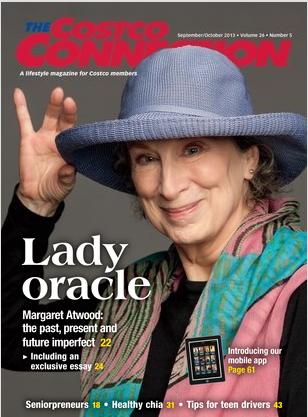
She was on the cover of a Costco flyer, for god's sake.

She was on the cover of a Costco flyer, for god’s sake.

I couldn’t take the pressure of reviewing such a high profile book. Maybe I’ll get around to a proper review of MaddAddam later. Till then, here’s a reading soundtrack. Continue reading

Readalong: Dragon Bound (Part One)

dragonboundreadalongbutton-01 (1)

It’s not too late to get in on this action: Sign up post

The most important thing to know about Dragon Bound is there is no *actual* dragon sex. Maybe this seems obvious, but in this post-Taken by the Triceratops world, I make no assumptions (for more on THAT, read Bad Lit Makes the World Go Round’s live-blog summary, NSF work, life, etc.)

No, our hero is a shape shifter, and thus far, he wears his human form when he wants to get down. Of course, his human form is “bronzed” and “massive” and “corded with strength” and six foot eight, to be precise. But you know men, haha, I bet he’s only six foot six! Oh and by the way, romance novel writers, height and dick size are not as correlated as you’d have us believe (Source: A Legit Scientific Study, “Guys I Have Slept With, 1997-Present.”)

Size-issues aside, I don’t hate the book so far. I don’t love it, either, but I’m enjoying the read-along more or less. Dragon Bound is likely benefiting being compared – fairly or not – to the only romance/erotica novels I’ve read of late: Fifty Shades of Grey and The Claiming of Sleeping Beauty. Both those gems feature underage virgin heroines (yes yes Ana is ostensibly 21 but come on, mentally she is about 13) who fall in insta-love with alpha-male types and feature sex scenes that are monotonous and of dubious consent at best. Dragon Bound‘s Pia at least displays some awareness of her sexuality in a non-giggling-teenager way, without having to attribute it to an “inner goddess.” Continue reading

Love Letters of the Angels of Death by Jennifer Quist

Love Letters of the Angels of Death by Jennifer Quist | Published in 2013 by Linda Leith | Paperback: 202 pages | Source: Review copy from publisher

Love Letters of the Angels of Death by Jennifer Quist | Published in 2013 by Linda Leith | Paperback: 202 pages | Source: Review copy from publisher

My rating: 4/5 stars

Goodreads

Synopsis:

A breathtaking literary debut, Love Letters of the Angels of Death begins as a young couple discover the remains of his mother in her mobile home. The rest of the family fall back, leaving them to reckon with the messy, unexpected death. By the time the burial is over, they understand this will always be their role: to liaise with death on behalf of people they love. They are living angels of death. All the major events in their lives – births, medical emergencies, a move to a northern boomtown, the theft of a veteran’s headstone – are viewed from this ambivalent angle. In this shadowy place, their lives unfold: fleeting moments, ordinary occasions, yet on the brink of otherworldliness. In spare, heart-stopping prose, the transient joys, fears, hopes and heartbreaks of love, marriage, and parenthood are revealed through the lens of the eternal, unfolding within the course of natural life. This is a novel for everyone who has ever been happily married — and for everyone who would like to be.

I thought this was going to be another one of those books that hits home, and it was, but not for the reasons I thought. I knew that the main character’s mother dies and that we learn about how his wife is able to support him by tuning into his needs. Quist says this of that opening scene (read the whole interview at her publisher’s web site):

The fact is, the opening scene is based on a real experience my husband and I shared when his father died unexpectedly and alone. During that disaster, I coped with my own shock and grief by making my husband’s feelings and perceptions the only things that mattered to me. It was a desperate strategy meant to get both of us through the experience as undamaged as possible. I went back into that hyper-empathetic frame of mind to write the first chapter of the novel. I’d been there before. The rest of the book – the fiction – evolved out of that truth.

I figured it was the story of a happy marriage made even happier by a traumatic event. That’s… not how it works for me. My husband lost his father four years ago, just three weeks before the birth of our first child, which was traumatic and accompanied by postpartum depression. We turned inward rather than toward each other. Neither of us were good spouses during that time. So, I was prepared for a literary smack upside the head – why didn’t this make us stronger? Why couldn’t I put my needs aside when my husband was grieving? Why couldn’t he see that I was struggling too?

But the book wasn’t about smack downs at all. Nor was it a marriage manual (though Quist gives some great pointers here.) It was, duh, a story, and once I got over the second-person perspective I was immersed and not worrying about the state of my marriage. Love Letters speaks directly to my tastes in many ways – the prairie and maritime settings, the morbidity, the Catholic relics, the heroine who is most definitely a feminist and shares my incapacitating fear of bugs (if I ever see a tar sand beetle I will die.) Continue reading

Reading Roundup: September 2013

My poor books are sitting in a laundry basket. Someone come put my new IKEA bookshelves together, please!

My poor books are sitting in a laundry basket. Someone come put my new IKEA bookshelves together, please!

September: The Most Bookish of Months. Book events were attended, long-awaited books were released, and award long-lists were revealed. Let’s get to it!

Book Events:
I attended four book events this month, including one on my husband’s birthday, in case you were curious about my priorities in life.

  • The Dilettantes was up first, and it was like my Twitter stream had come to life, complete with awkward “do I know you” moments. The Edmonton Book Bloggers were there in full force. Author Michael Hingston read his book and it was even funnier read aloud. Maybe do an audio version?
  • Diana Davidson‘s launch for Pilgrimage drew a similar crowd and I hear her book sold out. My review is coming soon.
  • You can read about Jennifer Quist‘s tour of Alberta for Love Letters of the Angels of Death here. Her event at drew a smaller crowd, but it made for an intimate reading – kind of appropriate for the subject matter. You should also know that Jennifer and I are on a hugging basis now.
  • Todd Babiak‘s event for Come Barbarians was weird. No reading, and a much different crowd than the first three: older and better dressed. Kristilyn and I felt a little awkward. But Todd is a great speaker, and he knew who I was AND he told me that book bloggers will take over the world. Total fangirl moment – I guess I better read one of his books now! Oh and you NEED to watch his book trailer. Even if you aren’t from Edmonton and have no idea who he is. Just do it.
  • The bookish events keep coming! Shout out to Yegwrites for keeping Edmonton’s literary calendar up to date. In October I’ll be attending LitFest, including an event with Jessica Kluthe and Lawrence Hill, and hope to get more books signed on Oct. 9th with Meredith Quartermain and Fran Kimmel.

Blog News:

  • The Agnes Grey read-along has finished. This was a pretty low key read-along, where participants just comment on one master post, rather than create their own weekly posts. Gotta say, I prefer doing weekly posts. There’s more to comment on and to be honest, a bit of a competitive aspect – can I make my post funnier/weirder/more insightful/more laden with gifs than the other read-alongers? (No, I probably can’t, but it’s fun to try.)
  • Speaking of weird and read-alongs: The Dragon Bound Read-along begins. I have read the first section and I’m enjoying it, though I keep having Feminist Moral Dilemmas but that’s true of almost everything I read, not just romances.
  • I upped my reading goal from 25 to 50 books. No pressure. Continue reading

Readalong: Dragon Bound (Introduction)

dragonboundreadalongbutton-01 (1)

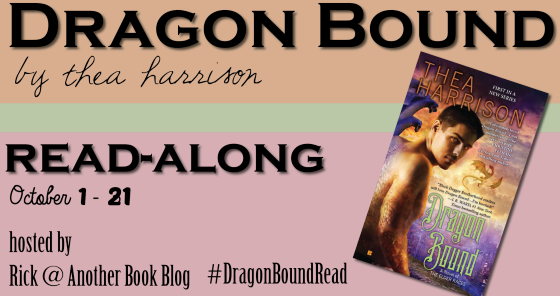
So for reasons that wouldn’t even make sense a couple of years ago (seeing as they involve Twitter,) Rick at Another Book Blog, who generally reads literary fiction, is hosting a readalong for a paranormal romance, Dragon Bound by Thea Harrison. You can read the whole story here. I joined in solidarity with Rick, but after getting a few Trogdor jokes out of my system, I find that I’m looking forward to this book without irony.

  • Dragon Bound has won multiple awards in the romance world. This is my first foray into paranormal romance and it seems like it should be a prime example of the genre.
  • I have read a couple of soul-crushingly sad books lately and need something a little more… adventuresome. Okay, okay, and dirty. This is Reading in BED after all.  (Spoiler alert: He’s a shape-shifting dragon, which makes it all a little less alarming.)
  • I’ve been craving a romance with a believable heroine. I’ve read ahead to the first chapter, and Pia swears, deals with problems herself, and *isn’t a virgin*. So, the opposite of Ana in Fifty Shades, which I subjected myself to this summer.
  • I also think Pia is a witch and I am getting definite The Craft vibes from her.
Fuck, I miss the 90s. via http://blog.misskl.com/

Fuck, I miss the 90s. via http://blog.misskl.com/

I’ll be reading and posting my reaction over the next couple weeks on Mondays. Seeing as I know next-to-nothing about the author, the book, or the genre, I don’t have much more to say at this point. Let’s get to the dragon sex already!

Oh – you should follow Another Book Blog on Twitter for live-tweeting goodness, and see his introductory post here, which is much more informative than mine.

Rosina, The Midwife by Jessica Kluthe

Rosina, The Midwife

Rosina, the Midwife by Jessica Kluthe | Published in 2013 by Brindle & Glass | Paperback: 216 pages | Source: LitFest

My rating: 4/5 stars
Goodreads
Synopsis:

Between 1870 and 1970, twenty-six million Italians left their homeland and travelled to places like Canada, Australia, and the United States, in search of work. Many of them never returned to Italy.

Rosina, the Midwife traces the author’s family history, from their roots in Calabria in the south of Italy to their new home in Canada. Against this historic background, comes the story of Rosina, a Calabrian matriarch and the author’s great-great-grandmother, the only member of the Russo family to remain in Italy after the mass migration of the 1950s. With no formal training, but plenty of experience, Rosina worked as a midwife in an area where there was only one doctor to serve three villages. She was given the tools needed to deliver and baptize babies by the doctor and the local priest, and, over the course of her long career, she helped bring hundreds of infants into the world.

Enhancing the stories and memories passed down through her family with meticulous research, Kluthe has, with great insight, created not only Rosina’s story, but also the entire Russo family’s. We see her great-grandfather Generoso labouring through the harsh Edmonton winter to save enough money to buy passage to Canada for his wife and children; we glimpse her grandmother Rose huddled in a third-class cabin, sick from the motion of the boat that will carry her to a new land; and we watch, teary-eyed, as her great-great-grandmother Rosina is forced to say goodbye, one by one, to the people she loves.

I recently wrote about books that hit home and I mentioned a couple of books that talk about teen pregnancy and miscarriage, but this is The One that inspired the post, and the one I couldn’t review until I talked about That.

That said, there’s more to this book than pregnancy. Actually, pregnancy and childbirth didn’t play as big a role as I thought they would. I was expecting something like The Birth House. Pregnancy, birth, and loss all play a part, but this is really a story about identity and home.

I was also expecting fiction. I didn’t know Rosina was a memoir until I was offered a copy by the staff at LitFest, a non-fiction festival. It reads very much like fiction. I kept forgetting, and thinking “I wonder why she chose this setting,” or, “I wonder what the purpose of this character is,” then realizing that the setting was really where it happened and the character was a real person. Those questions are still valid though. In non-fiction, the author still chooses what to describe in detail, and what to gloss over. She chooses who has a voice – in this case, herself, and her great great grandmother Rosina – and who stays in the background.

Kluthe chooses to give a voice to a woman who stayed behind when her family left for Canada, who lost her husband as a young woman with young children, and who brought innumerable other babies into the world. I love hearing another side of history like this (though I admit, I knew little about Italian immigration from traditional sources, either.)

These women could be snapped off the tree like the walnut branches, and soon no one would know they existed.

The themes in this book reminded me of a lecture I attended by CanLit superstar Esi Edugyan. She spoke about her experience as a Canadian going “home” to Ghana, though she’d never lived in Ghana, and how her expectations about finding a place to belong were not quite satisfied – she was still an outsider, just in a different way. Kluthe goes though a similar journey as she visits Italy in a bid to understand her ancestor Rosina, to tie together the snippets and whispers she’s heard over the years. Of course, it’s not as easy as getting on a plane. Kluthe’s relatives speak Italian and even with a translator, you get a sense that she’s removed from the real conversation. I had trouble keeping all the relatives straight at times for the same reason – we’re kept at arm’s length.

There’s an air of mystery and secretiveness surrounding Rosina.  Some of the relatives aren’t willing to speak. There were difficulties locating her grave. She always seems a few steps out of reach. The silence and shame surrounding Rosina are reflected in the author’s experience with an unplanned pregancy.

I imagined secrets swirling around the burgundy-stained glass. I felt like this secret was a serious one, and I knew I couldn’t ask any more questions

The writing has been described as lyrical, but it’s also really understated and simple, which worked well. Kluthe does a great job tying together the different time periods and settings, and the straightforward memoir with the imagined day-to-day life of Rosina.

Kluthe eventually makes some important discoveries about Rosina, but I wondered how much resolution she felt. This is real life, so it’s not all tied up in a neat little package. I found myself kind of bereft at the end, wondering, now that she knows about her ancestors, her home, how does that play out in her life? Does it help her move on from her loss? Well, a cool thing about reading non-fiction is that Kluthe is a real person so there’s a chance we’ll find out.

I’ve talked a bit about how this book hit home for me. I’ll leave you with this description of that time between thinking and knowing you are pregnant. That stillness and inertia is just how I remember it, too.

The snow stopped. What had fallen had hardened into one crisp layer across the ground. I knew I had to go tot the doctor; it had been almost three months since I had had a period. I had to drive down the highway and into the city to the clinic. I had to pass by the familiar houses, fields, and farms, curve under the overpass and pass the golf course, and wonder if, on my way back, this world would look different. I had already imagined the trip several times, switching between possible outcomes, possible feelings. If I told Mom, she would make me go to the doctor. If I told Karl, we would go together. He’d sit there with me and wait. On the way, he’d adjust the mirrors, the fans. Reset the trip dial.

Thank you to LitFest for the book! Come see Jessica Kluthe this October at LitFest events Writing in Blood (I’ll be there!) and the Writers’ Cabaret for Literacy.

Visit Jessica Kluthe at her website or on Twitter.