Rupert’s Land by Meredith Quartermain: Review and Author Q&A

Rupert's Land front cover

My rating: 4/5 stars

Published: September 1, 2013 by NeWest Press

Source: Review copy from the publisher

Synopsis:

At the height of the Great Depression, two Prairie children struggle with poverty and uncertainty. Surrounded by religion, law, and her authoritarian father, Cora Wagoner daydreams about what it would be like to abandon society altogether and join one of the Indian tribes she’s read so much about.

Saddened by struggles with Indian Agent restrictions, Hunter George wonders why his father doesn’t want him to go to the residential school. As he too faces drastic change, he keeps himself sane with his grandmother’s stories of Wîsahkecâhk.

As Cora and Hunter sojourn through a landscape of nuisance grounds and societal refuse, they come to realize that they exist in a land that is simultaneously moving beyond history and drowning in its excess.

I try to go with my gut when I rate books, but sometimes, I make a change after letting a book digest for a while. I gave Rupert’s Land three stars at first, but as you can see, I’ve upgraded my rating to four stars. In the week since I finished it, I often find myself thinking about the story, the characters, and the historical context. I keep thinking that I need to recommend this book to people. Doesn’t sound like three stars to me.

So why the middling rating to begin with? Quartermain uses a distinctive writing style that was hard for me to get lost in. I stayed just a bit removed that perfect reading state where you’re not thinking about the words as you read them, you’re just absorbing them. On further reflection, though, it’s not that there’s anything wrong with the writing. It’s more a matter of taste, or mood, I think. (I’ll spare you a tangent on star ratings and what they mean.)

The writing is poetic, relies of streams of consciousness from our main characters, and has some quirks, like made up compound words and a lack of punctuation. The latter actually didn’t bug me, but I know it does some people. You will find a smattering of Cree vocabulary as well – don’t worry, there’s a handy glossary in the back. I would compare the style  to Faulkner or even the little throw-away chapters in The Grapes of Wrath, you know, like the one where the men are at the car dealership and the reader “hears” the background noise and snippets of conversation.

To get a sense of what I mean, check out this scene, as heroine Cora is teased by her friend Netty for refusing to try on some lingerie:

You going to wear schoolgirl bloomers all your life? Netty leans against the door frame dropping one hip. A deep dimple creases soft white flesh overhanging the knickers. Golden fuzz coats her sturdy legs.

Rather do that than end up married to Bunk.

Rate you’re going, you’ll end up an old maid.

A fussy frump then. In her blue lisle stockings. Her face like a lastyear apple, a witch’s nose touching her witch’s chin. End up a schoolmarm with a stick body and claws for hands — children running away from her, boys making stink bombs and shooting spit balls at her A is for apple over and over on the blackboard until she died. But she’s not going to make herself all fluffy and cushy like Netty does.

Quartermain’s poetic language is grounded in some traditional CanLit territory, like the the depression-era prairie setting, the suffocating small town, and the outsiders up against the strict values of the establishment. But it’s the departures from the expected that make the story so rich. The two narrators aren’t at all who or what I expected them to be. Continue reading
Reading Roundup: Strange Summer and Frantic Fall

Strange things are afoot at Reading in Bed. I’ve noticed a couple of things since I finished reading Moby-Dick back in July:

  • I’m kind of addicted to read-alongs, as I signed up for another one immediately, this time for Margaret Atwood’s Oryx and Crake. And I’m signing up for yet another this month.
  • I keep stumbling on books that I connect with on a really profound and personal level. And I’m still trying to figure out how to review them without it becoming a weird confessional kind of exercise. They were: Bumped by Meaghan McCafferty, Rosina, The Midwife by Jessica Kluthe, and Love Letters of the Angels of Death by Jennifer Quist.
  • I read Fifty Shades of Grey and didn’t hate it with the fiery passion I thought I would. (I hated it, yes, but I didn’t HATE it, you know?)
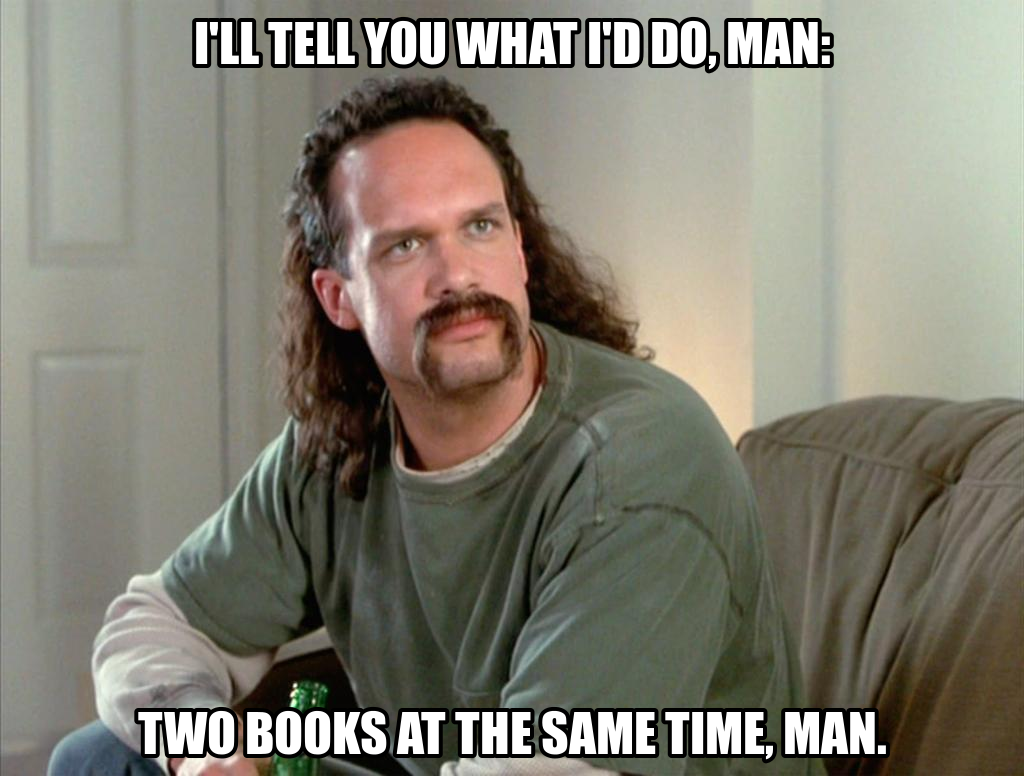
  • I’m reading, like, SUPER fast. Six months ago I was barely managing ten pages per day. Now I’m flying through books in four days, or less. My secret is that I’m reading multiple books at the same time. This is something I’ve NEVER done. I’ve always been a serial monogamer in romance and in books. It’s like reading Moby-Dick flipped a switch in my brain and now I can just go back and forth between books with ease.

Lawrence Office Space Meme

Anyway, these are all good things and I’m enjoying reading, and blogging, and chatting with other book bloggers, more than ever. In fact, after my social media break (social media free August, thanks Momaccounts) I logged on to Twitter and went on an unfollowing spree so that my timeline is now 80% book-related. Bloggers, authors, literary journals, and the like. And I love it.

Fall Plans

So things are great at the moment, but I must admit, I’m feeling a tad overwhelmed with all the stuff I have planned for Fall. Here’s a preview. Continue reading

First (Wrong) Impressions by Krista D. Ball

First (Wrong) ImpressionsMy rating: 2.5/5 stars

Published: May 28th, 2013

Source: Review copy from the author

Synopsis:

Lizzy Bennet’s fundraising mission is to keep her homeless centre’s clients well-fed through a cold prairie winter. She meets the snobby and pompous William Darcy of Fitz & William Enterprises. While she’d never dare ask him for help, she can’t stop bumping into him — sometimes, quite literally. But when Lizzy’s campaign is cut short by the disappearance of her sixteen year old sister, William and his younger sister step in to help the woman they want to make part of their family. Inspired by Jane Austen’s classic, Pride and Prejudice, First (Wrong) Impressions is Lizzy’s quest for happiness, security, and love in the 21st century.

An important caveat to this review: this isn’t the type of book I would pick up on my own, so I was a little dubious from the get go. My long-term readers know I have certain… snobbish tendencies when it comes to literature, and the term “fan fiction” makes my skin crawl. Jane Austen fan fiction is an industry in it’s own right, moving out of the online shadows in recent years, with the success of mash ups like Pride and Prejudice and Zombies and more literary rewrites like Death Comes to Pemberly. I thought I would give this a whirl as part of Austen in August, and after chatting on Twitter, author Krista D. Ball kindly gave me a review copy.

First (Wrong) Impressions gave me a case of just that; it didn’t end up being exactly what I thought it would at the start, and that’s a good thing, because my first impression was a paint-by-number retread of the source material, plopping 18th century characters into 21st century settings. As I pushed forward, my defenses were broken down by Ball’s humourous one-liners and, eventually, by her creativity in using very modern scenarios to show us a new side of Elizabeth (Lizzy) Bennett. Continue reading

Roost by Ali Bryan

roost

My rating: 3.5/5 stars

Published on: April 1, 2013

Publisher: Freehand Books

Source: Electronic review copy from the publisher

Synopsis:

Claudia, single mother of two young children, pines for her past independent life. Her ex, after all, has moved on to a new wardrobe, a new penchant for lattes–and worst of all, new adult friends. But in Claudia’s house she’s still finding bananas in the sock drawer and cigarettes taped to wrestling figures. Then Claudia receives the unexpected news that her mother has died.

Shared through the hilarious, honest, and often poignant perspective of a single mother, Roost is the story of a woman learning about motherhood while grieving the loss of her own mother. And as she begins to mend, she’s also learning that she might be able to accept her home–as it is.

A funny thing happened while I was reading Roost. I was on a flight from Nova Scotia, author Ali Bryan’s home province and the setting of Roost, on my way home to Alberta, where Bryan now lives. I was nursing Henry while Ben played on his iPad. Ben’s legs don’t reach the floor, so he braced himself on the seat in front of him to adjust his position. The woman in front of Ben turned around and said, “If your son kicks my seat again, I am going to come back there and pour a glass of water over his head.” I said, “He’s three. I’m doing my best.” She told me to “do better” and turned around, huffing and puffing. This woman threatened my three year old son and called me a bad parent. As shame burned just below the skin on my reddening face, I thought, “this is exactly the type of thing that would happen to Claudia. Except she wouldn’t give a flying fuck.”

Claudia is our heroine, a woman smack in the middle of various family dramas, with barely enough time or energy to register it all, let alone deal with the fall out. She’s got two young kids, a prissy brother and sister-in-law, eccentric parents, and an ex who’s moving on with his life entirely too quickly A crisis occurs when her mother dies, and everyone around her starts to unravel.  Her family seems to think, Claudia is already heaped on with responsibility, so, why not add more? Why not have her deal with funeral arrangements, and take care of her nieces and nephews while sister-in-law is treated for postpartum depression? Why not leave her holding the (garbage) bag when her father’s hoarding comes to light? I think about Claudia when I’m feeling busy or stressed or hard done by. I’ve got it easy.

This all sounds a little heavy, but the book is hilarious. I love Bryan’s deadpan style. Claudia says, of her two-and-a-half year old daughter,


…when you first held her in the hospital and she weighed five pounds and she gazed in your eyes and you fell in love, did you ever imagine that you would one day think she was an asshole?

Anyone who’s had a two-and-a-half year old gets this.

I loved how present the children are. I often find that children are seen and not heard in literature, but anyone who’s had children knows that they are everywhere – their voices, their messes, their routines and habits that must be observed. Roost is not about the children, really, but they are always in the picture.

I found some of the characters and story lines strained credibility. Claudia’s brother in law is so terrible, he becomes a little hard to believe. And I don’t understand how her father hides a hoarding habit for five months when both his children live in the same city.  Maybe it’s just that Claudia is so strongly written. She also has a story line that’s a little out there, involving an airline luggage mix up, a suitcase full of maternity clothes, a fake pregnancy, and a one-night stand, but I believed her. I understood why she needed to go a little crazy for a while and pretend to be someone else.

Oh, speaking of that one night stand, I love this, immediately following:

He makes a quiet exit and when he disappears from the room I feel intense and bold and exhausted. Like I just cut a seven layer cake with a guillotine.

I’ve seen a few reviews that describe this book as a series of vignettes, but I found the short chapters very cohesive and satisfying. I devoured Roost in two days and was sad that it didn’t last me the whole flight back to Edmonton. Huffing and puffing lady turned around two more times before we arrived, and I hope she picks up a book like this, and then maybe she’ll get it, that kids are just messy and loud and terrible but it’s not their fault. In the meantime, I’ll keep thinking of devastating comebacks, weeks too late.


Austen in August: Introduction and Northanger Abbey Review

austeninaugustrbr-button

August is almost over and I haven’t posted once about Roofbeam Reader’s Austen in August event. I have been reading, though. Here are my picks, and a review of my first read, Northanger Abbey.

My Austen in August Reads:

1. First (Wrong) Impressions by Krista D. Ball Continue reading

The Classics Spin #3

The Classics Club

It’s Classics Club Spin time again! The timing is impeccable, as I’m suffering a severe reading hangover after cruising through two thirds of Margaret Atwood’s dystopian Maddaddam series, and feel like I need a real classic to cleanse the palate. Plus, I’ve only read five Classics Club books so far, and I need to read ten per year to stay on track.

What the heck is the Classics Club, you ask? Check out my list and the general idea here.

Want to join me? Here’s the deal:

  • Pick twenty books that you have left to read from your Classics Club List (or, you know, your TBR list, if you’re not a Classics Clubber.) Try to challenge yourself: list five you are dreading/hesitant to read, five you can’t WAIT to read, five you are neutral about, and five free choice (favorite author, rereads, ancients — whatever you choose.)
  • Post that list, numbered 1-20, on your blog by next Monday (Agust 19).
  • Monday morning, The Classics Club will announce a number from 1-20. The challenge is to read the corresponding book by October 1, even if it’s an icky one you dread reading!

Here we go! Crossing my fingers that I don’t get Tristram. I’m not ready yet! In the immortal words of Jessie Spano, I’m so excited… I’m so… scared.

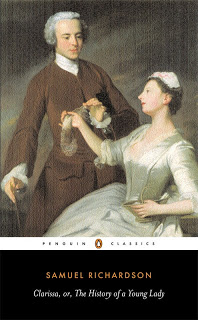
Five I’m dreadingclarissa

  •  American Pastoral by Philip Roth. I didn’t know that much about Roth when I added this to my list. Now I hear he’s kind of a gross old man who talks about his penis a lot. SOUNDS FASCINATING.
  • Tristram Shandy by Laurence Sterne – Long. Abandoned years ago. Too dense. Scary. But also awesome.
  • Clarissa by Samuel Richardson – Long. Sounds dense. But one of those “have to read it” books.
  • Stoner by John Williams – Not my sort of book at all, but added based on a rave review.
  • Mrs. Dalloway by Virginia Woolf – I’ve been poisoned against Mrs. D by 101 Books! Continue reading

Top Five: Fall 2013 Books by Edmonton Authors

I wrote about reading local last year, and why I think it’s important. I don’t know if there’s an exceptional crop of Edmonton books out this season, or if I’m just paying more attention, but I’ve got a short list that could rival any hoity-toity book award. Here are my most anticipated #yegbooks for Fall 2013. Which ones are on your To Be Read list?

1. Love Letters to the Angels of Death by Jennifer Quist

loveletters

The basics:

  • Release date: August 3, 2013
  • Goodreads
  • I received a review copy from the publisher, Linda Leith, but assure you it was my most anticipated book before that happened.

Why I want to read it:

  • I love Jennifer’s blog. Every post has me nodding my head in agreement. She’s a beautiful writer.
  • She got a great review in the Montreal Review of Books.
  • The novel is about a happy marriage. I like to read about dysfunction so much that maybe I need to change things up.
  • A personal connection. The set up is the death of the main character’s mother just before his wife gives birth. My husband lost his father just weeks before our first baby, and I didn’t deal with it very well. I’m looking forward to a fresh perspective on life and death (yep, my expectations are pretty high!) Continue reading

The Ocean at the End of the Lane by Neil Gaiman

TheOceanAtTheEndMy rating: 2.5/5

Synopsis:

Sussex, England. A middle-aged man returns to his childhood home to attend a funeral. Although the house he lived in is long gone, he is drawn to the farm at the end of the road, where, when he was seven, he encountered a most remarkable girl, Lettie Hempstock, and her mother and grandmother. He hasn’t thought of Lettie in decades, and yet as he sits by the pond (a pond that she’d claimed was an ocean) behind the ramshackle old farmhouse, the unremembered past comes flooding back. And it is a past too strange, too frightening, too dangerous to have happened to anyone, let alone a small boy.

This book was set up to fail in my eyes. My expectations were set way too high. Gaiman has been recommended to me by bloggers I respect, by strangers on the internet, by book store staff.  I read early reviews that proclaimed this the best book that every booked, and I believed them. There was no way the experience of reading these 180 pages could live up to the hype. Especially once I realized that I read a book earlier this year that does everything this book tries to do, only better. Continue reading

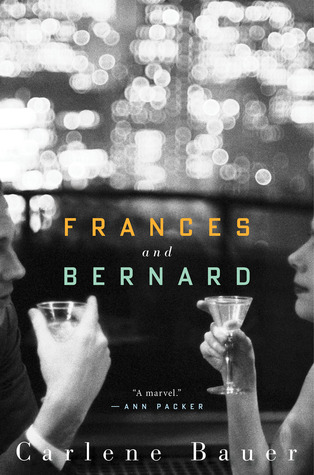
Frances and Bernard by Carlene Bauer

image

My rating: 5/5 stars

Two important things to know about this book: it had the saddest “happy ending” I’ve ever read, and Catholicism figures heavily in the plot. If these things turn you off, you should still give it a whirl, but be warned.

The Catholic thing in particular throws off many Goodreads reviewers. “The Catholic stuff was boring” and “I don’t care about religion, I don’t want to read about it.” I kind of get it, I mean, I’m an athiest with a Catholic background, but if writing is good, it’s good. It doesn’t matter what it’s about, or doesn’t matter much.

And that ending? Left me devastated for days. I won’t quote the last line, because who does that, but it physically hurt me to read it.

Another warning: I suppose the book is a bit pretentious, being based on the real lives of writers Flannery O’Connor and her Robert Lowell, and being epistolary, and being character driven, as opposed to plot.

This is a long list of caveats for a five star review. I think the bad reviews on Goodreads really hurt my feelings and I while I want to tell everyone to read this, read it now, I also want readers to go in with eyes open.

So, assuming you are okay with sad endings, religious themes, and literary leanings, why read Frances and Bernard?

I picked this up at the library months ago, so I can’t quote, but the writing is just how you would imagine the correspondence between two writers in love to be: spare, beautiful, manipulative, and heartbreaking. The characters are so fully realized in their genius and their limitations. They certainly aren’t likable, but you will want them to work things out even though you know they won’t, can’t. It’s not a spoiler because it’s obvious, they’re star crossed. This is what happens when Romeo and Juliet are grown ups instead of flighty teens.

This is my favorite read of the year so far. It might be yours too. Read it, won’t you?

A Reading Soundtrack: Part II

A Reading Soundtrack was one of my favourite posts to write ever, and I got some good feedback from my readers. I even introduced an American reader to a relatively obscure Canadian band, Wake Owl. I feel like the CRTC owes me some money for pushing the CanCon!

The Book: The Paradise Engine by Rebecca Campbell (my review)

The Song: Of Space and Time by City and Colour Continue reading