Tagged: 20booksofsummer23
Abigail by Magda Szabó, translated by Len Rix
We’ve reached the end of 20 Books of Summer 2023, and with this, I have read and reviewed eight books, which I count as a huge win! Three of those were 1001 Books, two were by women in translation, and at least one had been on my shelf for more than ten years. Huge thanks to Cathy and all the participants for the motivation.

I just about died recently, when I heard someone on Booktube refer to The Idiot (Batumen, not Dostoyevsky) as “dark academia”. In what world? I’m not saying an adult, literary novel can’t be classified this way but like… The Idiot just isn’t it. It’s missing the gothic setting and magic and whatnot. It’s a campus novel at best, and I’d argue it’s not even that because a fair amount of the book takes place off-campus.
It got me thinking about adult novels that do have the requisite lush settings, closed societies, mystery, and danger, like The Secret History and Vita Nostra, and whether a book like Abigail fits.
Most of the action in Abigail takes place in a fortress-like boarding school, and it’s got some sorta-supernatural elements, namely, a statue named “Abigail” the school girls confide in via written notes, and who sometimes writes back. It’s a closed society but it’s very much in the real world of Hungary in 1943, and it’s a very refreshing take on the coming of age novel, in that romance and friendship are present, but are not the drivers of Gina’s journey.
Gina enters Bishop Matula school as a child, with no idea why her beloved father, “the General,” banished her from her comfortable, cosmopolitan life in Budapest, to a religious school in the middle of nowhere full of naive country girls. By the midway point, she is forced to grow up when her father tells her the truth about why he’s hidden her away, and about what’s really happening to Hungary, and to him.
The mystery and magic of “Abigail”, as in, how a statue is able to respond to the various crises and complaints of the girls, drives the early narrative, but for me, this was a story about bullying, and adults trying to exert control over the uncontrollable force that is teenage girls. The real dark side of academia!
I grew up in a time where bullying was seen as pretty normal and nothing to get worked up about, while my kids are growing up with pink shirt days and no-bullying pledges. Despite having been bullied myself, in a somewhat similar way as Gina (this book is most realistic depiction of bullying I’ve ever read), I’m skeptical of anti-bullying campaigns. Isn’t the whole point of bullying that kids get to subvert the social order adults want to impose, the “play nice” messages they’ve been fed since preschool? A way for those with little control over most aspects of life to exert control over the most relevant things in their view: their peers? Why would a social marketing campaign cooked up by adults change all that? Maybe I’m too cynical, but I just don’t see bullying going away.
There’s more to this story than bullying, though. What makes it so genius is that it parallels the social control inside Bishop Mantula (both official – the strict rules and routines – and unofficial – the unspoken social rules the girls concoct, and severe consequences for those who don’t conform to both) with the social control exerted by a nation during wartime. Communication is strictly controlled and mostly propaganda in both cases, so the sudden appearance of anti-war messages on landmarks, in train stations, and even in the church feel just as magical as the messages from Abigail. The girls nominating one student to sing hymns loudly in the dayroom, so the rest can gossip undetected, is just as ingenious as the dissident who breaks into the church, and switches all the readings and hymns to ones with anti-war messages. Teenage girls are dissidents in training – by the end, quite literally.
I still don’t know if this all counts as “dark academia” or if that even matters, but fans of The Secret History or Vita Nostra will probably like this, as it takes its young student characters seriously while still portraying them as suitably naive, and all the more dangerous for it.
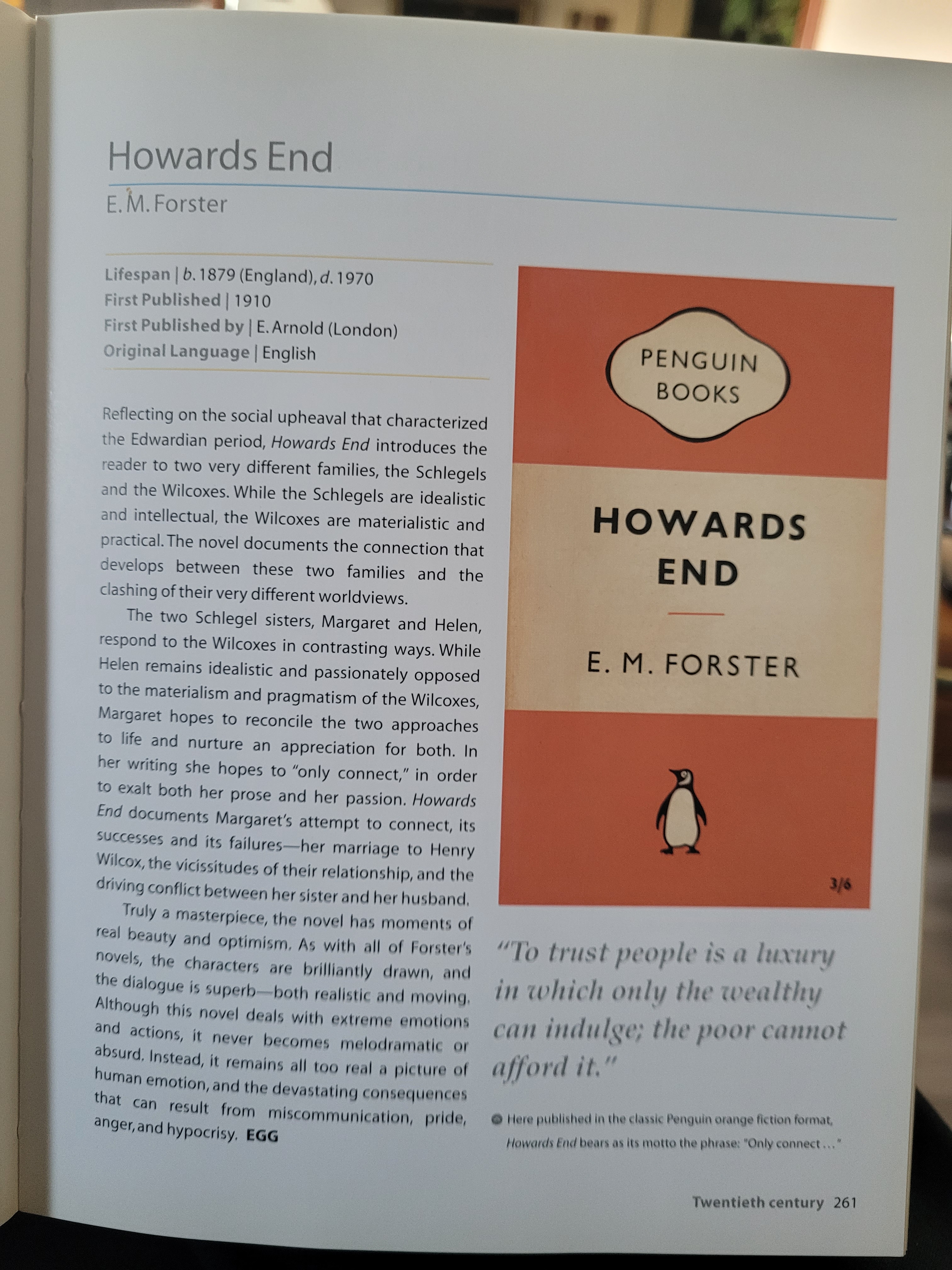
Howards End by E.M. Forster
Howards End is #754 on the 1001 Books You Must Read Before You Die list. See the whole list and my progress here. This summer, I’m reading from the list for my 20 Books of Summer challenge, and instead of straight reviews, I’m going to compare the 1001 Books write ups with my own impressions.

If you’re my age (an ageing Millennial or a youthful GenXer, depending who you ask) you might have seen that genre of TikTok that points out that the way we thought about the 1960s as teenagers is the way teenagers today think about the 1990s (i.e. as ancient history.) This made me think about the classic lit equivalent: the way we thought about Victorian literature as teens is the way we should think about Edwardian literature today.
The metaphor doesn’t really work, because my microgeneration felt like whatever was going on in the 90s was fresh and new, whereas Victorian and Edwardian literature have only even felt “old”. But the fact remains: when I was a teenager getting into classic lit, books from 100-125 years ago were Victorian, and now books that old are Edwardian. Maybe it’s time to stop obsessing about the Brontës and Dickens and see what those Edwardians were up to*.
Howards End is the perfect place to start, written 113 years ago, navigating feminism, politics, and those newfangled “motors” that were taking over the roads. I enjoyed it thoroughly, though Forster (this is my first) does tend to get a little… off track at times. A lot of random philosophizing when I just wanted to know how the family was going to deal with Helen’s latest scandal.
The 1001 Books write up is on the bland side, so I started flipping through the adjacent pages, to see what else was happening circa 1910. Plenty of fellow modernists like Woolf, Lawrence, and Mann, but also the more traditional John Galsworthy. The write up for The Forsyte Saga (1906) could have applied to Howards End in that it mentions Beauty (with a capital B) and the urge to possess it, and how the family unit can stand in for society. It also calls it a “monument to the Edwardians.”
These books are both great depictions of the last gasps of Victorian-era morals and the emergence of Edwardian concerns. Forster contrasts the artistic Schlegels with the practical Wilcoxes, while Galsworthy gives us Soames Forsyte, representing the pursuit of property and power, while cousin Jolyon and wife Irene represent the pursuit of love and feeling. Galsworthy wanted to “only connect the prose and the passion” as much as Forster did, he just didn’t come up with such an eloquent way of putting it (and sorry, but legally, you have to quote this line in a review of Howards End.)
But they offer a pretty limited view of the lower classes. In both books, artistic, passionate men of a lower class are brought in to cause a commotion among the wealthy characters, and then they (spoiler alert) immediately die. Women of the lower classes are even more incidental – servants or prostitutes, mostly. There’s nothing to connect there. Why don’t we get a prosaic poor person to contrast with the passionate Leonard Bast in Howards End, or with Irene’s lover Philip Bosinney?
After perusing the 1910 era of the 1001 Books, I flipped all the way to the end. #4, On Beauty by Zadie Smith, is a loose retelling of Howards End, and while I read it too long ago to cite the details, I’m pretty sure it addressed the class shortcomings. The write up says it’s a novel about “art, love, race, class, family” which sounds about right. I looked up an ebook preview to see how Smith adapted Forster’s opening chapter that begins “One may as well begin with Helen’s letters to her sister.” (yep, with email transcripts). A reread might be in order.
As for which adaptation is better, please stand by: a DVD of the 1992 Howards End is on hold for me at the library. Don’t hold your breath though, The Forsyte Saga (2002) is one of my favourite historical mini-series ever!
*I do not actually plan to stop obsessing about the Brontës
20 Books of Summer check in and catch up
We’re well past the halfway point, and I’ve read six and reviewed four of my 20 Books of Summer. This is pretty average for me, though I feel like something’s shifted – like I might be coming out of whatever reading slump/brain fog I fell into at the beginning of the pandemic. I’ve read 31 books so far this year, and struggled to get past forty for the whole year in 2020-2022. I’m not sure why I’m on an upward trajectory, as I’m busier now (back in the office part time, kids in activities etc.) and my own health has gone downhill in the last year (maybe it’s ageing, maybe it’s perimenopause) but I’m not going to question it too much.
The challenge is going well: I’ve read some new favourites, built up my 1001 Books tally, and had the distinct pleasure of reading a book that has long been recommended to me by a friend, and loving it.
But this challenge is *really* about reviewing! To catch up and clear the decks, here are some mini-reviews to tide you over until I write a longer one.
Tomb of Sand by Geetanjali Shree, translated by Daisy Rockwell

Apparently there is some DNF discourse going on over on Booktube, and it might have started with this video, but I first came to it in Brian’s video about the dangers of DNFing in which he mentioned Tomb of Sand. He makes the obvious point that a book is more than its first 50 pages or first chapter – it might get better! – as well as the more interesting point that maybe you shouldn’t impose your preconceived notions about a book – maybe it’s supposed to be slow or hard to understand or whatever! Maybe that’s the point! And you’re going to miss the point if you can’t go in with an open mind.
I came close to closing Tomb of Sand several times, and had I not a) paid full price and b) been invested in the International Booker Prize, I probably would have done so after the first 100 or 200 pages. And I wouldn’t have been wrong! This is the rare case where I didn’t get a lot out of an IBP book. But I will say the failure is at least partly mine. Tomb of Sand is written in a stream of consciousness style that reminded me of Ducks, Newburyport, though if Ducks is a 10 on the stream of consciousness scale, Tomb of Sand is maybe a 6. But that consciousness is steeped in a place and culture that was so unfamiliar, I felt like I couldn’t be swept along. I was taken out of it every time I didn’t understand a reference, which was often. So while I agree with Brian that you can’t go into a book with a rigid idea of what you want it to be, and that you should think before DNFing after a few pages, I probably should’ve trusted my gut after 200, 400, hell 600 pages of this one.
The Life of Charlotte Bronte by Elizabeth Gaskell
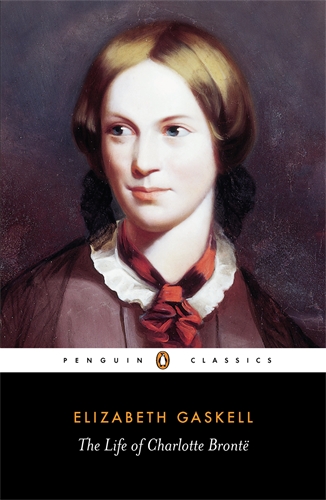
It took me more than twenty years to get through the major works of the Brontës. I hope I can pick up the pace when it comes to the minor, biographical, and critical works. I started here and I’m glad I did. This biography is devastating and intimate. Gaskell is far from an objective observer. She was Charlotte Bronte’s friend and colleague, and was commissioned to write this book by Charlotte’s father. Various introductory texts will tell you how Gaskell suppressed unsavoury aspects of Charlotte’s life, and you can tell she’s being awfully careful in parts. She lets Charlotte speak for the most part, quoting her letters at length, but interjects with extremely evocative descriptions of Charlotte’s world, understanding the time and place in a way no modern biographer can. Gaskell’s selectiveness would probably be framed as dishonesty, but for modern readers of this work, it’s one way we can attempt to understand what it meant to be a woman with ambition and genius in a hostile society, and the compromises those women had to make.
Next up, I am reading the very juicy Howards End. I’m only disappointed that I can’t find the movie adaptation streaming anywhere.
Green Darkness by Anya Seton
This summer, I’m doing the 20 Books of Summer challenge, and instead of straight reviews, I’m going to compare my impressions of books to their write ups in the 1001 Books list (see the whole list and my progress here), or in this case, I’m comparing a regular book to a few listed books.

For a fifty-year-old novel in a genre I rarely read, I was surprised how many connections I made while reading Green Darkness by Anya Seton. These comparisons are mostly unfavourable to Seton, but, I do think this is a fascinating story, both ahead of its time and a throwback, even in 1972.
Green Darkness makes you think it’s about the leisure class in 1960s England, specifically, newlyweds Richard and Celia, who are hosting a motley crew of friends, relatives, and acquaintances at Richard’s ancestral manor house. But that’s just an excuse to explore the past lives of the couple, who are pretty boring in the present day, but were apparently in love at least twice before, once in late-Tudor England and once in ancient times. The bulk of the book tells the tale of Celia the barmaid and her doomed affair with a Benedictine Monk during the reigns of Edward VI, Mary I, and Elizabeth I (and, briefly, Jane). We know from page one that things don’t end well, to put it mildly: Celia ends up being “walled up”, that is, sealed in a tiny room, alive, Cask of Amontillado style. This is based on a maybe-true story of the “walled-up girl” of Ightham Mote.
Despite the lack of a happy ending, to me, this is a romance novel. There are literal ripped bodices, as well as overwrought declarations, trysts in the woods, love potions, and a LOT of sexual frustration. These people are horny as hell, and I tell you, when we finally see some action around page 350, I was a little frustrated too!
I immediately started thinking of other books in the “horny monk” genre, both of which happen to be on the 1001 list: The Monk by Matthew Lewis (#946) and The Name of the Rose by Umberto Eco (#293). Green Darkness is pretty out there, with the whole past lives, reincarnation angle, but doesn’t quite reach the heights (or depths) of drama found in The Monk (both Satan and The Spanish Inquisition make appearances, someone “accidentally” marries a ghost) nor the horniness… I’m pretty sure there are more sex scenes in this 18th century novel. The Name of the Rose is a more compelling mystery, and a better written book, with just a few horny moments, both hetero (Brother Adso and the peasant girl) and homosexual (various monks).
I also have The Nun by Denis Diderot (#944) on deck for 20 Books of Summer, which I imagine is in this vein, though perhaps more sapphic…
Looking beyond monks and the 1001 books, there are also quite a few parallels between this book and the steamy Thornchapel series by Sierra Simone, in which another ragtag group of friends, including a VERY horny priest, repeat the sins of their ancestors in a manor house. It’s got a murder mystery and a strong paranormal element too. Though Simone would never make you wait 350 pages for a sex scene.
Then there’s the historical angle. I’m no expert, but I did have a Tudor phase a few years ago, and the political and social backdrop seemed well-researched. Reading names like Wyatt and Wriothesley put me in mind of Hilary Mantel’s Wolf Hall trilogy, which is unfair, because no one is doing it like her (or, did it – I keep forgetting she’s gone). Green Darkness was never going to deliver a character with the depth of Thomas Cromwell, and Seton’s Wyatts and Wriothesleys are just walk-on parts in Celia and Stephen’s story, not delightful characters in their own rights. Seton created a world where Mantel created a universe – and the fact that Mantel is not represented on any edition of the 1001 Books lists is a gross oversight.
Emma Donoghue is a more apt comparison – she’s known for taking the kernel of a historical fact and running with it, like in Slammerkin, where the real story of a teenage servant girl who murdered her employer in 18th century Wales was woven into a story about greed and lust in London. The walled-up girl of Ightham Mote is just as good a starting point – even if it is probably a myth.
Green Darkness doesn’t quite measure up to most of these classics, however, it’s pretty impressive that it balances so many elements and genres: paranormal, historical, suspense, and romance. The prose style reads like a throwback, but the genre-shifting and subversion of (some) romance tropes makes it feel pretty modern.
As for how its aged in the fifty years since it topped the bestseller list: there’s a surprising amount of gay and bisexual representation (and at one point I wondered if Celia and her friend Magdalen, the future Viscountess Montagu, were going to have a lesbian romance – Emma Donoghue, please write that story!). There’s also a surprising number of racial slurs thrown around in the contemporary sections. Modern readers also might be a bit dubious about a 27-year-old monk’s desire for a 14-year-old girl in the beginning of the story, but remember, it’s a slow burn; several years pass and she’s a widow by the time anything too crazy happens!
I’m only left wondering two things: was there really a walled-up girl at Ightham Mote, and what does the “green darkness” in the title refer to? Google is unhelpful on both accounts.
Self-Portrait With Boy by Rachel Lyon
Wuthering Heights is #902 on the 1001 Books You Must Read Before You Die list. See the whole list and my progress here. This summer, I’m reading from the list for my 20 Books of Summer challenge, and instead of straight reviews, I’m going to compare the 1001 Books write ups with my own impressions – or in this case, I’m going to compare one of my 20 Books to a book on the 1001 list.


I am once again drawing parallels between two books based on what very well may be coincidences. Hear me out on this one, though. If I’m wrong, at the very least, take this as a sign that if you are a Wuthering Heights fan, you will probably like Self-Portrait With Boy by Rachel Lyon, too.
I have found no evidence that Rachel Lyon has even read Wuthering Heights, let alone been influenced by it. She tends to recommend modern writers, and talks about real-life inspiration for this novel. But look, it’s a story about a motherless girl living in a sprawling, ramshackle building who is haunted by a ghost that knocks on and eventually breaks her window. My heights are officially wuthered!
Then there are the copious details that could be pulled from any number of gothic novels of Brontë’s time: filthy living conditions (including a memorable scene with a family of rats), evil landlords, orphans, grieving parents, a closed society (the 1990s NYC art scene), clearly defined class structure (poor Lu even becomes an art teacher for wealthy children, a modern day governess), a beautiful woman in distress…
But the most important parallel didn’t become clear until the very last line, and it’s a feature of Wuthering Heights that I tend to discount, and even forget in between rereadings: the frame story.
In a story full of literal frames (art, window) the literary frame in Self-Portrait is conventional enough: an old(er) woman looking back at her life. It’s unobtrusive at first. The story of Lu capturing a photograph of a child falling to his death, a moment that will define her career if it doesn’t tear her apart, is so compelling that it’s easy to forget that we are reading the thoughts of a self-aware, middle-aged woman looking back on it all, until the story catches up with itself at the end.
The frame in Wuthering Heights feels a bit more dated (as it should, 200ish years on): someone is being told a story. And it’s not subtle at all. On every reread, I forget how much of Lockwood’s perspective we have to get through before Nelly Dean gives him (and us) the goods on Cathy and Heathcliff.
These frames are totally necessary though. They allow both books to end on a haunting and devastating note. In Wuthering Heights, Lockwood wondering “how anyone could ever imagine unquiet slumbers, for the sleepers in that quiet earth” would not hit the same if it was just some omniscient narrator, or one of the remaining Lintons or Earnshaws. It has to be an outsider who’s slowly come to understand the tragedy that played out on these moors, alongside the reader. In Self-Portrait, the last line (which I won’t quote – spoilers apply to novels from 2018) is similarly devastating, and would not make sense coming from twenty-something Lu; she doesn’t have the insight yet. The reader feels the truth of it, and the weight of the time that’s passed, all in that final sentence.
If Wuthering Heights is the epitome of Georgian gothic (yes, it was written in the Victorian era, but it’s a historical novel, set a generation or two in the past, just like Self-Portrait), then Self-Portrait With Boy has a strong claim on late 20th century NYC gothic. Or whatever that era eventually gets called.
Hard Times by Charles Dickens
Hard Times is #888 on the 1001 Books You Must Read Before You Die list. See the whole list and my progress here. This summer, I’m reading from the list for my 20 Books of Summer challenge, and instead of straight reviews, I’m going to compare the 1001 Books write ups with my own impressions.

Hard Times is one of the lesser known Dickens novels. It’s been on my shelf for 10+ years, and I’ve started it more than once, without getting much farther than the schoolroom chapters, where the teacher is named “Mr. McChokemchild.” A library ebook helped me get past the small font in my Penguin Popular Classics edition, and I soon wondered why no one told me this book has so much more than school children. It’s a classic Victorian social novel, tackling class, unionization, alcohol abuse, gambling, infidelity, and more. It’s sort of a North and South, with more humour and less romance.
Well, someone did try to tell me. The 1001 Books Hard Times write up not only mentions Gaskell (in an unfavourable comparison) but the entry is right beside the entry for North and South, highlighting the fact that these stories were being serialized at pretty much the exact same time – what a time to be alive! You know, if you weren’t a factory worker… or a woman…
The write up also would have helped me make the connection to utilitarianism, a philosophy I’ve been interested in since reading The Brothers Karamazov (and since going down several rabbit holes related to the current crop of tech-bro philosophers who are rebranding it as Effective Altruism). This theme is first explored in this early classroom scenes – what is an education for? What’s the point of “wondering” when you can memorize facts?
The write up portrays Hard Times as a bit of an unfocused look at these various social issues, and I guess it is, but compared to Dickens’ known works like A Tale of Two Cities, I found this one more satisfying. It read faster (not only because it’s significantly shorter), the characters were more varied, and while some were one-dimensional “bad guys”, most had some depth and showed some growth, even some of the female characters. And it’s just very funny. The circus ringmaster, Mr. Sleary, with his lisp and his rolling glass eye, was played for comic relief, but he speaks the line that sums up the book:
‘People must be amuthed, Thquire, thomehow…they can’t be alwayth a working, nor yet they can’t be alwayth a learning. Make the betht of uth; not the wurth.’
Chapter VI
To me, that’s as good as “It is a far, far better thing that I do, than I have ever done; it is a far, far better rest that I go to than I have ever known” (though perhaps not as good as “the best of times” etc.) I’m glad I finally read this. For me, that’s four down, six to go for the 1001 Books-worthy Dickens novels.

20 Books of Summer 2023
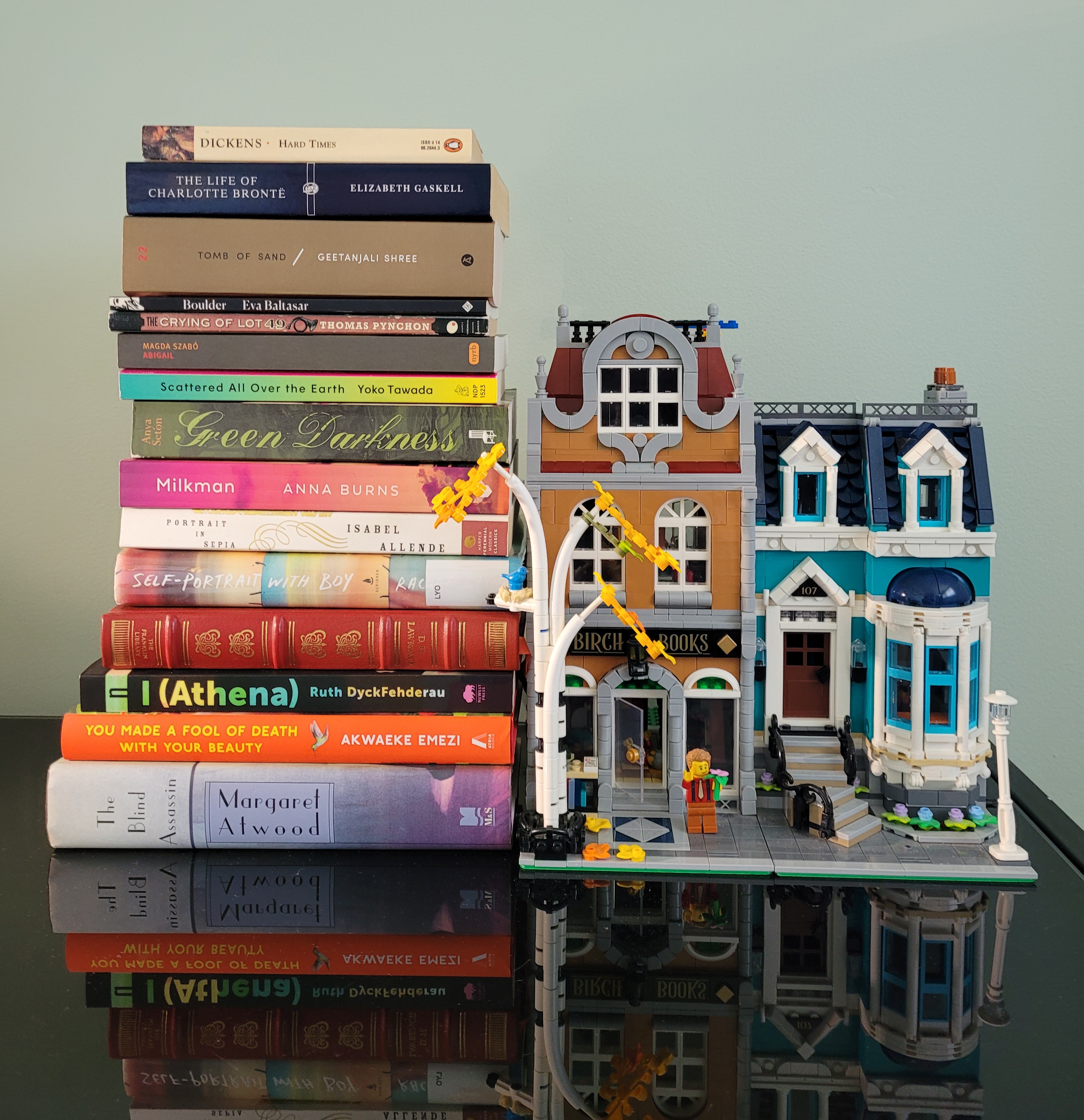
After skipping last year, I’m back at it again, joining Cathy in creating an overly-ambitious, unrealistic plan to read and review twenty books this summer. Though perhaps I shouldn’t sell myself short. Reviewing my past record, there’s a decent chance I’ll get to these, eventually… of my 20 books of summer 2019, I’ve now read 19. This year’s list is a combination of carryovers from summers past, prize winners and longlisters, review copies, and the few remaining 1001 Books that are sitting unread on my shelf (or books by authors who appear on that list.) Guess I’ll have to visit a used bookstore soon to replenish!
- The Crying of Lot 49 by Thomas Pynchon (1001 Books, previous on a 20 Books list)
- Hard Times by Charles Dickens (1001 Books, previous on a 20 Books list)
- The Blind Assassin by Margaret Atwood (1001 Books, previous on a 20 Books list)
- Howard’s End by E.M. Forster (1001 Books)
- The Ambassadors by Henry James (1001 Books)
- [Holding this space for another 1001 Books pick, pending a trip to Wee Book Inn]
- The Life of Charlotte Brontë by Elizabeth Gaskell (1001 Books adjacent)
- The Ladybird by D.H. Lawrence (1001 Books adjacent)
- Abigail by Magda Szabó, translated by Len Rix (on a previous 20 Books list)
- Green Darkness by Anya Seton (on a previous 20 Books list)
- Portrait in Sepia by Isabel Allende, translated by Margaret Sayers Peden (on a previous 20 Books list)
- Scattered All Over the Earth by Yoko Tawada, translated by Margaret Mitsutani (one of the books I bought in a Covid-induced haze last year)
- You Made a Fool of Death with Your Beauty by Akwakae Emezi (another Covid book)
- Tomb of Sand by Geetanjali Shree, translated by Daisy Rockwell (2022 International Booker Prize winner)
- Boulder by Eva Baltasar, translated by Julia Sanches (2023 International Booker Prize shortlister)
- [Holding this space for the 2023 International Booker Prize winner, in case I haven’t read it]
- I (Athena) by Ruth DyckFehderau (a review book from this year)
- The Last Samurai by Helen DeWitt (just a plain old “been on my TBR forever”)
- Milkman by Anna Burns (Booker prize winner)
- Self-Portrait with Boy by Rachel Lyon (cheating as I’m about to read this)
Join in at 746 Books and hold me accountable!
 Reading in Bed