Tagged: 1001 Books
It’s Always Sunny in La Mancha

I discovered two beloved and durable classics in 2025, but only one counts towards my 1,001 Books challenge: Don Quixote by Cervantes, translated by Edith Grossman.
Don Quixote’s length means it becomes an undertone to whatever else is going on in your life during the weeks (okay, months) you are reading it. For critic Ariel Dorfman, Don Quixote is forever linked to the coup in Chile, as she and 30 other refugees read it to each other in 1973 while hiding in an embassy. Ed Simon, an editor at LitHub, connects Cervante’s imprisonment and themes of freedom in the book with the kidnapping and imprisonment of immigrants in modern America.
As for me, I read Don Quixote (DQ hereafter unless I mean the character) while binge-watching It’s Always Sunny in Philadelphia (IASIP hereafter), and now, it is inextricably linked with The Gang’s adventures.
This is perhaps not as meaningful as others’ experiences, but as I watched and read, I started to suspect that Cervantes invented the sitcom, rather than the novel, which he is often credited with. This feels significant, as sitcoms are dying out, after overtaking novels as a dominant narrative form in the twentieth century*. So while I’m interested in what Cervantes has to say about freedom, imagination, and the dying days of the Spanish empire, my brain was primed to see him inventing the form that eventually led to Danny DeVito writhing on the floor, naked and covered in hand sanitizer.
So rather than write a review of DQ, as you hardly need me to tell you if you should read it, I’m going to look at all the ways in which DQ is echoed in IASIP, a show that premiered exactly four hundred years after the First Part of the Ingenious Gentleman Don Quixote of La Mancha was published in 1605.
Continue readingHowards End by E.M. Forster
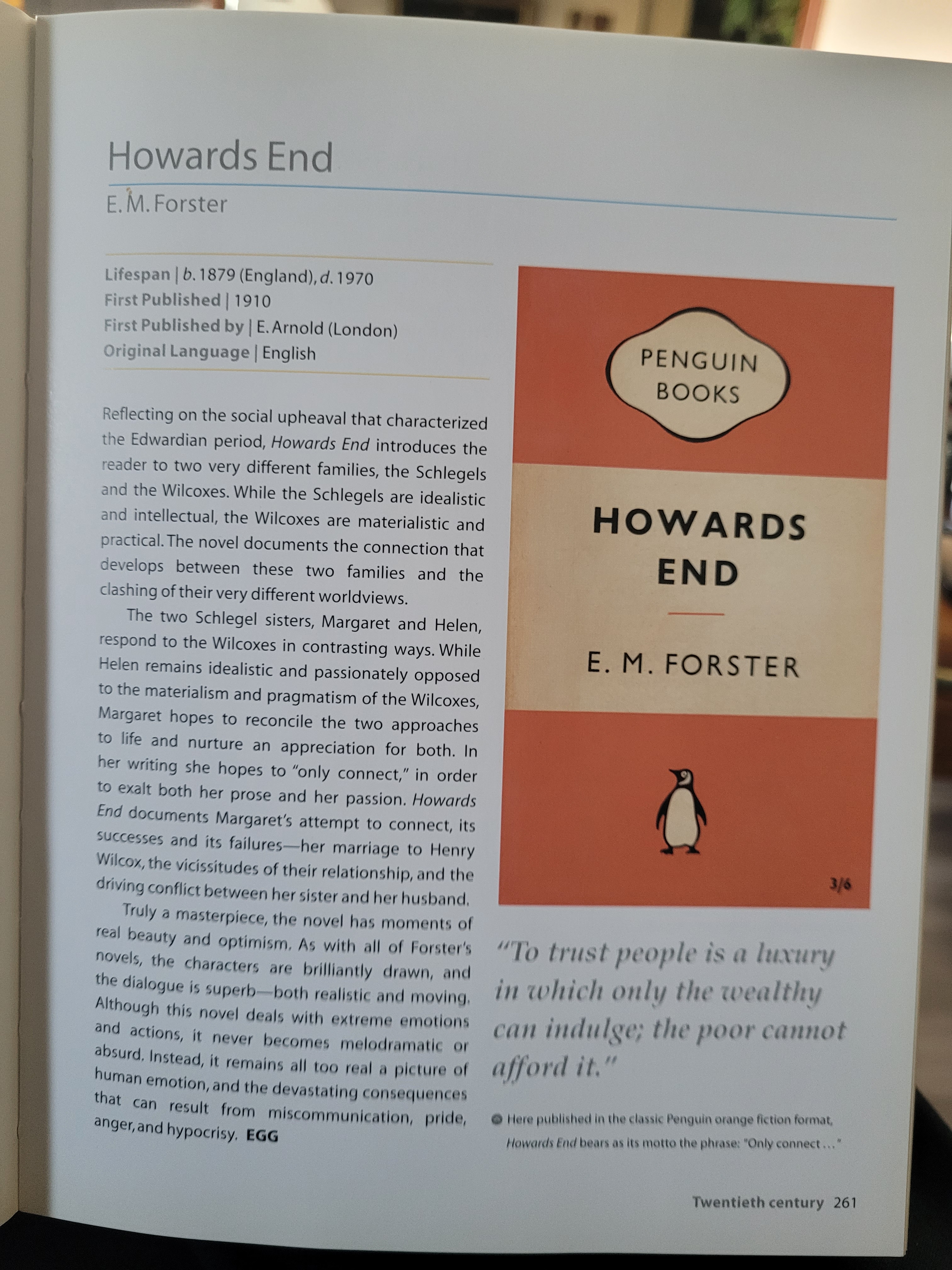
Howards End is #754 on the 1001 Books You Must Read Before You Die list. See the whole list and my progress here. This summer, I’m reading from the list for my 20 Books of Summer challenge, and instead of straight reviews, I’m going to compare the 1001 Books write ups with my own impressions.

If you’re my age (an ageing Millennial or a youthful GenXer, depending who you ask) you might have seen that genre of TikTok that points out that the way we thought about the 1960s as teenagers is the way teenagers today think about the 1990s (i.e. as ancient history.) This made me think about the classic lit equivalent: the way we thought about Victorian literature as teens is the way we should think about Edwardian literature today.
The metaphor doesn’t really work, because my microgeneration felt like whatever was going on in the 90s was fresh and new, whereas Victorian and Edwardian literature have only even felt “old”. But the fact remains: when I was a teenager getting into classic lit, books from 100-125 years ago were Victorian, and now books that old are Edwardian. Maybe it’s time to stop obsessing about the Brontës and Dickens and see what those Edwardians were up to*.
Howards End is the perfect place to start, written 113 years ago, navigating feminism, politics, and those newfangled “motors” that were taking over the roads. I enjoyed it thoroughly, though Forster (this is my first) does tend to get a little… off track at times. A lot of random philosophizing when I just wanted to know how the family was going to deal with Helen’s latest scandal.
The 1001 Books write up is on the bland side, so I started flipping through the adjacent pages, to see what else was happening circa 1910. Plenty of fellow modernists like Woolf, Lawrence, and Mann, but also the more traditional John Galsworthy. The write up for The Forsyte Saga (1906) could have applied to Howards End in that it mentions Beauty (with a capital B) and the urge to possess it, and how the family unit can stand in for society. It also calls it a “monument to the Edwardians.”
These books are both great depictions of the last gasps of Victorian-era morals and the emergence of Edwardian concerns. Forster contrasts the artistic Schlegels with the practical Wilcoxes, while Galsworthy gives us Soames Forsyte, representing the pursuit of property and power, while cousin Jolyon and wife Irene represent the pursuit of love and feeling. Galsworthy wanted to “only connect the prose and the passion” as much as Forster did, he just didn’t come up with such an eloquent way of putting it (and sorry, but legally, you have to quote this line in a review of Howards End.)
But they offer a pretty limited view of the lower classes. In both books, artistic, passionate men of a lower class are brought in to cause a commotion among the wealthy characters, and then they (spoiler alert) immediately die. Women of the lower classes are even more incidental – servants or prostitutes, mostly. There’s nothing to connect there. Why don’t we get a prosaic poor person to contrast with the passionate Leonard Bast in Howards End, or with Irene’s lover Philip Bosinney?
After perusing the 1910 era of the 1001 Books, I flipped all the way to the end. #4, On Beauty by Zadie Smith, is a loose retelling of Howards End, and while I read it too long ago to cite the details, I’m pretty sure it addressed the class shortcomings. The write up says it’s a novel about “art, love, race, class, family” which sounds about right. I looked up an ebook preview to see how Smith adapted Forster’s opening chapter that begins “One may as well begin with Helen’s letters to her sister.” (yep, with email transcripts). A reread might be in order.
As for which adaptation is better, please stand by: a DVD of the 1992 Howards End is on hold for me at the library. Don’t hold your breath though, The Forsyte Saga (2002) is one of my favourite historical mini-series ever!
*I do not actually plan to stop obsessing about the Brontës
Green Darkness by Anya Seton
This summer, I’m doing the 20 Books of Summer challenge, and instead of straight reviews, I’m going to compare my impressions of books to their write ups in the 1001 Books list (see the whole list and my progress here), or in this case, I’m comparing a regular book to a few listed books.

For a fifty-year-old novel in a genre I rarely read, I was surprised how many connections I made while reading Green Darkness by Anya Seton. These comparisons are mostly unfavourable to Seton, but, I do think this is a fascinating story, both ahead of its time and a throwback, even in 1972.
Green Darkness makes you think it’s about the leisure class in 1960s England, specifically, newlyweds Richard and Celia, who are hosting a motley crew of friends, relatives, and acquaintances at Richard’s ancestral manor house. But that’s just an excuse to explore the past lives of the couple, who are pretty boring in the present day, but were apparently in love at least twice before, once in late-Tudor England and once in ancient times. The bulk of the book tells the tale of Celia the barmaid and her doomed affair with a Benedictine Monk during the reigns of Edward VI, Mary I, and Elizabeth I (and, briefly, Jane). We know from page one that things don’t end well, to put it mildly: Celia ends up being “walled up”, that is, sealed in a tiny room, alive, Cask of Amontillado style. This is based on a maybe-true story of the “walled-up girl” of Ightham Mote.
Despite the lack of a happy ending, to me, this is a romance novel. There are literal ripped bodices, as well as overwrought declarations, trysts in the woods, love potions, and a LOT of sexual frustration. These people are horny as hell, and I tell you, when we finally see some action around page 350, I was a little frustrated too!
I immediately started thinking of other books in the “horny monk” genre, both of which happen to be on the 1001 list: The Monk by Matthew Lewis (#946) and The Name of the Rose by Umberto Eco (#293). Green Darkness is pretty out there, with the whole past lives, reincarnation angle, but doesn’t quite reach the heights (or depths) of drama found in The Monk (both Satan and The Spanish Inquisition make appearances, someone “accidentally” marries a ghost) nor the horniness… I’m pretty sure there are more sex scenes in this 18th century novel. The Name of the Rose is a more compelling mystery, and a better written book, with just a few horny moments, both hetero (Brother Adso and the peasant girl) and homosexual (various monks).
I also have The Nun by Denis Diderot (#944) on deck for 20 Books of Summer, which I imagine is in this vein, though perhaps more sapphic…
Looking beyond monks and the 1001 books, there are also quite a few parallels between this book and the steamy Thornchapel series by Sierra Simone, in which another ragtag group of friends, including a VERY horny priest, repeat the sins of their ancestors in a manor house. It’s got a murder mystery and a strong paranormal element too. Though Simone would never make you wait 350 pages for a sex scene.
Then there’s the historical angle. I’m no expert, but I did have a Tudor phase a few years ago, and the political and social backdrop seemed well-researched. Reading names like Wyatt and Wriothesley put me in mind of Hilary Mantel’s Wolf Hall trilogy, which is unfair, because no one is doing it like her (or, did it – I keep forgetting she’s gone). Green Darkness was never going to deliver a character with the depth of Thomas Cromwell, and Seton’s Wyatts and Wriothesleys are just walk-on parts in Celia and Stephen’s story, not delightful characters in their own rights. Seton created a world where Mantel created a universe – and the fact that Mantel is not represented on any edition of the 1001 Books lists is a gross oversight.
Emma Donoghue is a more apt comparison – she’s known for taking the kernel of a historical fact and running with it, like in Slammerkin, where the real story of a teenage servant girl who murdered her employer in 18th century Wales was woven into a story about greed and lust in London. The walled-up girl of Ightham Mote is just as good a starting point – even if it is probably a myth.
Green Darkness doesn’t quite measure up to most of these classics, however, it’s pretty impressive that it balances so many elements and genres: paranormal, historical, suspense, and romance. The prose style reads like a throwback, but the genre-shifting and subversion of (some) romance tropes makes it feel pretty modern.
As for how its aged in the fifty years since it topped the bestseller list: there’s a surprising amount of gay and bisexual representation (and at one point I wondered if Celia and her friend Magdalen, the future Viscountess Montagu, were going to have a lesbian romance – Emma Donoghue, please write that story!). There’s also a surprising number of racial slurs thrown around in the contemporary sections. Modern readers also might be a bit dubious about a 27-year-old monk’s desire for a 14-year-old girl in the beginning of the story, but remember, it’s a slow burn; several years pass and she’s a widow by the time anything too crazy happens!
I’m only left wondering two things: was there really a walled-up girl at Ightham Mote, and what does the “green darkness” in the title refer to? Google is unhelpful on both accounts.
Most Disappointing Books of 2022
Normally, I do a catch-all “year in review” post, and I will still do one, but, there’s been some anti-worst-books-lists discourse lately and we must push back. I haven’t even listed my worst books since 2018, so it’s high time.



Obscure for a reason
Obscure books that no one talks about and no one should read.
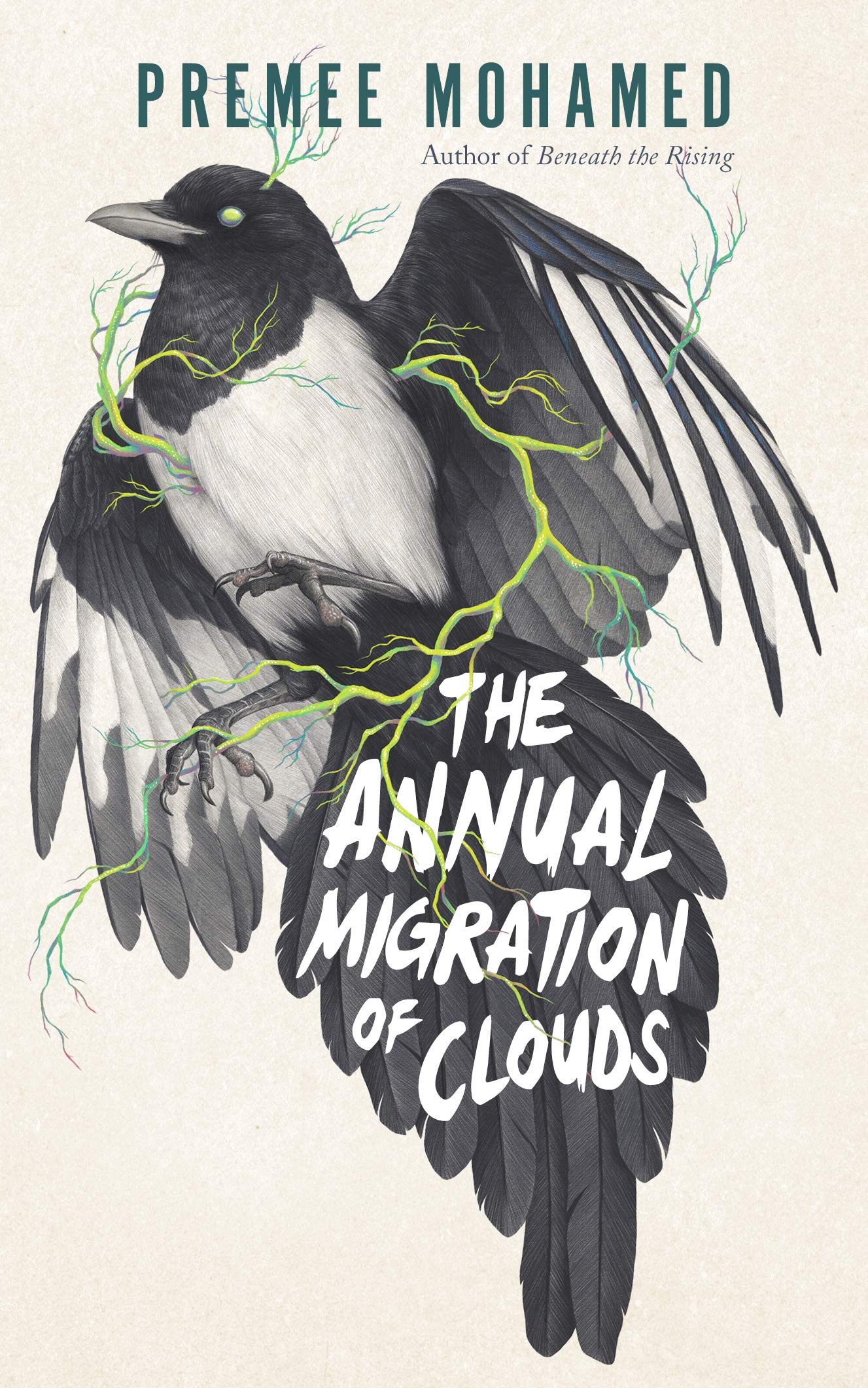
- The Annual Migration of Clouds by Premee Mohamad. I was excited to read this near-future apocolytic novel set right here in Edmonton, and I did indeed recognize many locations, even in their dyspotian form, but the story was so thin, and the main character so wannabe edgy, and the premise was just stealing bits from every popular YA novel in the past twenty years. Having a character walk down Whyte Ave. was not nearly enough to make up for it.
- Bitcoin Widow by Jennifer Robertson. Such an obvious cash grab, and yet I didn’t hear anyone talking about it, so was it worth it? Jennifer Robertson tells her side of the Quadriga crypto mystery, and asks the reader to believe that she is either incredibly naive or incredibly stupid when it comes to how her (late?) husband was financing their lavish lifestyle.
Crappy classics
At least I go to cross off two entries in the 1,001 Books list!
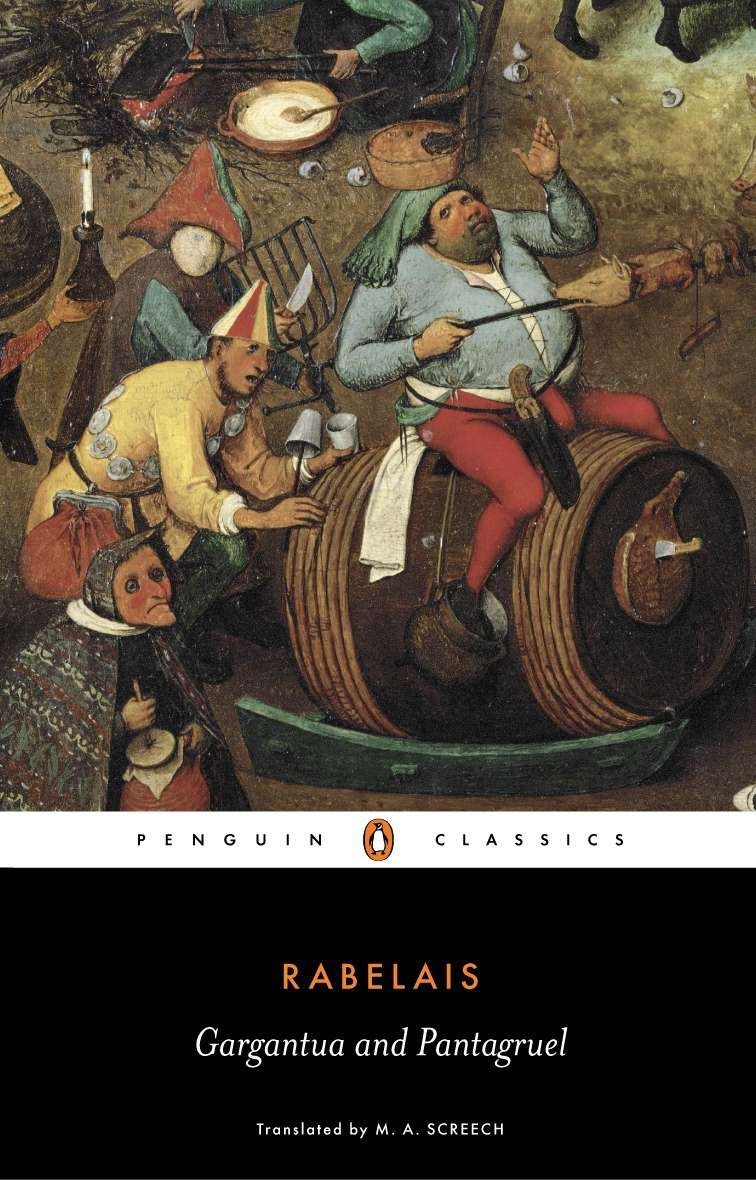
- Gargantua and Pantagruel by Rabelais. Well I’m not going to tell you that a novel written in a time when “novels” weren’t really a thing is “bad,” exactly, but I was not enjoying myself. After a certain number of piss and shit jokes it all kind of blurred together.
- The Autobiography of Alice B. Toklas by Gertrude Stein. I’m pretty sure this book invented the “autofiction” genre. Ms. Stein has a lot to answer for. There are a few good one-liners in here but you have to wade through interminable pages of “this artist visited us, we visited this artist, this person was boring, this person was a genius” and it’s SO BORING.
Mainstream, Midlist, and Meh
Some recent-ish books that honestly weren’t terrible but did not live up to the hype.
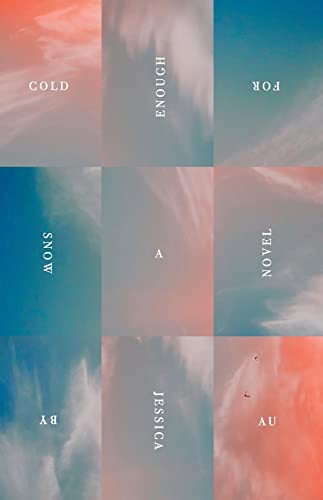
- Cold Enough for Snow by Jessica Au. Probably suffered from comparison to My Phantoms, which had similar themes but is just better in every way. This was totally forgettable for me.
- Helpmeet by Naben Ruthnum. I’m just really tired of horror books that use pregnancy and childbirth (or clear analogs) as their big, scary thing. Especially from male writers.
- Mayflies by Andrew O’Hagen. This one actually had some great moments, and is great when depicting 1980s England and the burgeoning punk scene, BUT the writing was so overwrought. And the sudden pivot to the current day halfway through was… unwelcome. I can handle overwrought when it’s teenagers we’re talking about, but when it’s guys in their 50s…
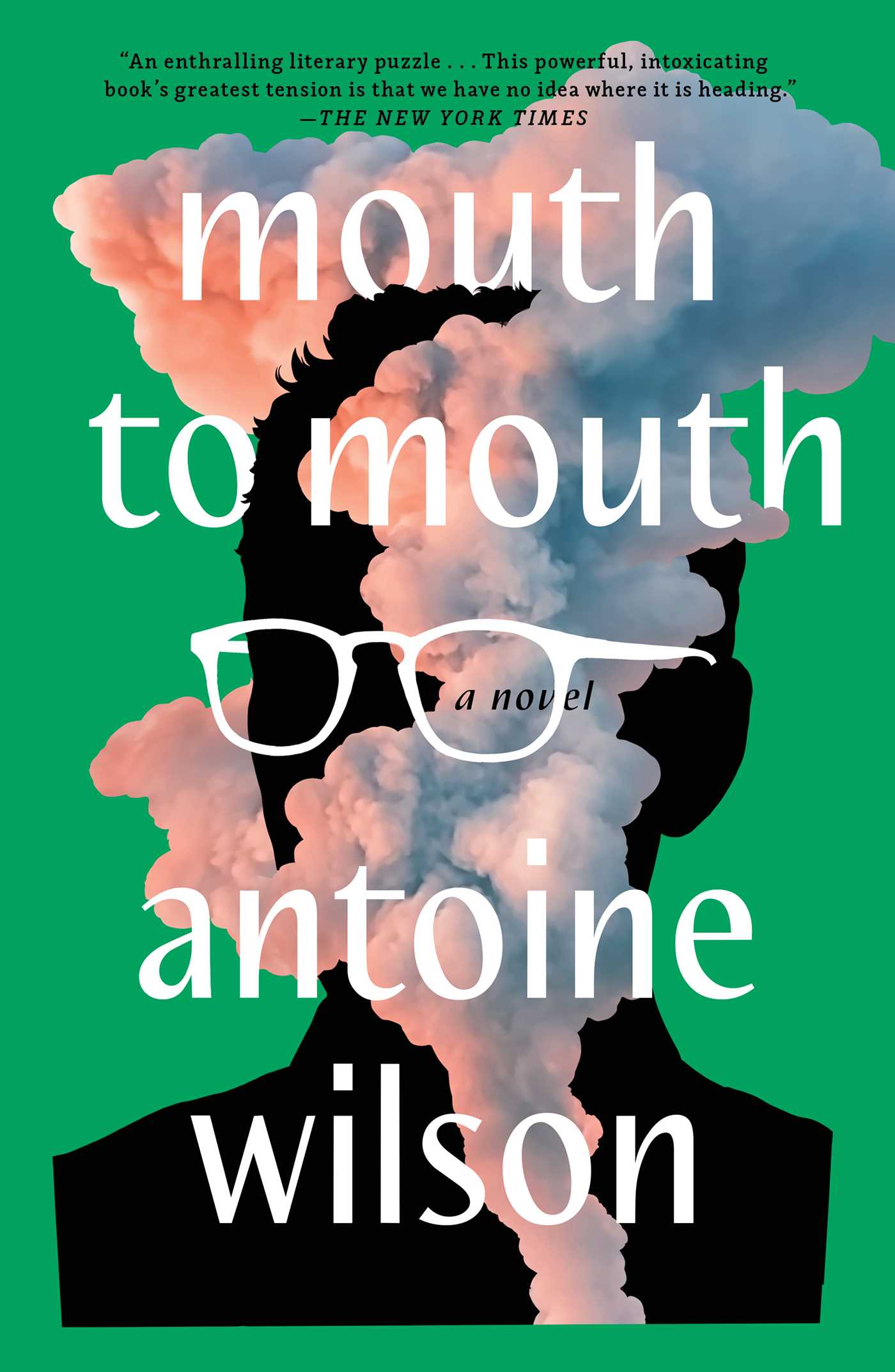
- Mouth of Mouth by Antoine Wilson. A Giller nominee, but I’ve also seen this in American best-of lists so it’s making waves… too bad I was so let down by the twist ending.
Tristram Shandy by Laurence Sterne
The Life and Opinions of Tristram Shandy, Gentleman is #963 on the 1,001 Books You Must Read Before You Die list. See the whole list and my progress here. This summer, I’m reading from the list for my 20 Books of Summer challenge, and instead of straight reviews, I’m going to compare the 1,001 Books write-ups with my own impressions.
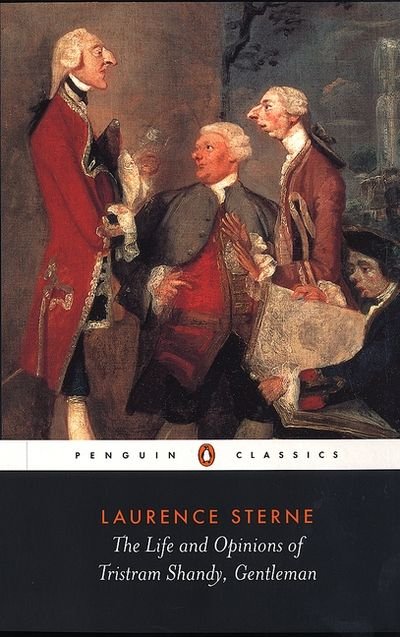


Tristram Shandy is a tough book to summarize, let alone in the couple of paragraphs granted each 1,001 Books entry. Contributor Drew Milne makes a good attempt, touching on the absurdities of a book about “the life and opinions” of a man who isn’t even born until several volumes in, and the experimental nature of Sterne’s writing, which acknowledges the futility of trying to capture life on the page.
Continue readingWise Children by Angela Carter
Wise Children is #173 on the 1,001 Books You Must Read Before You Die list. See the whole list and my progress here. This summer, I’m reading from the list for my 20 Books of Summer challenge, and instead of straight reviews, I’m going to compare the 1,001 Books write-ups with my own impressions.
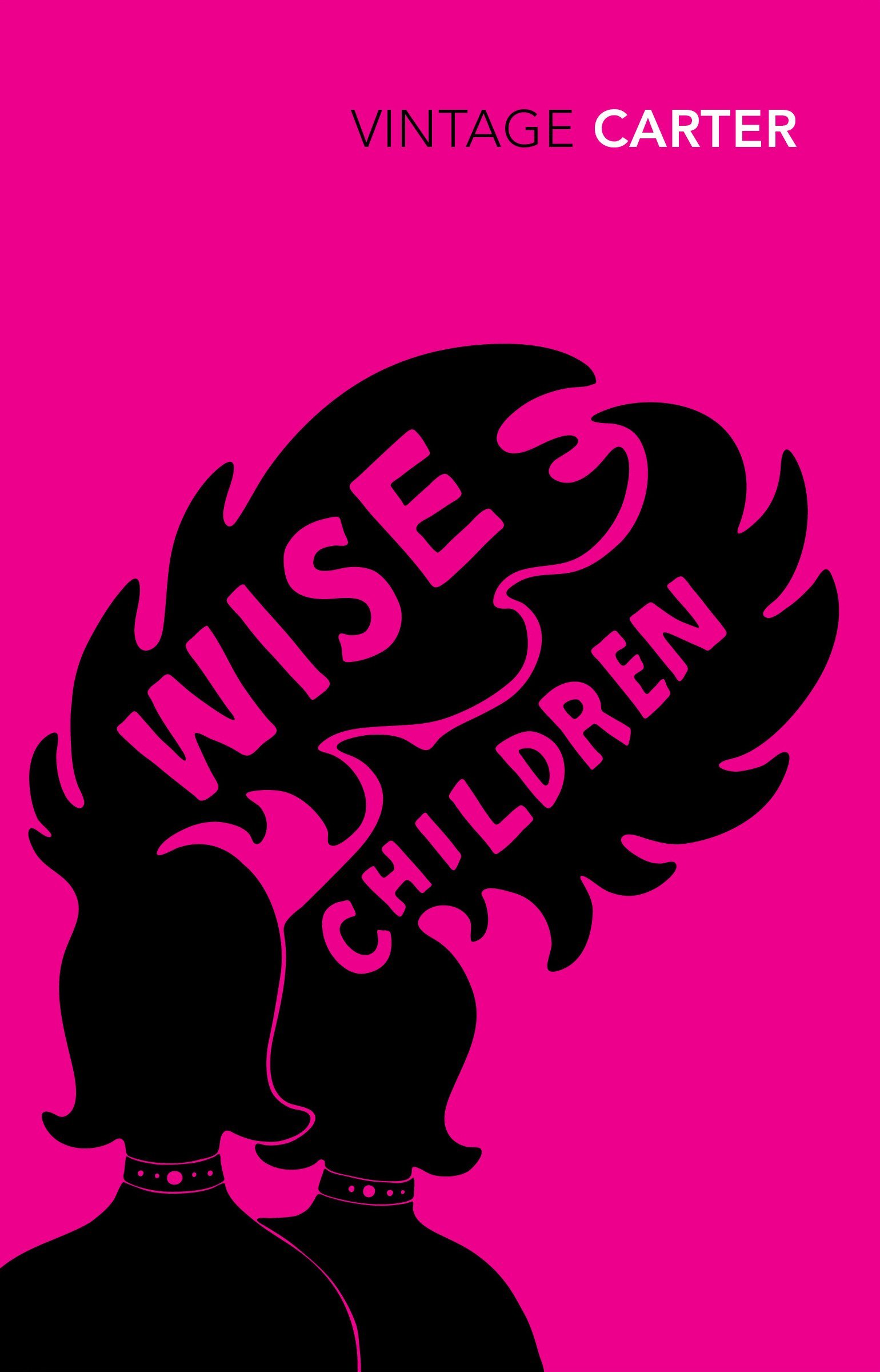
In a nice contrast with the first of these comparisons, I completely agree with 1,001 Books contributor Anna Foca that Wise Children is a “joyously exuberant unraveling of purity, legitimacy, and other cultural fantasies” and that it “gleefully documents the comic hybridizing forces of worlds colliding”. I honestly don’t know that I can put it better than that.
Continue readingThe Fox by D.H. Lawrence
The Fox is #724 on the 1,001 Books You Must Read Before You Die list. See the whole list and my progress here. This summer, I’m reading from the list for my 20 Books of Summer challenge, and instead of straight reviews, I’m going to compare the 1,001 Books write ups with my own impressions.


The Fox is a borderline novella, 86 pages in my wide-margined and illustrated edition. The 1,001 Books write-up begins by contrasting the length of this book with Lawrence’s major works, calling it “too brief and too self-contained” to include much more than plot. I can’t argue that it’s brief, though I would argue that there’s plenty of the “symbolism and mysticism” the reviewer found lacking, right where you’d expect it – the titular fox, who poaches chickens from two women running a small farm, is transposed onto the returning WWI solider who disrupts their solitary life:
Continue reading“But to March he was the fox. Whether is was the thrusting forward of his head, or the glisten of the fine whitish hairs on the ruddy cheek-bones, or the bright, keen eyes, that can never be said: but the boy was to her the fox, and she could not see him otherwise.”
The Fox by D.H. Lawrence
20 Books of Summer 2021
Or, let’s be realistic, 10 books of summer if I’m lucky. Last year I made a stack of twenty books, read ten (eventually), and reviewed four (the last review appearing in December). Let’s see how my late pandemic brain does compared to my early pandemic brain, I guess?
If you’re not familiar with this event, Cathy of 746 Books is our host and it’s as simple as it sounds. You have from June 1 through September 1 to read and review your books, but there’s lots of flexibility in terms of quantity, substitutions, and the definition of “summer” (good thing, we have snow in the forecast!)
This year, I am doing a bit of a theme. I am just ten books away from reaching a milestone in my long-running 1,001 Books You Must Read Before You Die project. My pace has slowed considerably over the last couple of years, and I need a boost. So, my list of ten books is made up of the nine “list” books I happen to have in the house, plus an open space. Perhaps you have a recommendation? You can review the list, and see which ones I’ve already read, here.
Here’s what I have on deck:
- The Fox by D.H. Lawrence (included in “Four Short Novels”)
- Quartet by Jean Rhys
- Wise Children by Angela Carter
- Zorba the Greek by Nikos Kazantzakis
- The Crying of Lot 49 by Thomas Pynchon
- The Life And Opinions Of Tristram Shandy, Gentleman by Laurence Sterne
- Independent People by Halldór Laxness
- Hard Times by Charles Dickens
- The Blind Assassin by Margaret Atwood
- I’ve got a blank space, baby (TBA, recs welcome!)

With expectations duly lowered, let’s go!
2016 Year in Review #1: The Stats
You may notice something different about this year’s stats, compared to other years. Let’s see how long it takes to spot it…
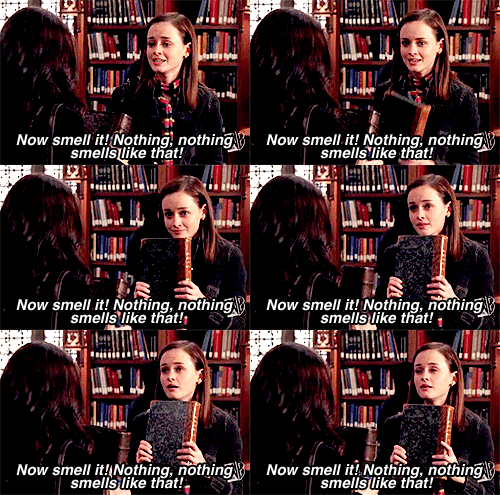
I smelled 0% of the paper books because that’s weird.
Books Read
- Books read in 2016: 35, down from 69 in 2015. That was on purpose, though. And I’m not counting rereads, kids books, or books I read for work.
- Shortest book: Bluets by Maggie Nelson (112 pages)
- Longest book: Cecilia by Frances Burney (1,056 pages)
- Format: 97% paper, 3% ebook, 0% audio (compared to a third of my reading on ebook and audio last year)
About the Author
- 100% female (58% in 2015)
- 34% person of colour (up from 20% 2015)
- 37% Canadian (same as 2015) 38% American, 11% British, and 1 each: Korean, Japanese, French, Filipino.
- Three Edmonton-area authors this year, being generous with one who moved recently!
… did you catch it? Yes, I did the #readwomen thing this year, and my experience will be covered in a separate blog post. Brace yourselves: unlike many who do this sort of thing, I did not come to any shattering realizations, and I *cannot wait* to read some dudes in 2017.

The book that started it all.
Genres and Lists
- 11% classics (same as 2015), 63% contemporary lit fic (about the same as previous years), 11% nonfiction (all memoirs), and a handful of erotica, poetry, and graphic novels.
- 2 1001 Books for a total of 127 read.
Probably gonna mix it up a bit next year, say, read some nonfiction that isn’t memoir?
Ratings
- 17% were rated five stars (up from 11% last year), 49% were four stars, 23% were three stars, 14% were two stars and poor Nora Roberts gets just one.
- The most underrated book was After Claude, which I rated a 5, compared to average 3.55 rating on Goodreads. Which I assume is due to people getting offended, which is the whole point.
- The most overrated book was The Liar, which I rated a 1, compared to average 3.94 rating. It was just bad.

Lemme in, Something Awful! I won’t stay long, I promise!
Blog Stats
- Headed for about 17,000 page views in 2015, down from 23,000 in 2015. And 11,000 visitors, down from 15,000.
- I’m not panicking, because my review of The Fault in Our Stars, which amassed 7,000 views in 2013-2015, was viewed just 400 times this year. Looks like kids writing papers have moved on to another book. Similarly, my review of Sleeping Beauty is not pulling the numbers it used to (nor am I seeing as much filth in my search terms). I think a lot of my traffic in 2014/2015 was artificial due to people landing on those posts – and quickly clicking away. They were never my readers anyway. The moral is: never review YA or erotica.
- An Oryx and Crake readalong recap from 2013 continues to perform, due to a post on a Something Awful forum which I’m sorely tempted to pay for so I can see what it is… anyone a member? Hit me up!
- On course for 45 posts this year, up from 39 posts in 2015.
- Most viewed post of 2016 is that mysterious Oryx and Crake one.
- Most viewed post that was actually written in 2016: Intro post of the Cecilia readalong, likely due to a little help from CBC.
- Least successful post in 2016: Short Story Advent Calendar Video Reviews. Same as in 2015, it’s a Booktube post. Okay, I get it, you guys don’t like the Booktube…
Stay tuned for best books, disappointing books, and 2017 plans, of which I have several!
2015 Year in Review #1: The Stats
While my family enjoys the traditional new year’s eve feast of microwave popcorn and mini-watermelon slices (it was in our produce box this week!) I shall avail you of my blog stats. Stay tuned for my favourite books of 2015 and 2016 plans.
 Books Read
- Books read in 2015: 69, up from 64 in 2014 and 52 in 2013.
- Shortest book: We Should All Be Feminists (49 pages)
- Longest book: City on Fire (944 pages)
- Format: 64% paper, 20% ebook, 16% audio (which would be up from 0% audio in any previous year, and represents the biggest change in the way I read.)
About the Author
- 58% female (Same as 2014)
- 20% person of colour (same as 2014)
- 38% Canadian (down from 55% in 2014) 35% American 16% British and 1 each: Argentinian, Nigerian, New Zealand, Malaysian, Italian, Brazilian, Angolan, German.
- Six Edmonton-area authors this year, up from two last year.
I didn’t pay much attention to gender and race this year, but ended up with the same “diversity” stats as last year. I put “diversity” in quotes because these stats and challenges generally leave a bad taste in my mouth. (That’s a whole other post, but this or this can give you an idea why.) I was curious about how my reading fell out, though, so I did the calculation. I notice that I expanded the number of author nationalities (at the expense of #CanLit, oops) while still reading a large majority of Canadian, American, and UK authors.
The book that started it all.
Genres and Lists
- 10% classics (down from 19% in 2014), 51% contemporary lit fic (about the same as previous years), 14% non fiction (up a bit from last year), and a handful of YA, erotica, romance, memoir, graphic novels, and a thriller.
- 3 1001 Books for a total of 126 read – and reread two more.
I’m further and further away from the reason I started this blog. Not saying that’s good or bad… stay tuned for 2016 plans!
Ratings
- 7% were rated five stars (down 13% in 2014), 41% were four stars, 36% were three stars, 16% were two stars. I DNF’d one book that was headed for a one-star rating.
This year is a bit of a slump. Only a few books blew me away. As usual, I tend to rate books lower than the masses on Goodreads:
- I rated 26 books higher. The most underrated book was The Bear, which I rated a 5, compared to average 3.31 rating. Yeah, I have a lot of feelings about this book.
- I rated 40 books lower. The most overrated book was We Should All Be Feminists, which I rated a 2, compared to average 4.44 rating. Not because I don’t agree, but because there was nothing new or challenging.
 Blog Stats
- 23,000 page views in 2015. About 50 fewer than last year, and about a thousand fewer visitors. So… things are a little stagnant around here.
- 39 posts in 2015, down from 52 in 2014 and 96 in 2013. Which might explain the stagnation.
- If I was an optimist, I’d calculate views per post, or views per visitor, but I’m not.
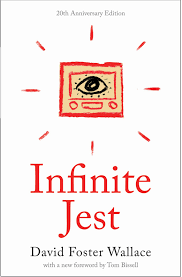
- Most viewed post of 2015: What’s the Deal With Infinite Jest? And I expect that to continue, as the 20th anniversary edition will be out soon.
- Most viewed post that was actually written in 2015: Book-loving hedonists and alienated intellectuals: why readers need to settle down about reading. This was my favourite post to write as well.
- Least successful post in 2015: Novellas in November 2015 wrap-up (video.) Seriously? I thought I was so hip and with it, what with the Book-tubing….
 Reading in Bed