Green Darkness by Anya Seton

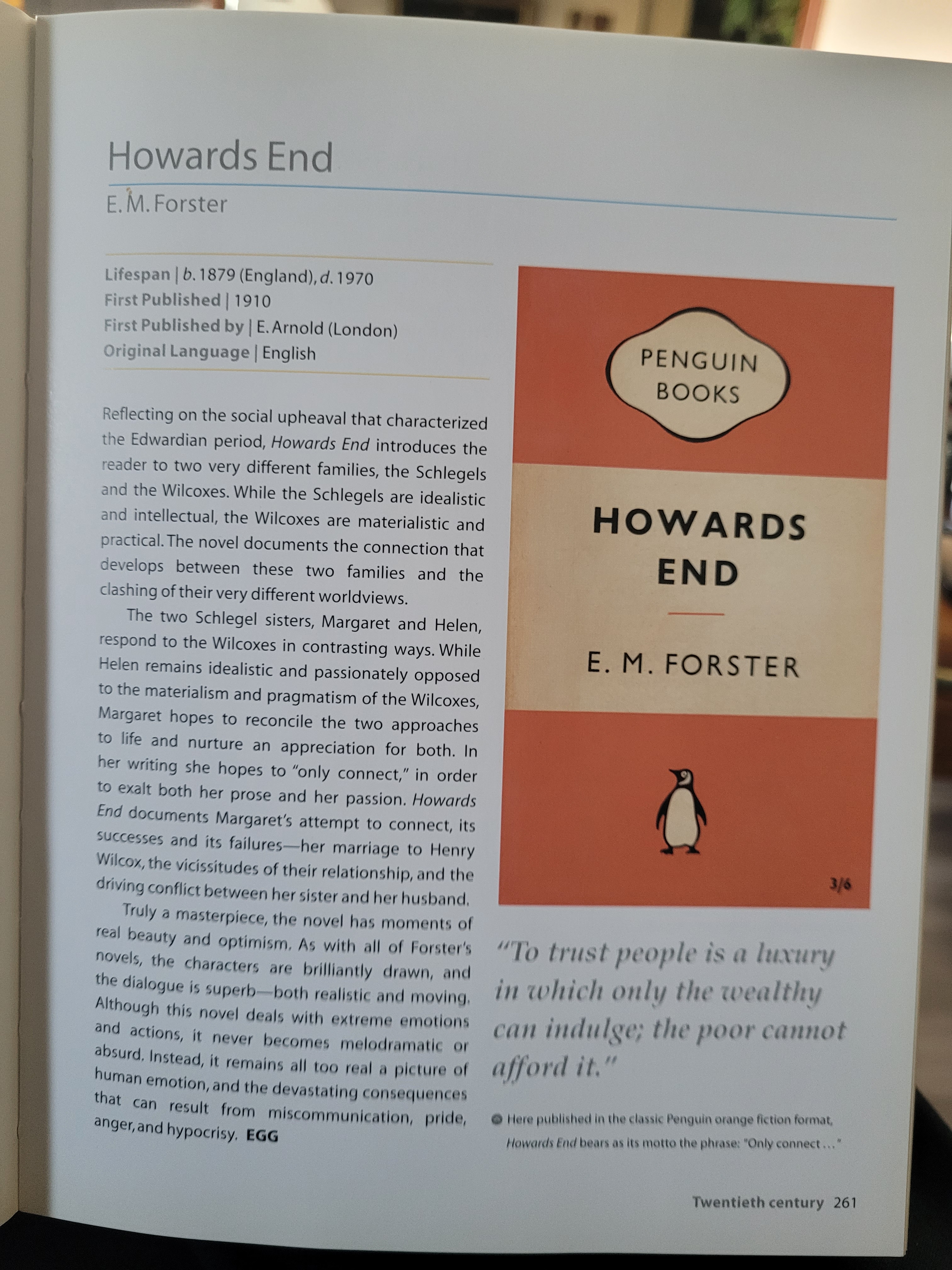
This summer, I’m doing the 20 Books of Summer challenge, and instead of straight reviews, I’m going to compare my impressions of books to their write ups in the 1001 Books list (see the whole list and my progress here), or in this case, I’m comparing a regular book to a few listed books.

For a fifty-year-old novel in a genre I rarely read, I was surprised how many connections I made while reading Green Darkness by Anya Seton. These comparisons are mostly unfavourable to Seton, but, I do think this is a fascinating story, both ahead of its time and a throwback, even in 1972. 

Green Darkness makes you think it’s about the leisure class in 1960s England, specifically, newlyweds Richard and Celia, who are hosting a motley crew of friends, relatives, and acquaintances at Richard’s ancestral manor house. But that’s just an excuse to explore the past lives of the couple, who are pretty boring in the present day, but were apparently in love at least twice before, once in late-Tudor England and once in ancient times. The bulk of the book tells the tale of Celia the barmaid and her doomed affair with a Benedictine Monk during the reigns of Edward VI, Mary I, and Elizabeth I (and, briefly, Jane). We know from page one that things don’t end well, to put it mildly: Celia ends up being “walled up”, that is, sealed in a tiny room, alive, Cask of Amontillado style. This is based on a maybe-true story of the “walled-up girl” of Ightham Mote.

Despite the lack of a happy ending, to me, this is a romance novel. There are literal ripped bodices, as well as overwrought declarations, trysts in the woods, love potions, and a LOT of sexual frustration. These people are horny as hell, and I tell you, when we finally see some action around page 350, I was a little frustrated too!

I immediately started thinking of other books in the “horny monk” genre, both of which happen to be on the 1001 list: The Monk by Matthew Lewis (#946) and The Name of the Rose by Umberto Eco (#293). Green Darkness is pretty out there, with the whole past lives, reincarnation angle, but doesn’t quite reach the heights (or depths) of drama found in The Monk (both Satan and The Spanish Inquisition make appearances, someone “accidentally” marries a ghost) nor the horniness… I’m pretty sure there are more sex scenes in this 18th century novel. The Name of the Rose is a more compelling mystery, and a better written book, with just a few horny moments, both hetero (Brother Adso and the peasant girl) and homosexual (various monks). 

I also have The Nun by Denis Diderot (#944) on deck for 20 Books of Summer, which I imagine is in this vein, though perhaps more sapphic…

Looking beyond monks and the 1001 books, there are also quite a few parallels between this book and the steamy Thornchapel series by Sierra Simone, in which another ragtag group of friends, including a VERY horny priest, repeat the sins of their ancestors in a manor house. It’s got a murder mystery and a strong paranormal element too. Though Simone would never make you wait 350 pages for a sex scene. 

Then there’s the historical angle. I’m no expert, but I did have a Tudor phase a few years ago, and the political and social backdrop seemed well-researched. Reading names like Wyatt and Wriothesley put me in mind of Hilary Mantel’s Wolf Hall trilogy, which is unfair, because no one is doing it like her (or, did it – I keep forgetting she’s gone). Green Darkness was never going to deliver a character with the depth of Thomas Cromwell, and Seton’s Wyatts and Wriothesleys are just walk-on parts in Celia and Stephen’s story, not delightful characters in their own rights. Seton created a world where Mantel created a universe – and the fact that Mantel is not represented on any edition of the 1001 Books lists is a gross oversight.

Emma Donoghue is a more apt comparison – she’s known for taking the kernel of a historical fact and running with it, like in Slammerkin, where the real story of a teenage servant girl who murdered her employer in 18th century Wales was woven into a story about greed and lust in London. The walled-up girl of Ightham Mote is just as good a starting point – even if it is probably a myth. 

Green Darkness doesn’t quite measure up to most of these classics, however, it’s pretty impressive that it balances so many elements and genres: paranormal, historical, suspense, and romance. The prose style reads like a throwback, but the genre-shifting and subversion of (some) romance tropes makes it feel pretty modern.

As for how its aged in the fifty years since it topped the bestseller list: there’s a surprising amount of gay and bisexual representation (and at one point I wondered if Celia and her friend Magdalen, the future Viscountess Montagu, were going to have a lesbian romance – Emma Donoghue, please write that story!). There’s also a surprising number of racial slurs thrown around in the contemporary sections. Modern readers also might be a bit dubious about a 27-year-old monk’s desire for a 14-year-old girl in the beginning of the story, but remember, it’s a slow burn; several years pass and she’s a widow by the time anything too crazy happens!

I’m only left wondering two things: was there really a walled-up girl at Ightham Mote, and what does the “green darkness” in the title refer to? Google is unhelpful on both accounts.

The Blind Assassin by Margaret Atwood

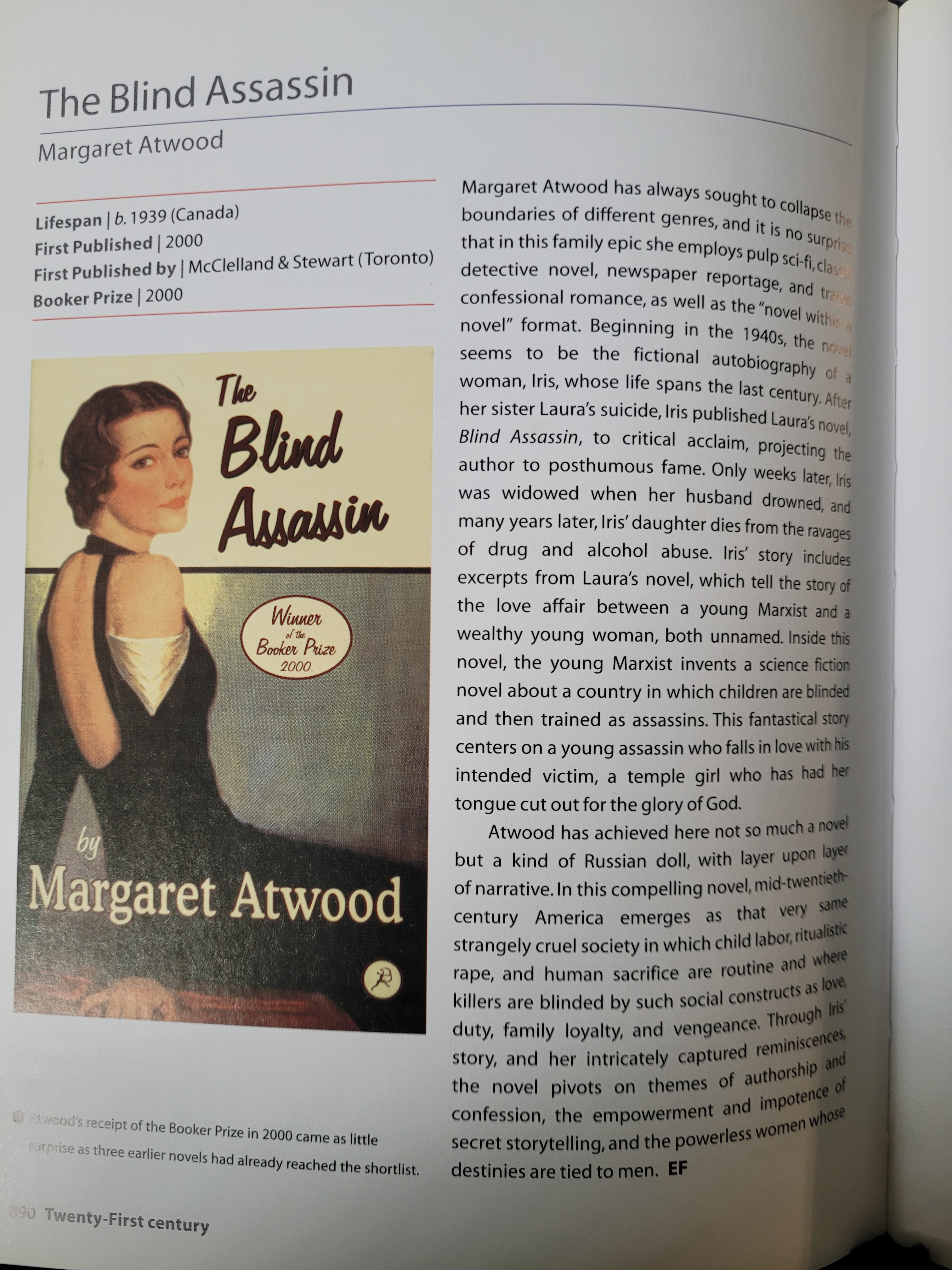
The Blind Assassin is #63 on the 1001 Books You Must Read Before You Die list. See the whole list and my progress here. This summer, I’m reading from the list for my 20 Books of Summer challenge, and instead of straight reviews, I’m going to compare the 1001 Books write ups with my own impressions – or in this case, I’m going to get angry about a contemporary review! The 1001 Books write up is fine and not that interesting.

It goes without saying that Goodread reviews are suspect. Where can a reader go for a trustworthy, competent review these days? Not the New York Times, apparently! After reading the fairly standard 1001 Books write up, I thought I’d look for something a little juicier, and I was shocked to find a blatant misreading of The Blind Assassin committed to print on the book’s publication date.

It’s difficult to describe what this review got wrong without going deep into the plot, and this is a deep plot, as in, layered. In my last 20 Books review, I talked about frame stories. This one has got frames on frames on frames. The main character is not only telling two stories at once, of her present-day life as an elderly woman, and of her childhood through young adulthood, but also the story of her younger sister, who attained cult status after her novel, also called The Blind Assassin, was published posthumously. Passages from that novel are interspersed into the narrative, and that novel has its own story-within-a-story. Oh, and there are newspaper clippings here and there, adding an extra “here’s what it looked like from the outside” layer. And of course, all the characters are hiding things, and are generally unreliable.

I hope *I* got all that right. But the NYT reviewer absolutely missed a major plot point. My best guess is that he took what the (clearly unreliable) narrator writes about the novel within the novel at face value, and either didn’t read the end, or skimmed it, and so never came to the (clearly signalled) revelation that I and other attentive readers did.

This oversight makes the reviewer’s subjective assertions, e.g. that characters are “flat as a pancake”, or that the reader’s first impressions of them are “not so much lasting as total”, or that a particular character is a “cardboard villain” extremely suspect. The narrator comments on the villainous presentation of her husband, and why she does it, and that’s just a minor example. When the reviewer goes on to complain that narrator’s “sourness” seems more “adolescent than geriatric” I wanted to shake him. YES, that is THE POINT, she is NOT DONE WITH THE PAST, she is STILL THE YOUNG WOMAN WHO… oh, you don’t even know which young woman she was!

I’m unable to find a direct quote, but Atwood either “said” she was amused or “seemed” amused by all of this, depending on the source. Would that all authors were so serene. Anything more than an “amused” reaction to a bad review, even a bad review that is clearly a misread of the book, is either going to backfire, or create a hot take cycle. Easy for Atwood to say, I guess, in the year 2000, where the majority of people reading that review were doing so on soon-to-be-recycled newsprint and book blogs were in their infancy, let alone Goodreads. She was also a four-time booker nominee (and soon to be a winner). But I suggest that even small, debut authors should take note. Don’t rise to it.

Or better yet, authors and readers alike should get off Goodreads entirely until we can figure out what the hell is going on. And go to a reliable source about books like… uh… BookTok?

If you’re interested… wtf is going on with the font on this cover??

Self-Portrait With Boy by Rachel Lyon

Wuthering Heights is #902 on the 1001 Books You Must Read Before You Die list. See the whole list and my progress here. This summer, I’m reading from the list for my 20 Books of Summer challenge, and instead of straight reviews, I’m going to compare the 1001 Books write ups with my own impressions – or in this case, I’m going to compare one of my 20 Books to a book on the 1001 list.

I am once again drawing parallels between two books based on what very well may be coincidences. Hear me out on this one, though. If I’m wrong, at the very least, take this as a sign that if you are a Wuthering Heights fan, you will probably like Self-Portrait With Boy by Rachel Lyon, too. 

I have found no evidence that Rachel Lyon has even read Wuthering Heights, let alone been influenced by it. She tends to recommend modern writers, and talks about real-life inspiration for this novel. But look, it’s a story about a motherless girl living in a sprawling, ramshackle building who is haunted by a ghost that knocks on and eventually breaks her window. My heights are officially wuthered!

Then there are the copious details that could be pulled from any number of gothic novels of Brontë’s time: filthy living conditions (including a memorable scene with a family of rats), evil landlords, orphans, grieving parents, a closed society (the 1990s NYC art scene), clearly defined class structure (poor Lu even becomes an art teacher for wealthy children, a modern day governess), a beautiful woman in distress…

But the most important parallel didn’t become clear until the very last line, and it’s a feature of Wuthering Heights that I tend to discount, and even forget in between rereadings: the frame story.

In a story full of literal frames (art, window) the literary frame in Self-Portrait is conventional enough: an old(er) woman looking back at her life. It’s unobtrusive at first. The story of Lu capturing a photograph of a child falling to his death, a moment that will define her career if it doesn’t tear her apart, is so compelling that it’s easy to forget that we are reading the thoughts of a self-aware, middle-aged woman looking back on it all, until the story catches up with itself at the end. 

The frame in Wuthering Heights feels a bit more dated (as it should, 200ish years on): someone is being told a story. And it’s not subtle at all. On every reread, I forget how much of Lockwood’s perspective we have to get through before Nelly Dean gives him (and us) the goods on Cathy and Heathcliff.

These frames are totally necessary though. They allow both books to end on a haunting and devastating note. In Wuthering Heights, Lockwood wondering “how anyone could ever imagine unquiet slumbers, for the sleepers in that quiet earth” would not hit the same if it was just some omniscient narrator, or one of the remaining Lintons or Earnshaws. It has to be an outsider who’s slowly come to understand the tragedy that played out on these moors, alongside the reader. In Self-Portrait, the last line (which I won’t quote – spoilers apply to novels from 2018) is similarly devastating, and would not make sense coming from twenty-something Lu; she doesn’t have the insight yet. The reader feels the truth of it, and the weight of the time that’s passed, all in that final sentence.   

If Wuthering Heights is the epitome of Georgian gothic (yes, it was written in the Victorian era, but it’s a historical novel, set a generation or two in the past, just like Self-Portrait), then Self-Portrait With Boy has a strong claim on late 20th century NYC gothic. Or whatever that era eventually gets called.

Hard Times by Charles Dickens

Hard Times is #888 on the 1001 Books You Must Read Before You Die list. See the whole list and my progress here. This summer, I’m reading from the list for my 20 Books of Summer challenge, and instead of straight reviews, I’m going to compare the 1001 Books write ups with my own impressions.

Hard Times is one of the lesser known Dickens novels. It’s been on my shelf for 10+ years, and I’ve started it more than once, without getting much farther than the schoolroom chapters, where the teacher is named “Mr. McChokemchild.” A library ebook helped me get past the small font in my Penguin Popular Classics edition, and I soon wondered why no one told me this book has so much more than school children. It’s a classic Victorian social novel, tackling class, unionization, alcohol abuse, gambling, infidelity, and more. It’s sort of a North and South, with more humour and less romance.

Well, someone did try to tell me. The 1001 Books Hard Times write up not only mentions Gaskell (in an unfavourable comparison) but the entry is right beside the entry for North and South, highlighting the fact that these stories were being serialized at pretty much the exact same time – what a time to be alive! You know, if you weren’t a factory worker… or a woman…

The write up also would have helped me make the connection to utilitarianism, a philosophy I’ve been interested in since reading The Brothers Karamazov (and since going down several rabbit holes related to the current crop of tech-bro philosophers who are rebranding it as Effective Altruism). This theme is first explored in this early classroom scenes – what is an education for? What’s the point of “wondering” when you can memorize facts?

The write up portrays Hard Times as a bit of an unfocused look at these various social issues, and I guess it is, but compared to Dickens’ known works like A Tale of Two Cities, I found this one more satisfying. It read faster (not only because it’s significantly shorter), the characters were more varied, and while some were one-dimensional “bad guys”, most had some depth and showed some growth, even some of the female characters. And it’s just very funny. The circus ringmaster, Mr. Sleary, with his lisp and his rolling glass eye, was played for comic relief, but he speaks the line that sums up the book:

‘People must be amuthed, Thquire, thomehow…they can’t be alwayth a working, nor yet they can’t be alwayth a learning. Make the betht of uth; not the wurth.’

Chapter VI

To me, that’s as good as “It is a far, far better thing that I do, than I have ever done; it is a far, far better rest that I go to than I have ever known” (though perhaps not as good as “the best of times” etc.) I’m glad I finally read this. For me, that’s four down, six to go for the 1001 Books-worthy Dickens novels.

1001 Books

20 Books of Summer 2023

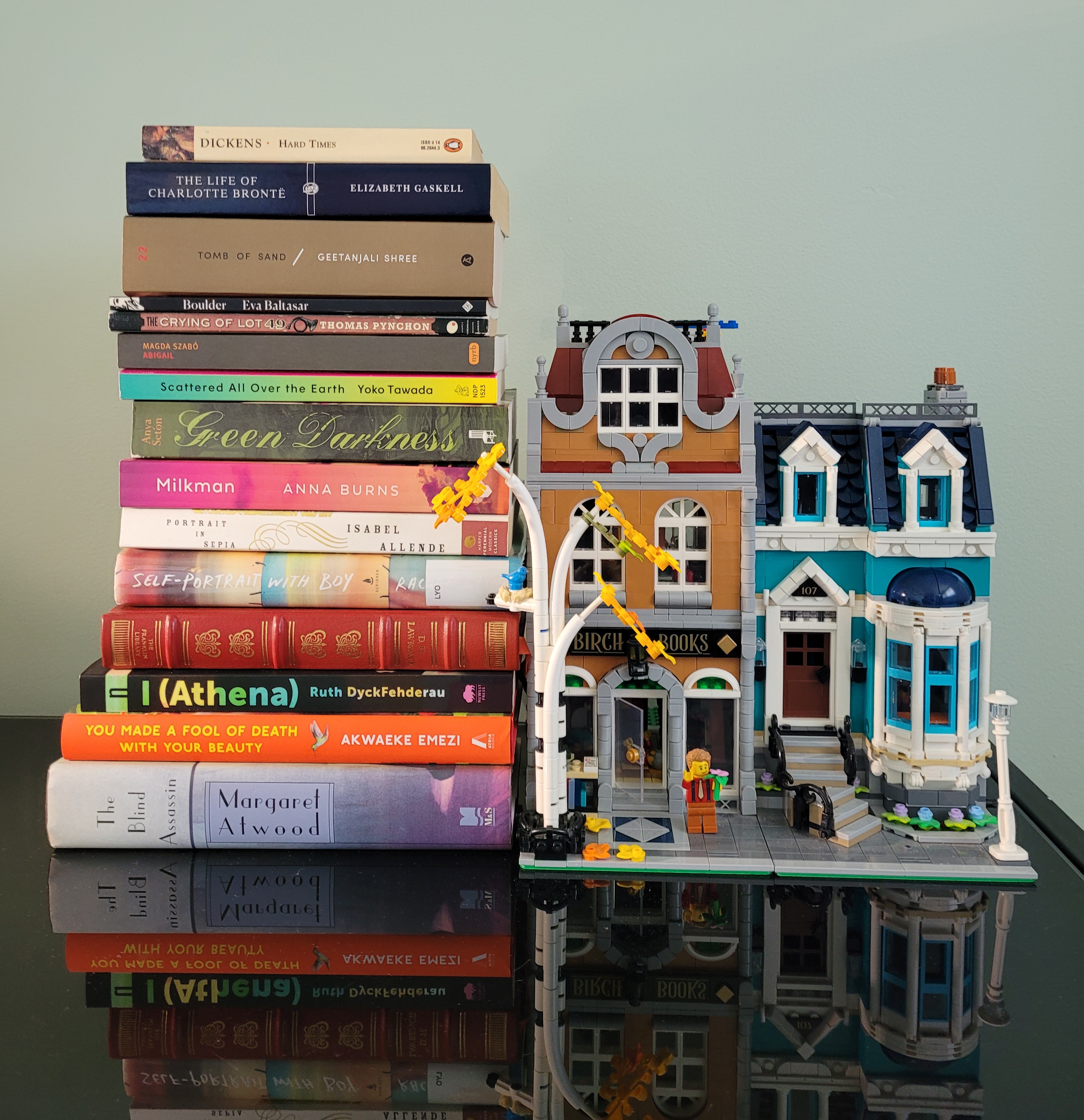
After skipping last year, I’m back at it again, joining Cathy in creating an overly-ambitious, unrealistic plan to read and review twenty books this summer. Though perhaps I shouldn’t sell myself short. Reviewing my past record, there’s a decent chance I’ll get to these, eventually… of my 20 books of summer 2019, I’ve now read 19. This year’s list is a combination of carryovers from summers past, prize winners and longlisters, review copies, and the few remaining 1001 Books that are sitting unread on my shelf (or books by authors who appear on that list.) Guess I’ll have to visit a used bookstore soon to replenish!

  1. The Crying of Lot 49 by Thomas Pynchon (1001 Books, previous on a 20 Books list)
  2. Hard Times by Charles Dickens (1001 Books, previous on a 20 Books list)
  3. The Blind Assassin by Margaret Atwood (1001 Books, previous on a 20 Books list)
  4. Howard’s End by E.M. Forster (1001 Books)
  5. The Ambassadors by Henry James (1001 Books)
  6. [Holding this space for another 1001 Books pick, pending a trip to Wee Book Inn]
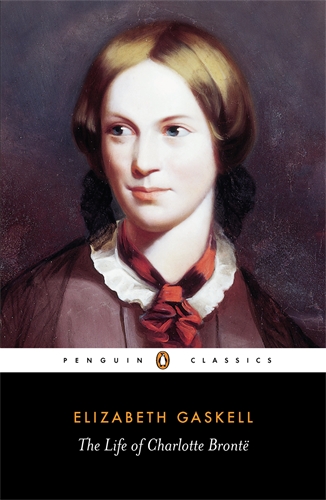
  7. The Life of Charlotte Brontë by Elizabeth Gaskell (1001 Books adjacent)
  8. The Ladybird by D.H. Lawrence (1001 Books adjacent)
  9. Abigail by Magda Szabó, translated by Len Rix (on a previous 20 Books list)
  10. Green Darkness by Anya Seton (on a previous 20 Books list)
  11. Portrait in Sepia by Isabel Allende, translated by Margaret Sayers Peden (on a previous 20 Books list)
  12. Scattered All Over the Earth by Yoko Tawada, translated by Margaret Mitsutani (one of the books I bought in a Covid-induced haze last year)
  13. You Made a Fool of Death with Your Beauty by Akwakae Emezi (another Covid book)
  14. Tomb of Sand by Geetanjali Shree, translated by Daisy Rockwell (2022 International Booker Prize winner)
  15. Boulder by Eva Baltasar, translated by Julia Sanches (2023 International Booker Prize shortlister)
  16. [Holding this space for the 2023 International Booker Prize winner, in case I haven’t read it]
  17. I (Athena) by Ruth DyckFehderau (a review book from this year)
  18. The Last Samurai by Helen DeWitt (just a plain old “been on my TBR forever”)
  19. Milkman by Anna Burns (Booker prize winner)
  20. Self-Portrait with Boy by Rachel Lyon (cheating as I’m about to read this)

Join in at 746 Books and hold me accountable!

The stack (not pictured: a few on my Kobo)

International Booker Prize 2023 mini reviews

Here are my brief thoughts on the books I’ve read so far, and my plans heading into the home stretch. It’s been nice to get back into the IBP this year, after a half-hearted 2022, skipping 2021 entirely, and getting derailed after a strong start in March of 2020. Not all the books have been nice though!

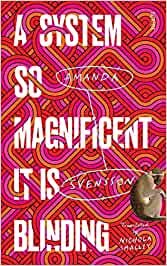
A System So Magnificent It Is Blinding by Amanda Svensson, translated from the Swedish by Nichola Smalley
This book is trying to be so many things, but ends up being a big old mess. I saw a reviewer compare Svensson to Franzen and yes, there are some similar themes around family, activism, and shadowy bureaucracy, but that’s not all there is to this book. Svennson adds: triplets! Babies switched at birth! Possible incest! Suicide! Cults! Monkeys! Infidelity! Depression! Eating disorders! Synesthesia! Child actresses! Peacock feathers! I’m sure I missed several recurring themes. All this stuff took attention away from the main family unit, which, Franzen would never.

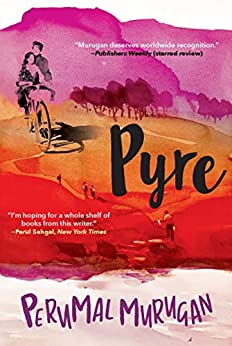
Pyre by Perumal Murugan, translated from the Tamil by Aniruddhan Vasudevan
I said what I needed to say in this post. This story was too opaque for me, so I felt a remove, but I would try more from the author, particularly The Story of a Goat.

The Birthday Party by Laurent Mauvignier, translated from the French by Daniel Levin Becker
People talk about this book like it’s a thriller but it’s a lot more… but also a lot less. More because of the complex language and extremely close narration, and less because when the story finally tips over from expectation and dread to action, it kind of falls apart. The meandering style works very well for revealing shocking parts of the character’s thought process and history, but a lot less well for shocking violence and split-second decisions. Then, the ending left me with more questions than answers, and not in a good way.

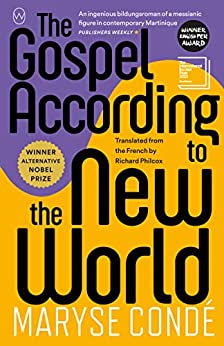
The Gospel According to the New World by Maryse Condé, translated from the French by Richard Philcox
I was hyped for this book because I’ve enjoyed both Caribbean literature and Bible retellings in the past. Then I read some reviews that said this was too close of a retelling, with not much new to say. That might be true, but, I loved it. At times funny and absurd, it was mostly just calming and meditative. Reading this felt like a respite from life. Which is sort of how my religious grandparents would talk about their faith, so, there’s that! Condé is a fascinating person, and I wish I could find an English translation of her Wuthering Heights retelling (which is the equivalent of the Bible for me).

On deck, I have copies of Is Mother Dead by Vigdis Hjorth, translated from the Norwegian by Charlotte Barslund, and Time Shelter by Georgi Gospodinov, translated from the Bulgarian by Angela Rodel out from the library. Is Mother Dead didn’t make the shortlist, but it’s a shorter (and beautiful, with full colour endpapers) book so I will try to get through it. I’ve read a few raves about Time Shelter. My copy of Boulder by Eva Baltasar, translated from the Catalan by Julia Sanches finally arrived, and I’m waiting on Whale by Cheon Myeong-kwan, translated from the Korean by Chi-Young Kim… and that’ll do it for me, unless something not listed here takes the prize, as I always like to read the winner!

Memories, modems, and martinis

This is a short piece I wrote for Hungry Zine‘s special edition “Mall Food”, a full issue dedicated to food culture in West Edmonton Mall. You can buy the issue here.

In the year 2000, West Edmonton Mall was at its peak: Phase IV was complete, the dragon in Silver City was breathing fire at regular intervals, Playdium had just opened, and Nickleback played a show at Red’s — when it was still called Red’s, and they were still a local band. These are just a few of the things that made West Ed what it was at the dawn of the new millennium, but one tenant stands above the rest as the most Y2K-coded thing the mall has ever known. Offering a heady mix of martinis, cigars, and high-speed internet access: Bytes Internet Cafe.

The “internet” or “cyber” cafe had a brief moment in the late 1990s and early 2000s, when home computers weren’t a given and dial-up was unreliable. It’s a food and drink concept that doesn’t really exist anymore. Now, we have our phones out, maybe face down on the table if we’re being polite, whether we’re at a humble Boston Pizza (Phase II), a trendy hand-pulled noodle place (Mogouyan, Phase III), or the swanky, Fantasyland Hotel-adjacent L2 Grill (Phase I). Every cafe is an internet cafe.

But in the Y2K era, going online was not just novel, but also a very contained experience. “Surfing the net” usually took place in a dedicated computer room or lab — not the best places to eat and drink, Mountain Dew and Doritos aside. (If you were truly online in this period, perhaps you were sipping an electric-blue Bawls soda, with its 64 mg of caffeine.) Sitting down to check your email while sipping a latte was something special.

Continue reading

How translated should a book be?

Pyre by Perumal Murugan, tr. Aniruddhan Vasudevan and The Birthday Party by Laurent Mauvignier, tr. Daniel Levin Becker

Pyre was the most accessible of the International Booker Prize longlist, availabilty-wise. My ebook hold came in almost right away. It’s quite short and sparse, and it’s a propulsive story with an inevitable conclusion that still manages to be shocking. But I’m left with questions, some specifically about the characters, and some about the accessibility of translated works in general. How much can a person reading in English understand the author’s intentions? How much hand-holding should a translator do?

In Pyre, Kumaresan, a young man from a tiny village in southern India, moves to a nearby city to work. He meets a girl, Saroja, and they elope, with plans to settle back in his home village. Saroja leaves her whole life behind, on a promise that she will be accepted by Kumaresan’s family and village, eventually. They eloped because they are from different castes, and neither family would have been in favour of the marriage, but they both seem to believe that when presented as a fait accompli, people will come around.

People do not come around. Not only are the couple not accepted, but they are instantly, continuously, relentlessly, and violently rejected, most vehemently by Kumaresan’s mother, but also by close family members, friends, and village officials, who consider cancelling a planned festival until Saroja can be cast out.

As a reader, am I to believe that Kumaresan, who grew up in this village and in this culture, had no idea this would happen? Is he very naive? Or was he blinded by love (or lust?) Or was he influenced by his time in the city, where rules around caste are more loosely observed? It was never clear to me, so I had a hard time understanding how annoyed I should be at this guy because Saroja, of course, bears the brunt of the villagers’ ire.

Apart from that (rather major) unknowable element of Pyre, much of the language was obscure to me. Names for food, clothing, and such were often presented in Tamil, and probably for good reason, but even my Kobo couldn’t help me out – no dictionary definitions, not even Wikipedia entries in many cases. Had I read a paper copy, I would have figured out sooner that there was a translator’s note and glossary in the back, but even those were pretty thin.

I’m not saying that translated books need to hold my hand. I can google as well as anyone, though after a few attempts at searching “Tamil castes”, “Nadu castes”, and so on, I was not much wiser as to how much Kumaresan should have know. This story, which is otherwise told in a very straightforward manner, remains impenetrable to me on some levels.

On the other hand, IBP longlister The Birthday Party feels a little over translated. I don’t think Three Lone Girls is a real place in France, but if it was, surely it would be Trois Filles Seules. Nor do I think that Stories of the Night, the book Marion reads to her daughter at bedtime, is real, but if it was, it would surely be called Histoires de la Nuit – and that’s the title of this book in French. “The Birthday Party” is a very literal title, since the setup is Marion’s fortieth birthday, and we first meet her husband Patrice, neighbour Christine, and daughter Ida as they prepare for her party. Histoires de la Nuit or Stories of the Night is much more suggestive.

Even the dog’s name is changed from Radjah to Rajah – Radjah seems to be a variant spelling that’s more popular in French. I promise I would have understood that the dog’s name is roughly Prince – though maybe I should just be glad it wasn’t rendered as “Prince”!

All this Anglicization annoys me. I wonder if that’s because I’m overconfident in my French reading abilities due to my Duo Lingo streak, or, if the characters just feel more familiar. I don’t think I’ve pissed off anyone enough to have my home invaded (mild spoiler, but don’t worry, I’m on page 300 and have NO idea where this is going to end up), but I am, like Marion, a working mom who met my husband on a first-generation dating website. I also understand the context of contemporary, Gilet jaunes-era France a bit better than I understand caste-related violence in 1980s India. But I wonder what cues and references I am missing?

I have a feeling I’ll be doing a little more research on both of these books – Pyre to illuminate the characters and plot points I may have missed or misinterpreted, and The Birthday Party just to see what other readers think of this complex and thrilling story. Here’s a review for Pyre that helped me understand a bit more about the author; I learned that he’s written a book from the point of view of a goat, which was given a rave review by Parul Seghal, for one thing! As for The Birthday Party, I tried to read the first chapter in French with an ebook sample, but it was not happening. Perhaps I could read a review in French though?

How to read the 2023 International Booker Prize longlist in Canada

2023 will go down as the year everyone’s International Booker Prize predictions were wrong. I was surprised not to see Mieko Kawakami, Han Kang, Yōko Tawada, or Sayaka Murata, and I was so sure we’d see the new Can Xue, Barefoot Doctor, that I shelled out nearly $30 for the ebook!

I love this list though. It’s the most accessible one I’ve seen in years, meaning that even in Canada, you can read the whole longlist ahead of the prize being awarded, if you want to. You could buy half the longlist right now from Canadian retailers. You could buy the whole longlist from Blackwell’s for $332.77 CAD.

These insights and more are available in my annual spreadsheet. It includes a bit of demographic info, but mostly helps you figure out where to obtain these books in Canada for the best price. My sources are noted, but generally, Canadian cover prices are from Glass Bookshop, library availability refers to Edmonton Public Library, and UK editions are from Blackwell’s. All prices are in CAD and include shipping. I didn’t bother linking to publisher’s websites this time, because for once, it’s not necessary.

I’m happy to see a nice range of languages (Tamil, Bulgarian, Catalan, and Norwegian, in addition to the usual suspects – but notably, no Japanese!) and a nice range of ages (the youngest writer is 35-year-old Amanda Svensson, while the oldest, and the oldest ever to make the list, is 89-year-old Maryse Condé – or is she 86, as Wikipedia claims?) though it’s skewing a little older this year, and very heavy on Gen X writers (seven out of 13).

I got a lot of traction (i.e. almost 100 likes) on a tweet complaining about the “creative” way book prizes present their longlists. The International Booker Prize gave us the courtesy of a text-based list, but even then, you have to click through to see the authors and translator names, so for your convenience, here’s your plain-text, detailed longlist*:

  • Ninth Building by Zou Jingzhi, translated from the Chinese by Jeremy Tiang
  • A System So Magnificent It Is Blinding by Amanda Svensson, translated from the Swedish by Nichola Smalley
  • Still Born by Guadalupe Nettel, translated from the Spanish by Rosalind Harvey
  • Pyre by Perumal Murugan, translated from the Tamil by Aniruddhan Vasudevan
  • While We Were Dreaming by Clemens Meyer, translated from the German by Katy Derbyshire
  • The Birthday Party by Laurent Mauvignier, translated from the French by Daniel Levin Becker
  • Jimi Hendrix Live in Lviv by Andrey Kurkov, translated from the Russian by Reuben Woolley
  • Is Mother Dead by Vigdis Hjorth, translated from the Norwegian by Charlotte Barslund
  • Standing Heavy by GauZ’, translated from the French by Frank Wynne
  • Time Shelter by Georgi Gospodinov, translated from the Bulgarian by Angela Rodel
  • The Gospel According to the New World by Maryse Condé, translated from the French by Richard Philcox
  • Whale by Cheon Myeong-kwan, translated from the Korean by Chi-Young Kim
  • Boulder by Eva Baltasar, translated from the Catalan by Julia Sanches

And shout out to Bookstagrammer time4reading who posted her own simple list of books plus where to source them in Canada – she’s Toronto-based, so if your library or prefered bookstore is in TO, check her out.

As always, follow the IBP Shadow Panel for reviews and Eric Karl Anderson for a peek behind the scenes (he usually gets to go to the awards ceremony, I think!)

*Not seeing any official sources for the original languages so I took my best guess!

Felicia’s Journey from book to screen

This is not, technically, an entry in my very occasional series in which Rachel makes me watch a movie adaptation of a short story. First of all, Felicia’s Journey is a novel, not a short story, and secondly, Rachel had nothing to do with it – though I hope she takes this as a sign that she should read this book and watch this movie. 

But, much like the adaptations of Calm with Horses and Escape from Spiderhead, which Rachel did inspire me to criticize, the 1999 film “Felicia’s Journey” was flattened on its way to the screen. I continue to have the distinct feeling that filmmakers just don’t trust movie-goers to appreciate a nuanced story with characters who don’t fit neatly into “good” and “bad” categories, or to tolerate anything but a happy (or at least, hopeful) ending. 

This film fares a little better than the other two in presenting morally grey characters, and of the three adaptations, might be my favourite, for sticking to the plot (more or less), for keeping the bad guy pretty darn bad, and because it gave me some new insight into the characters. The other two mainly made me wonder what went wrong.

I came to Felicia’s Journey through Cathy and Kim’s “A Year with William Trevor” event. I wasn’t particularly drawn to this book (I’m not big on teenage-pregnancy-as-plot-point, and I talk enough about “journeys” at work) until I realized there was a Canadian movie adaptation, available for free on CBC Gem. Director Atom Egoyan is legendary here, and I’ve never seen any of his movies.

But first, the book. Based on the title and cover, I was expecting some kind of heartfelt family drama, but instead found a thriller. Or maybe a mystery. Not about Felicia – a good Irish Catholic girl getting knocked up, abandoned by the father, and rejected by her family is a tale as old as time, and the additional drama due to the father joining the British army is a tale going back to at least 1916. Joe Hilditch, though? At first, he’s presented in a very particular way – the way he wants to be seen – as a fastidious middle-aged middle manager who has a big appetite for food, but who otherwise lives quietly and correctly. He seems like the type of pleasant, older man that kids on TikTok would want to “protect at all costs,” until he meets Felicia, newly arrived in England and looking for her wayward boyfriend.

Hilditch appears helpful at first, suggesting where she could look for a young man in industrial Birmingham. But soon he’s following Felicia, and manipulating things so that he’s the only one who can help her. We learn he’s done this before, and clue in pretty quickly that he doesn’t befriend wayward teenage girls out of the goodness of his heart. But, if you had asked me why he does it, exactly, at page 50, or 100, or maybe even 150, I wouldn’t have known. The slow reveal and unravelling of Hilditch is shocking and mesmerizing.

The movie takes a more direct route to showing us what Mr. Hilditch is up to, and why. His house is full of relics, he wears outdated clothing, and drives a vintage car, all of which are pristine. He’s fussy at work and at home, a man who is forever stuck in the past, still trying to please his late mother, never quite measuring up. Bob Hoskins, who I’d only known as “the Roger Rabbit guy” up to this point, is great at portraying Hilditch as alternately smug and near cracking under the pressure. Elaine Cassidy as Felicia, who I barely recognized from The Wonder, gives a quiet and passive performance, which is as it should be. Flashbacks to her home life in Ireland are set to very generic Irish music, but the setting is beautiful, especially the ruins of Glanworth Castle, and provide a striking contrast to the bleak industrial landscape she finds in England.

I will never figure out why Felicia is wearing chunky platform sandals in the movie, though. That’s certainly not in the book, and I was exhausted just thinking about a four-months-pregnant girl clomping around in those all day. Period-appropriate for the 1990s, yes, and Felicia is pretty naive, but no real girl would do this!

But I digress. There are other, somewhat-more understandable choices we need to discuss. 

I will give the movie props for keeping a controversial part of the story, in which Hilditch coerces Felicia into getting an abortion. The film portrays this in all its ambiguity – Hilditch is probably right that this makes sense, but he does it for all the wrong reasons, and Felicia doesn’t come around after, and is suitably traumatised by what she’s done.  

But we lose a pivotal passage in the book, in which, after the abortion, Hilditch starts to see Felicia in a more sexual light (Madonna-whore complex, much?). The movie is almost entirely desexualized, actually. Hilditch is portrayed as some kind of voyeur, luring young runaway girls into his car for conversation, mostly, taping it all with a hidden video camera, meticulously labeling and cataloguing the tapes at home. This does translate very creepily on film, but in the book, Hilditch is an exhibitionist, not just driving the girls around, but flaunting them in restaurants and rest stops, taking sick pleasure in the whispers and stares (real and imagined) as passersby trying to puzzle out what relationship this middle aged man could possibly have with these teenage girls. Hilditch’s need to be seen as successful, sexually, is in constant tension with his need to keep up appearances (it’s always some out-of-the-way roadside diner, never anything remotely near his home or work). These passages are so creepy and depraved, and the videotapes have nothing on it. 

In the book, this actually comes to a head at the abortion clinic, where Hilditch simply can’t help calling himself Felicia’s “boyfriend” to the unamused clinic staff. Unable to form normal relationships, Hilditch is reduced to tricking strangers into thinking he impregnated a teenager.

And that brings us to the biggest change of Felicia’s journey from book to film. Why is Hilditch the way that he is? As you may have gathered, it is indeed because of issues with his beloved late mother, but the intensity of this revelation is dialled way, way down for the film. What becomes clear near the end of the book is so shocking and sad, it makes the reader question what they’ve read so far, and what the book is about in the first place. If you only watched the movie, or watched it first, you might not feel like something is missing, necessarily, but the book is just on another level here. I can’t quite figure out why Egoyan softened the blow for movie-goers, as he’s known for some pretty out-there stuff. 

The movie also brings things to a close too quickly. In the book, some Jehova’s Witnesses become entwined in Felicia’s, and therefore Hilditch’s life, and their constant questioning chips away at what’s left of Hilditch’s sanity, bit by bit, until he’s brought to a breaking point. It brings a psychological thriller aspect to the book. In the movie, this plot point is there, but it goes from zero to sixty in a single scene. Similarly, in the book, Felicia spends a harrowing couple of nights (at least?) on the streets, bouncing between shelters, store entryways, and squats, and making friends with all sorts of unsavoury characters. It takes her from naive to desperate. These b-plots (“journeys”, I suppose) are necessary for the end of the story to make sense, and to have emotional depth. I have to think these story elements were cut for time, which is unfortunate but (somewhat) understandable. 

The very end, and the sense of where Felicia’s journey will take her next, is not wholly changed, but it’s cast in a much more hopeful light. I can’t say a lot more, but it was the very final scene of the movie that inspired this post and my initial note to self was “they can’t keep getting away with this!”

They really can’t. “Shadow of Violence”, “Spiderhead,” and now (well- 24 years ago) “Felicia’s Journey” took dark, messy, stories and made them more palatable for film. Felicia’s Journey is still well worth the watch, for Bob Hoskins, for the sets, for the preserved line of dialog from the book in which he muses that “Mothers can be difficult”, which, indeed. But please, I beg of you, read the book too!