
When you realize the introduction to your novel was written by a man and you’re not sure if that’s #readwomen approved (Woman Reading by Robert James Gordon, late 19th century)
At the beginning of the year, I wrote about my 2016 reading rules– only read books I own for the first three months, only read 35 books total – but didn’t mention the most significant restriction on my reading: In 2016 I only read books by authors who identify as women*.
In that post I referenced LitHub’s “Reader’s Manifesto“, in which a male literary editor sought head pats for deigning to read (certain, hip) women and minorities. My decision to take on a #readwomen challenge without telling anyone was a direct response to it. Is reading women, or “reading diversely” (i.e. not reading white men) still worthwhile if nobody knows you’re doing it?
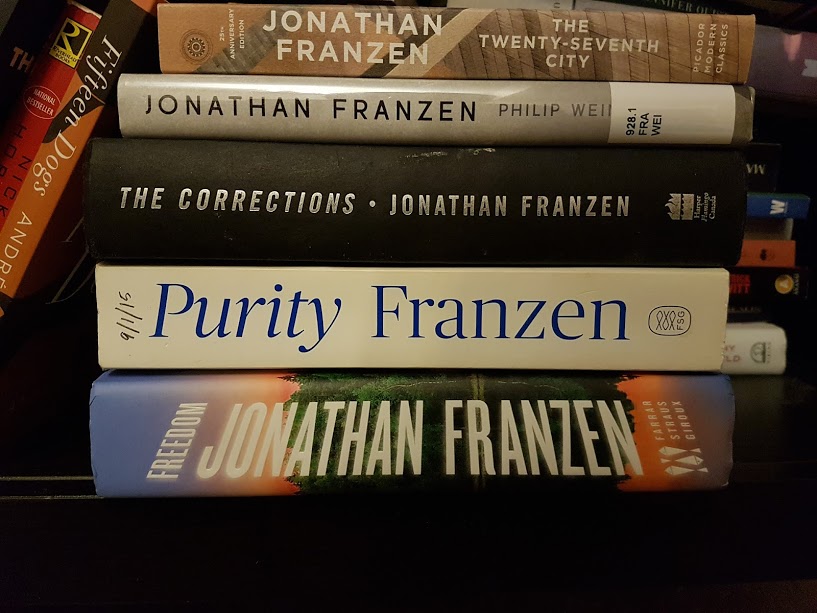
I may not have told anyone, but between this blog, YouTube, Instagram, and Litsy, my reading habits aren’t exactly a secret. I wondered, vainly, if anyone would notice. Could I host a month-long Franzen Fest with out actually reading Franzen? Could I do a big, chunky classic readalong and not pick a dead white guy? Yes. Easily. Turns out, no one really cares what you’re reading (unless they stand to make money off it, probably).
I also wondered if I would react like other #readwomen-ers? Would I have a better year of reading? Would I learn something about myself? Be a more discerning reader? Renew my commitment to feminism? Would I vow to never go back, and read mostly or only women from now on?
I went in cynical. If you read my blog, you know I’m dubious of reading challenges. Reading women, in particular, means subscribing to a gender binary, and assigning genders to authors, which can be dicey. Yes, I included trans and queer authors, but is that enough? Really, it’s more #dontreadmen than #readwomen. That doesn’t sound as good, does it?
So, my conclusion after a year of reading women: it was fine. I read some great books, and some not-great books. I read some new-to-me authors that I’ll never read again, and some that I’ll eventually read in their entirety. I didn’t come to any grand realizations. I’m still a feminist, but still struggle with hashtag #feminism. I still think “reading diversely” is often more about virtue signalling than actual commitment to diversity.
I did notice a few things. They just didn’t have much to do with what I was (or wasn’t) reading.
- Maybe it’s not books we should be worried about: Reading women made me notice gender imbalances in other arts and media, particularly music. I have a 25 minute commute, and can flip between four rock radio stations (3 local + CBC) and not hear a single woman’s voice, which I’d never noticed before. The indie music scene is super male dominated, too. My husband joined a band in late 2015, which means I’m going to local shows for the first time in many years. Between dozens of opening acts and battles of the band entries, in 2016 I saw a total of one band with a (single) female musician.
- Or at least, not fiction we should be worried about. I delved into some work-related reading this year, and found myself in the business section of my local Coles. If you wanna #readwomen but don’t want to #leanin with Sheryl Sandberg, you’re pretty much out of luck. I’m also into productivity lately (ask me about my #bujo!), and you’d think that since women are so famously into multitasking and having it all, there’d be plenty of #readwomen books to choose from, but you’d be wrong.
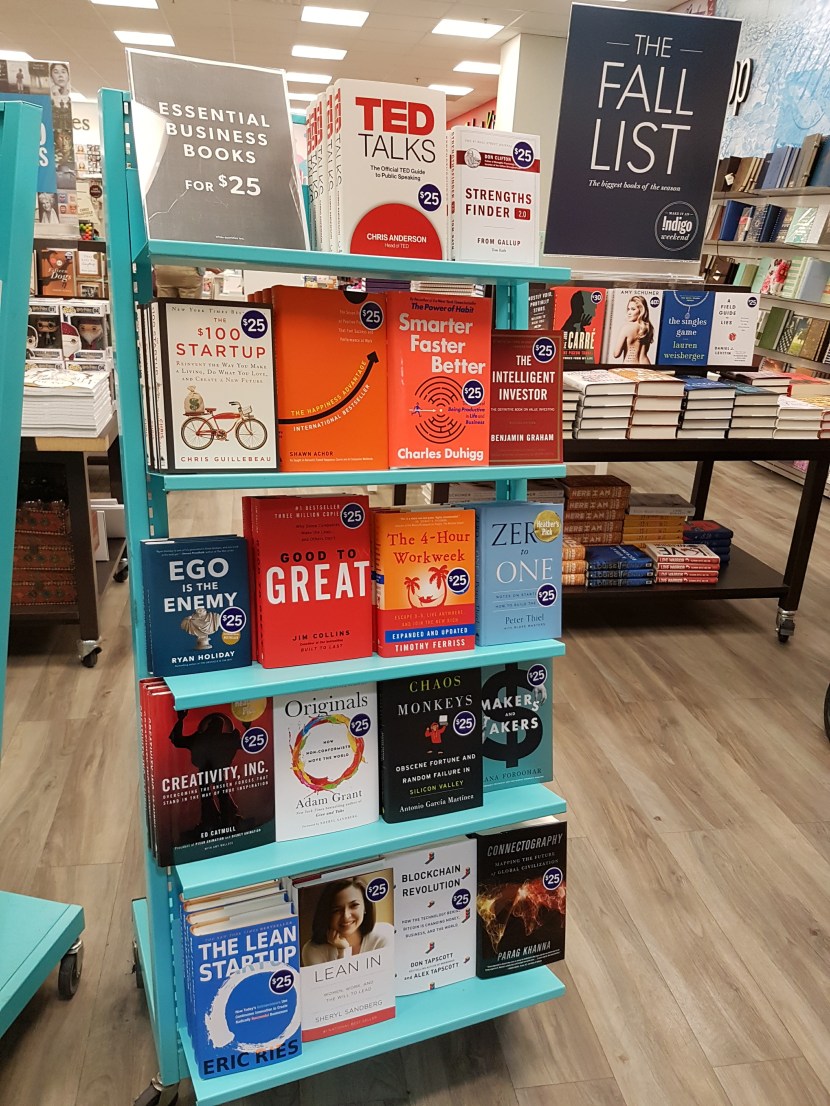
Coles City Centre, Edmonton, circa September 2016. Spot the single woman in this display of “Essential Business Books”!
- Maybe I should worry about myself. It’s easy (and satisfying!) to bitch about how traditional media and publishing is still male dominated, but what about the media that I curate for myself? In 2016 I started listening to podcasts, and really got into Booktube. Of the 21 literary podcasts I’m subscribed to, 11 have at least one woman host, and about three quarters of the literary YouTube channels I subscribe to are hosted by women. Sounds pretty great, right? What you have to realize is that literary podcasts and Booktube, like book blogs, are super female dominated. The fact that I’m not subscribed to 90% women means I’m skewing things. And I don’t have stats on this, but I know that the small fraction of those subscriptions that actually get watched or listened to are even more skewed towards men. Sometimes for superficial reasons – a soothing voice is an absolute must and I cannot abide vocal fry or uptalk, and yes I know it’s problematic for me to say so – but there might be more to it and I’ve not figured it out yet.
Where to go from here? I considered reading men for a year, or, at least the first 35 books of the year, to even things out. I also considered only reading books by people of colour for a year. I don’t think I’ll do either. I was worried that my year of reading women would become a year of reading white women, but it didn’t, so I trust myself to read broadly without making it a numbers game. I’ve got some other plans in mind that have less to do with who the author is and more to do with who I am as a reader. Less “read women” and more “woman reading”, you could say. More on that soon!
*I cheated by reading The Short Story Advent Calendar, which included male authors. It’s a tradition!






 Reading in Bed