Category: Reviews
Remember Me
When you think about memory, do you think of the distant past? In CanLit, many classics are written from the perspective of a character at the end of life, remembering. The Stone Angel comes to mind. It’s a popular frame for contemporary authors too. Carrie Snyder’s Girl Runner, for example, or Michael Ondaatje’s The Cat’s Table.
These days, I’m more interested in the beginnings of memory. My boys are three and five. What can you remember of these ages? At three, maybe nothing. Maybe a still image or someone’s voice. At five, you start to make sense of things. You remember chains of events. It’s pretty heavy, this sudden ability to remember and integrate and communicate your own life story. And as parents we wonder, how will my kids remember me?
With babies and toddlers, we’re afraid that we’ll do something to put our children in danger. We’re sleep deprived and don’t know what we’re doing. A couple years in and you realize: they survived. It’s okay. You think it’s about to get easier, now that they’re in school and potty trained (almost.) But it’s not easier. I was recently in a parenting class. Triple P, if you’re interested, and yes, I’d recommend it. The participants ranged from people like my husband and me, who’re basically okay, but run ragged and looking for some help, to people who are really floundering and some who were probably compelled by the court to be there. The thing that struck me is that we all had similar issues, and we all, with perhaps one exception, had at least one child in the three to five range. I think (part of) the reason these ages are so hard and so fraught is that we are starting to feel a whole new kind of fear: the fear of being remembered as something less than a perfect parent.
Maybe it’s coincidence that I’ve read a couple books lately that teeter on this edge of memory, but each of these helped me understand my kids and my fears.
The Bear
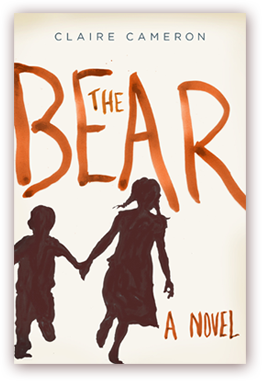
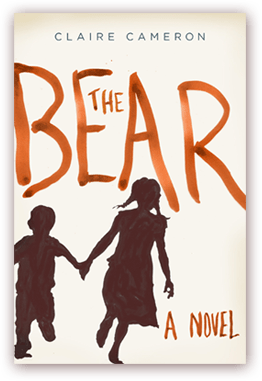
I thought I was afraid to read Claire Cameron’s The Bear because it’s a kids-in-danger story. I was tempted to flip ahead several times, to make sure Anna and Stick were alright (couldn’t indulge as it was an ebook,) but what really got me was five-year-old Anna’s memories of their parents.
Parenting media (ugh) tells us how to be afraid that something will happen to our children. They’ll be stolen from you if you turn your back for an instant. They won’t make it in life if you don’t interfere in their education. The Bear makes you confront the fear of something happening to you. We assume our kids need us – not just any adult, but specifically us – to survive, even though it’s clearly not true. We want our kids to remember us and carry on our legacies.
The Bear reminded me that, even at three and five, my kids are not just extensions of me. They can survive without me. And, that even if they don’t remember me the way I wish to be remembered, if their perception of me doesn’t match my own, it’s okay. It’s more than okay, it’s a necessary part of growing up. Kids can’t just be a mirror of their parents.
The Bear wouldn’t have worked if Anna hadn’t been old enough – just old enough – to remember her mom’s instructions, and her dad’s stories about the tail of the moon, and her brother’s tendency to run away and hide. Without any of that, she and Stick wouldn’t have made it off the island. But they also wouldn’t have got very far without Anna’s misinterpretations or her flights of fancy which reminded me so much of my five year old’s. Anna relies on memories of her parents’ but she relies on herself an awful lot too.
If you’re scared of this book too, well, you should be. There’s some hope for us parents, though. Without her parent’s quick thinking when the attack happened, and without the foundation of trust Anna obviously had, she wouldn’t have survived. Her parents mattered. They are remembered.
Detachment (my review)
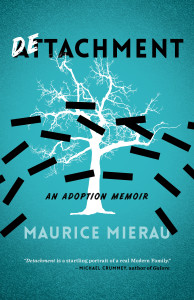
Sometimes being too young to remember is a blessing. In Maurice Mierau’s Detachment, Mierau and his wife adopt two boys from the Ukraine – ages three and five. In The Bear, I wept for Stick because I knew he wouldn’t remember his parents. For Peter, the five year old in this story, his memories of an unstable home life and then an orphanage are a burden, and might have triggered his detachment disorder. Three year old Bohdan doesn’t remember anything before the orphanage. The difference between the boys and their ability to settle into life in Canada highlights the power of memory, and vulnerability kids have at these particular ages.
Unlike The Bear, we hear from the adoptive parent in this case, which doesn’t mean it’s 100% reliable narration. I was often wondering, “what would your wife say about this” of “what do Peter and Bohdan think about this now, ten years later?” This being non-fiction, people have asked – Miereau wrote about the strong connection readers have with this book in The National Post and I admit I felt like writing him an email too!
There’s a subplot about Miereau finding his own family history in the Ukraine which means we get memories flowing from all directions – none of those memories being his, exactly, but I recognize the urge to gather it all together and make it make sense. This book taught me about patience and listening and that we never have the full story, at age three or five or thirty five.
Yell Less, Love More

This blogger-turned-author, known online as The Orange Rhino, shares an “a-ha” moment that forced her to admit that she was a yeller, and it was not okay. Thinking she was alone in the house, she unleashed on her four kids one day. Nothing I wouldn’t have done in the same circumstances (and half as many children.) The momentary relief turned to shame when she realized her handyman was in the house and heard the whole thing. Her epiphany was based on wondering why it was acceptable to yell at children when you’re at home alone but not in front of an audience. What struck me is that her kids were all under the age of five – that is, approaching the onset of enduring memories. Do you want your children to remember you yelling and screaming? Suddenly everything is higher stakes when your audience can remember and communicate.
I do hope to write a full review of this book, but in the meantime, yes, Yell Less Love More worked. Since January 6 I’ve had two slip ups. Not yelling hasn’t magically fixed all my other problems, and actually illuminated some new ones, but it feels good. And I hope it goes a little ways toward being remembered by my boys, if not exactly as a perfect mother (whatever that means,) then as someone who was quiet enough to listen and calm enough to go to for comfort.
The Bridge of Beyond by Simone Schwarz-Bart
Feminism isn’t about making things for women. It’s about women making things.
That is badly paraphrased, possibly from something by Sarah Nicole Prickett, but it’s an idea I come back to a lot. It can apply many places, and I think the original context was in response to some ridiculous “women’s” product or another, you know, a pen with pink ink “For Her” or some such. But it works for books, too. When I think about what it means for a book to be feminist, it’s not about writing stories “for women” with “strong female characters” or casting females in roles that defy gender expectations, exactly. It’s about writing from a female perspective and not focusing on a woman’s relation to everyone else (all those “The _____’s Wife” books!) or not only her relationships. Writing her interior life. Letting her be redeemed by something other than motherhood and marriage, or maybe let her not be redeemed at all.
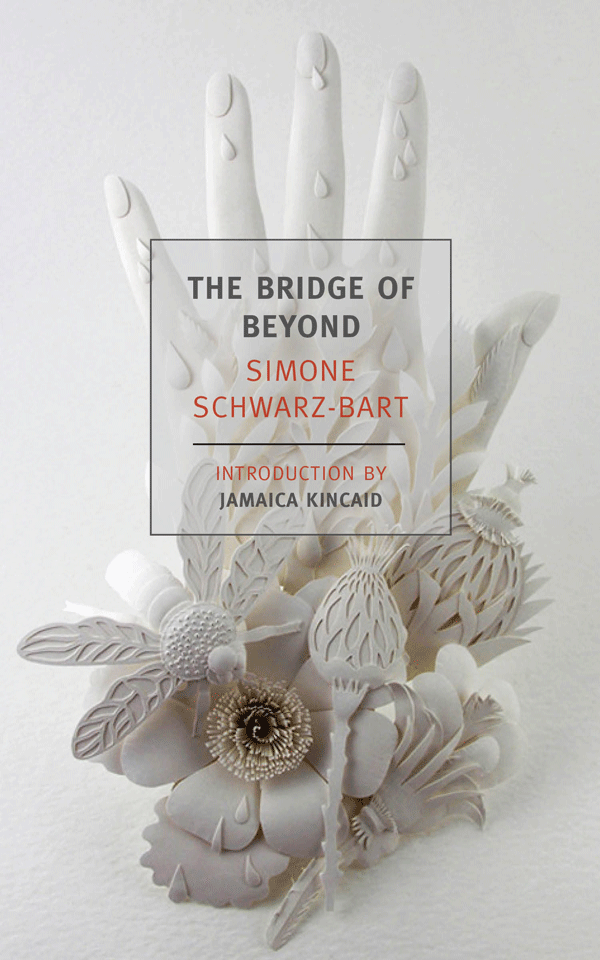
My favourite book of the year and my favourite cover of the year.
The Bridge of Beyond isn’t very well known as a feminist book (or very well known at all, though the New York Review of Books reissue a few years back will help, I hope) but I would put it right up there with The Handmaid’s Tale or The Awakening or I Know Why the Caged Bird Sings. Like those books, The Bridge of Beyond is set in a patriarchal, post-colonial, racist world but immerses us in the lives of women who are simultaneously defined by and able to transcend their oppression. Like Angelou’s memoir, this book made me think about how people survive horrific violence and oppression. This book made me think about the institutional and generational side, too: how does the Lougandor family survive through slavery and the after effects?
The story is about the end of slavery and in a way, the end of the Lougandor line, but neither are really over. The effects of slavery are still there, in the air and on the land and in the people. And though Télumée may be the end of the line in her family, it’s impossible to believe she won’t leave a mark on the land she walked or the air she breathed.
Let’s back up, though: on my first reading, I wasn’t even thinking about this book’s place in the feminist canon or anything like that. I was thinking that this book is a perfect reading experience. The word that comes to mind is “light.” You can probably guess that this book is full of horrific violence, abuse, and death, so how can I say it was “light?” I mean that the words flow effortlessly and reading it is like slipping into a dream state, almost. You will lose track of time. Your heart will hurt. But it’s not a grind. Not at all. Every word is perfect.
In the perfection of my rise, its speed and resonance, there was something disturbing, and I was puzzled at having obtained, all at the same time, the three crowns that can usually be hoped for only at the end of a long life. Love, the trust of others, and that kind of glory that accompanies every woman who is happy – these were gifts too great not to become dangerous in God’s sight. So sometimes, in the shade of my Chinese plum, I would tremble with fright, trying to make out the exact moment when the Almighty would take umbrage at my crowns. But then a little breeze would come and play with my skirts, my sleeves, my braids, and I’d feel I could go on like that until the end of time, and it was as if I was already embalmed, powdered, and laid out happy on my deathbed.
Did I mention this is a translation? Reminding myself that these perfect words aren’t even the original words was a constant source of wonder. Barbara Bray is a master. She also translated a lot of Margaurite Duras, who I haven’t written about here, but will. The Lover has a similar dream-like quality. This book is full of regional sayings that I’m sure aren’t a straightforward translation:
If anyone offered to replace Toussine at the bedside for a while, she would say, smiling gently, “Don’t worry about me. However heavy a woman’s breasts, her chest is always strong enough to carry them.” She spent seventeen days and seventeen nights cajoling death, and then, ill luck having gone elsewhere, Meranee expired. Life went on as before, but without one vestige of heart left, like a flea feasting on your last drop of blood, delighting in leaving you senseless and sore, cursing heaven and earth and the womb that conceived you.
Now that I’ve set your expectations, let me tell you how glad I was to go into this book with none. I received a copy from the fine folks at Shelf Awareness, and it was pitched to me as “Cool if you’re looking for something outside of the written-by-White-European-Males world,” and that was the extent of my knowledge going in. I didn’t have time to get nervous about the translation thing, or the colonialism thing. I was just pleasantly, no, wonderously surprised to be reading what would go on to be my favourite book of the year. Maybe reading it on my first away-from-the-kids trip had something to do with it too.

Simone Schwarz-Bart. You can see Pluie et vent sur Télumée Miracle, the French title of The Bridge of Beyond. via lehman.cuny.edu
One of the reasons I waited almost a year to review this book (other than laziness) is that I wasn’t sure how to comment on how race plays into it. In finally writing this review, I realized that I don’t have to. Like any other review, I pick and choose what to comment on, and I can just focus on the writing. I bring it up here because I’m seeing a lot of #reviewwomen and #readdiverse and what not, and I realize this book (or more precisely, this author) is a perfect example of that diversity – of gender, race, and language – but the way the book was pitched to me sums up why I’m loathe to categorize it in that way. This book is so brilliant and beautiful; it doesn’t need to be defined by what it is not, i.e. not white, not male. I don’t want someone to pick this up and think “this’ll be great for my diversity stats!” This post by FrenchieDee got me thinking along these lines (read the comments!) I will continue to read and review “diverse” book but I think we all need to step back and not make this about ourselves and turn “read diverse” into a humblebrag, “look at me, reading women of colour!” Let’s keep the focus on the books and the authors. End rant.
The Bridge of Beyond is a classic of literature, period. And if you’re in the mood for something translated, Caribbean, post-colonial, or feminist, you will not do better than this.
Find The Bridge of Beyond on Goodreads
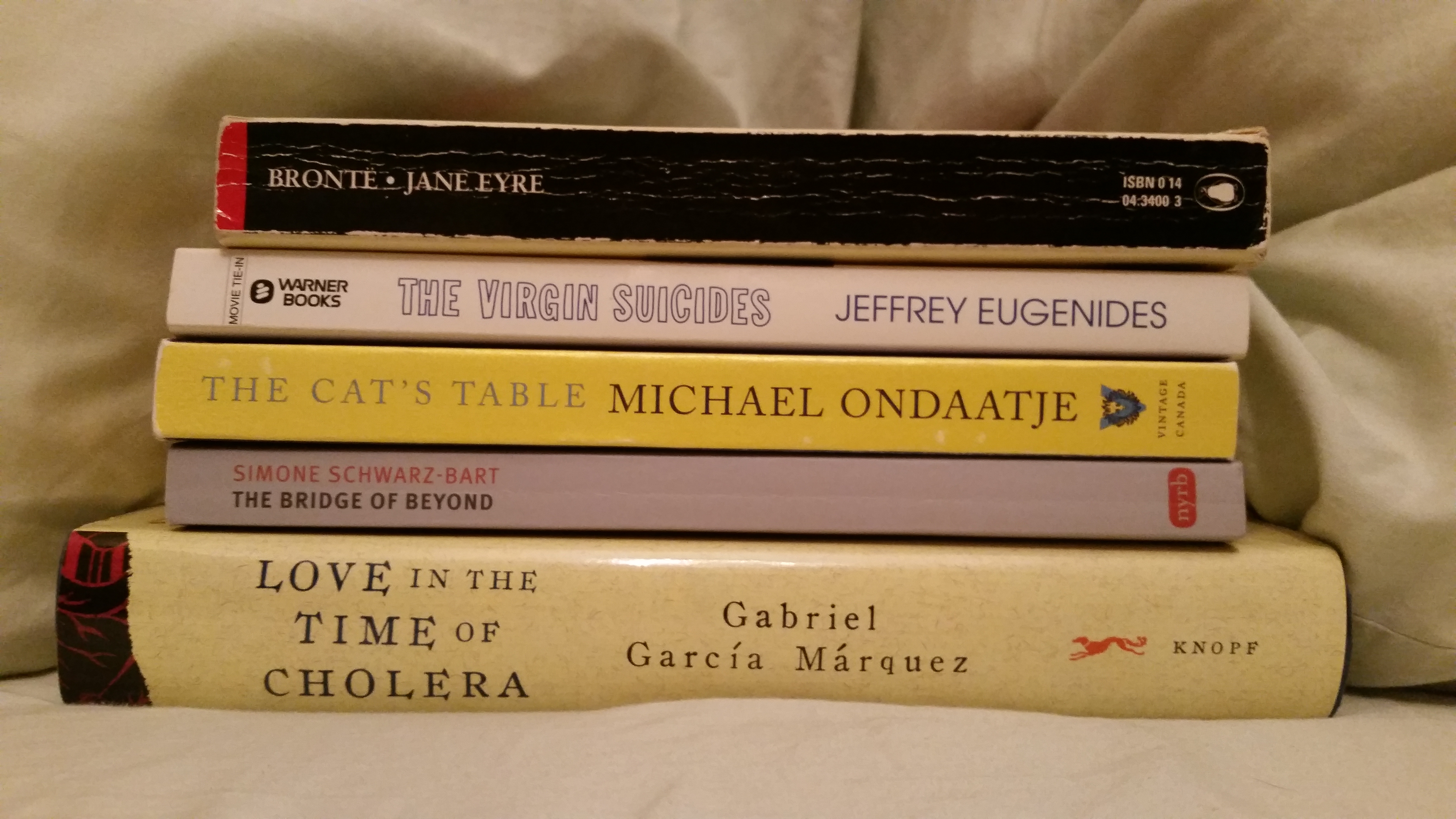
The Bridge of Beyond with some “if you like these, you’ll like this” books from my shelves
Novellas in November 2014 Update #2: Santa Rosa, North East, Bartleby the Scrivener
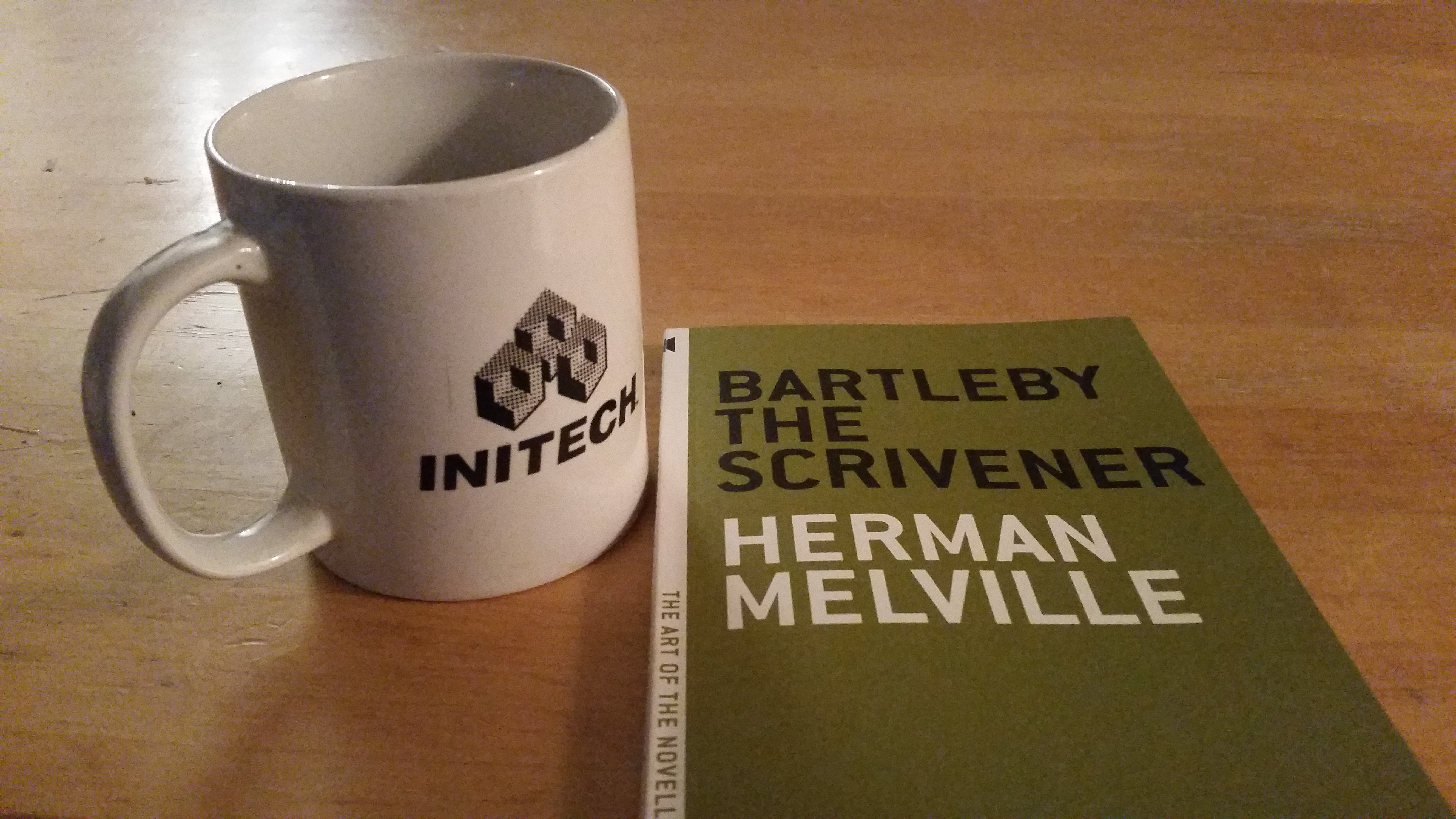
Fuckin’ A.
Check out my introductory post here, and follow along with participants The Wandering Bibliophile and Write Reads.
Santa Rosa and North East by Wendy McGrath
My rating: 2.5/5 stars
Goodreads
I’m new to verse novels and I don’t think they’re my thing. I enjoyed Karma by Cathy Ostlere, which was very structured and straightforward, but I struggle with books like these, or, like Corey Greathouse’s Another Name of Autumn, which tend more towards stream of consciousness. Kind of verse, kind of not. I can’t find the right pace for reading and I lose track of the story.
The subject matter, and the characters, and the setting, are all of interest to me. In Santa Rosa and North East, we witness the crumbling of a marriage and an Edmonton neighbourhood through the eyes of a five year old. Child narrators are tricky. At times Christine seemed too savvy for her age, too empathetic maybe. I can’t help but compare to my own five year old. Maybe there are depths to him that I don’t see yet.
There is a third book coming, to complete the trilogy. I will probably read it, as the story is compelling enough that I want to find out what happens to Christine (I already know what happens to Santa Rosa; the neighbourhood isn’t there anymore.) I found North East a smoother read than the first, so maybe I’ll hit my stride at last.
Bartleby the Scrivener by Herman Melville
My rating: 5/5 stars
Goodreads
Hypothesis: Bartleby the Scrivener is the inspiration for the classic 1999 film Office Space.
Evidence:
- Bartleby “would prefer not to.” Peter Gibbons’s “just not gonna go.”
- Bartleby regularly stares out the window (which looks out on a brick wall.) Peter “spaces out” for about an hour every morning. “It looks like I’m working, but I’m not.”
- The less Bartleby and Peter do, the more their respective workplaces do for them. Bartelby’s boss assumes there’s something wrong with his eyes, and tries to be compassionate. The Bobs deem Peter a “straight shooter with upper management written all over him.”
- Bartleby’s quirky colleagues would totally take out a printer. “PC Load Letter? The fuck does that mean?”
- Bartleby also has much in common with Milton. Once fired, he simply won’t leave and hangs about in the stairwell. Milton ends up in the basement taking care of that little cockroach problem.
- Oh, and Bartleby works in what may be the first cubicle ever. “I procured a high green folding screen, which might entirely isolate Bartleby from my sight, though not remove him from my voice.” As Peter says, “Human beings were not meant to sit in little cubicles staring at computer screens all day, filling out useless forms and listening to eight different bosses drone on about mission statements!”
Both the book and the movie are a meditation on doing nothing, but end very differently. There’s no “fuckin’ A” coming for poor Bartelby. I don’t know what else to say; this book was amazing. Hilarious and weird and sad and strangely relevant to all the office drones out there, 160 years later.
I seem to have run out of November! I finished one more novella and aim to review that in the coming days. Tell me, whether you read along or not, what’s your favourite novella? Or, what’s your favourite line to quote from Office Space? Mine is “this place… is nice,” which is great for breaking an awkward silence.
Novellas in November 2014 Update #1: Giovanni’s Room, Rip Van Winkle, and Who Will Run The Frog Hospital
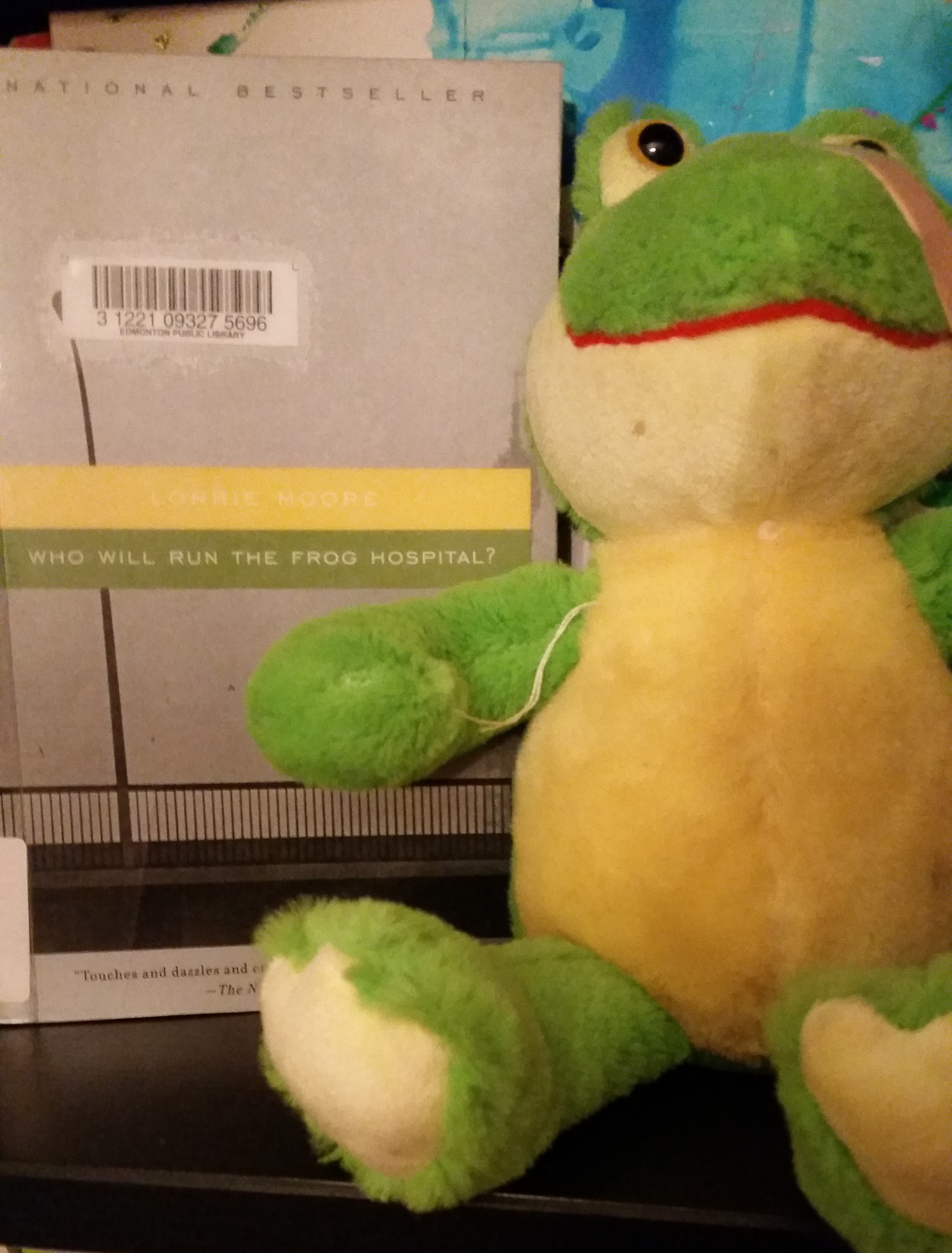
A literal take on the title: Who Will Run the Frog Hospital? by Lorrie Moore
The month’s coming to an end, so the updates will be fast and furious. Check out my introductory post here, and follow along with participants The Wandering Bibliophile and Write Reads.
Giovanni’s Room by James Baldwin
My rating: 4/5 stars
Goodreads
I had high expectations for James Baldwin after some coverage of his book Another Country on Booktube, and Giovannis’ Room did not disappoint, but, my enthusiasm waned near the end of the book. It was such a strong start, with a voice and a character who was so immediate and believable but still somehow removed – David’s name is hardly ever used in the book, and I would often forget his name altogether – and the back story about his family is so touching. Somehow, the sordidness and violence that come later just didn’t do it for me (and I appreciate sordidness and violence in fiction!)
I would compare Giovanni’s Room to The Great Gatsby and Bonjour Tristesse in both form and content. All three pack so much into so few pages. All three have captured their home countries’ imagination. All three are about sex and class and people who are never quite enough. This won’t be the last Baldwin book I read.
Oh, and I learned that France only stopped executing people by guillotine in 1977. I thought the references to the guillotine were symbolic or metaphor or something at first. Yikes.
Rip Van Winkle by Washington Irving
My rating: 3/5 stars
Goodreads
Rip Van Winkle is a cute story. I chose it because it was the basis for a plot arc on Classic Alice, but I didn’t get much out of the story or those episodes of CA. It’s good knowledge to have though; how many people know anything about Rip Van Winkle other than he slept for a long time? I thought he was supposed to have slept for a hundred years or something, but it was only twenty. The whole thing was about the American Revolution. Also, there were ghosts getting drunk and bowling. I did not know that.
I would recommend it to anyone interested in this time period, or American literature. Check out a free version. It’s funny and very short.
Who Will Run the Frog Hospital? by Lorrie Moore
My rating: 4/5 stars
Goodreads
Sometimes I wonder if teenage pregnancy is a very common topic in literary fiction, and that’s why it comes up in books I read so often, or if I’m somehow drawn to these books. Either way, these stories tend to work their way into my heart. This one sure did.
Berie and Sils were too young for all the good stuff that happened in the late 60s, and are stuck coming of age in the time of Vietnam and Nixon. They’re just the same age as my parents, actually, and I too relate – my parents just missed Woodstock, and I just missed Woodstock 94 (the latter’s probably a good thing.) The struggles are the same, though – I kept placing the story in the 90s, rather than the 70s, because it felt so immediate and relevant to my teenage years.
This is a coming of age story, but we get a glimpse of Berie as a young adult, reunited with Sils at their 10 year high school reunion, and another look, just a flash, really, of Berie as a middle aged woman with an unfaithful husband. There’s a sense of disconnection between these three version of Berie, but the story never feels disconnected.
I hesitated when rating this book 4 stars. It’s really a 4.5, or a 4.9. I love that moment when you read a big name author for the first time and you GET IT immediately. Lorrie Moore is the real deal. Highly recommended.
Tell me, are you Novella-ing this November? What are you reading?
Back from the DNF: The English Patient, A Wrinkle in Time, and The Sisters Brothers

DNF: abbreviation 1. Did Not Finish 2. The book blogger kiss of death
In Back from the DNF, I give previously DNF’d books a second chance, because sometimes, it’s not the book, it’s me. Maybe I read it too young. Maybe I read it while pregnant or postpartum (baby brain is real!) Maybe it just wasn’t the right time.
I made a list of books that didn’t get a fair shake, and will reread and review to see if anything’s changed. If you want to join me, feel free to steal the concept, title, and sweet banner.
My DNF List:
- Tristram Shandy by Laurence Sterne: Pregnancy brain
- Tinker Tailor Solider Spy by John LeCarre: Baby brain
- The English Patient by Michael Ondaatje: Too young (22)
- The House of Sand and Fog by Andre Dubuois III: Too young (20)
- Fifth Business by Robertson Davies: Too young (17)
- A Wrinkle in Time by Madeleine L’Engle: Too young (10)
The English Patient by Michael Ondaatje

Michael Ondaatje is my bae. Did I say that right?
My official reason for DNFing The English Patient is “too young,” but at 22, that’s a bit of a stretch. I was an adult. I was living on my own and working at a real job. I was also single after five years of serial monogamy, and in my newfound freedom my maturity level plummeted. I was consumed by shopping, clubbing, and boys for a couple years. Thankfully this was before the advent of social media. I shudder to think of the bar-bathroom selfies that never were.
I tried to keep up appearances in my reading, though. I read a lot of DH Lawrence, Thomas Hardy, and Jane Austen around this time. I picked up The English Patient thinking it was a “serious” book in this vein, and it is serious, but it’s very different from those old-school classics. You can’t just plow through it and you can’t rely on your memory of other similar books because there aren’t any. I don’t know how to classify The English Patient – adventure, romance, a little magical realism, post-colonial literature, war literature, English, Canadian, Indian… I don’t know. On first read, I was overwhelmed and couldn’t follow the threads. I gave up a few chapters in and hurled it into my closet. This time, I was overwhelmed in a good way, and again hurled the book with some violence on the bathroom counter (don’t judge, it was my kids’ bathtime) because the ending hurt my heart so much.
At 22 I couldn’t process this story. I thought I knew lots about love and tragedy and thought of myself as very jaded, but of course I didn’t and I wasn’t. Thankfully I grew up enough in eleven years to appreciate this book.
Verdict: It was me.

Edition I read in 1991. I find this whole cover unsettling.
A Wrinkle in Time by Madeleine L’Engle
I read this children’s classic as a child, so I can’t just say I was “too young.” At ten, I was starting to read adults books (there was no such thing as YA (thank god)) and I remember picking up A Wrinkle in Time and thinking, well, it’s a kid’s book but it’s for smart kids. I was very invested in my identify as a smart kid, so when I couldn’t wrap my brain around what was happening in this book, it was embarrassing. Shameful. I was also disappointed that I’d never get to read A Swiftly Tilting Planet because it’s a great title.
What I didn’t get as a kid is that Wrinkle is a Christian allegory (I didn’t get that about Chronicles of Narnia either. Wasn’t as smart as I thought.) But I got it this time. Oh lord did I get it. And okay, I’m not religious, but I’m okay with religious themes in fiction (see?) if it’s well written.This just isn’t. A very thin story, stilted dialog that contributes little to the plot, and an author banging us over the head with her philosophy: it’s Atlas Shrugged for kids. And don’t get me started on the ending. All I can do is quote Professor Frink: “The secret ingredient is… love?! Who’s been screwing with this thing?”
I will give L’Engle props for the creepy kids who bounce balls and jump rope in sync. That shit creeped me out today as much as it did 24 years ago.
The verdict: it’s the book.
The Sisters Brothers by Patrick deWitt
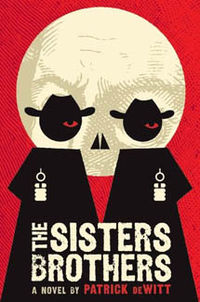
My 4 year old loves this cover. He knows what’s up.
Alright, I’m cheating a bit. When I tossed The Sisters Brothers aside, I knew I would pick it up a few weeks later for book club. But I did toss it aside. I got about 20 pages in and couldn’t see what the fuss was about. I’m currently 200 and some pages in on round two and loving it. I can’t account for the change of heart. There`s one particular line that made me roll my eyes so hard the first time I read it, and now stands as my favourite in the whole book so far: the main character imagines his poor, sick horses’s thoughts, as he’s whipping him, to be, “sad life, sad life.”
I don’t know if it was a full moon or I was suffering from a case of the Mondays or what, the first time round. Now all I can do is join the chorus: read this book. Immediately. If you don’t like it, take a break for a few weeks and try, try again.
The verdict: it was me.
Alright, you know the drill: tell me about your second chance books, or tell me which books you’re thinking of trying again.
Spat the Dummy by Ed Macdonald: An Interview with The Bible Pimp (review + author Q&A)

My rating: 4/5 stars
Goodreads
Synopsis:
Spat Ryan has demons. They haunt him by day and share his drink at night. Raised in Montreal by a bagman for the Irish mob, Spat has fictionalized or ignored chunks of his life too painful to recall. A chance meeting with an old friend of his father’s in a bar exposes the dark secret they’ve both been harboring, the secret that has shaped and defined Spat’s tumultuous life. Newly divorced and out of control, his decision to tell all and release himself from the past unleashes a storm of change in both his internal and external life.
I usually put my disclaimers at the end of a review, but this is a special case. I did not receive a review copy of this book, and I’ve never met the author, but he is known to me for two important reasons. First, his brother married my mom’s sister. If “uncle-in-law” was a thing, he would be mine. Second, he is THE BIBLE PIMP:
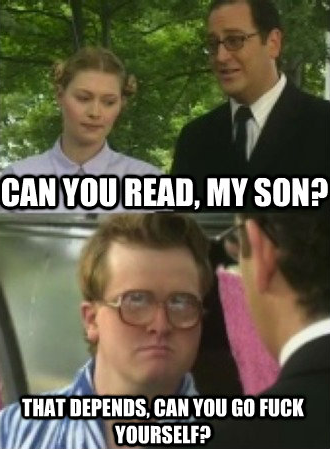
Ed Macdonald appears in Trailer Park Boys as The Bible Pimp. via quickmeme.com
The Bible Pimp was one of my favourite episodes of Trailer Park Boys, even before I knew about the family connection. It’s a hilarious episode, but it’s a little different because Ricky and Julian win. They expose The Bible Pimp as a scam artist, and get to watch someone else get hauled off to jail for once. Julian was in love with the Bible Pimp’s accomplice, though, and as she’s taken away, she sneers at him, “Fuck you, you greasy trailer park boy.” His face falls, and it’s one of the sadder moments of the show. For just a moment, all the Freedom 35 stuff falls away. He knows he’ll never be anything but a trailer park boy. I think it’s significant that it’s one of the only (maybe THE only) times the phrase “trailer park boy” appears in the series.
Sorry to those who didn’t come here for in-depth analysis of Trailer Park Boys. I’m going somewhere with this. The theme of escaping the past, and of become something else, or something more, than you were born into, is part of Spat’s story. Continue reading
Fear and Loathing in Suburbia: Between by Angie Abdou
My rating: 4/5 stars
Goodreads
Synopsis:
Vero and her husband Shane have moved out of the sweet suite above his parents’ garage and found themselves smack in the middle of adulthood―two kids, two cars, two jobs. They are not coping well. In response to their looming domestic breakdown, Vero and Shane get live-in help with their sons―a woman from the Philippines named Ligaya (which means happiness), whom the boys call LiLi. Vero justifies LiLi’s role in their home by insisting that she is part of their family, and she goes to great lengths in order to ease her conscience. But differences persist; Vero grapples with her overextended role as a mother and struggles to keep her marriage passionate, while LiLi silently bears the burden of a secret she left behind at home.
Before I even started Between, there was a lot at stake. A story about a working mom of two, written by a working mom of two, set in contemporary Canada, raises my expectations. I want to see myself. I want to learn something about myself. I don’t want to feel misrepresented. I wonder if brooding middle-aged men feel this way about all the stories about/by brooding middle-aged men? Don’t answer that.
The synopsis of Between put me in mind of I Don’t Know How She Does It by Allison Pearson, a bit of a groundbreaker in the “two kids, two cars, two jobs” domestic novel. Now, I read IDKHSDI when I was 22, and had no clue about marriage, children, or work, for that matter. And I hated it. I found the main character insufferable and didn ‘t relate to her at all. I still think she was ridiculous for trying to disguise store-bought cupcakes as homemade, to keep up with the supermoms at pre-school. It was a lot of that, and “getting ahead” at work, and it fell flat. I didn’t care.
Unlike Pearson’s upwardly-mobile heroine, Vero is not particularly ambitious. To be ambitious, she’d have to have a goal. It’s hard to be goal-oriented when you’re chasing 1 and 3 year old boys, working, and dealing with your spouse and their dysfunctional family. Vero is in survival mode. Now that, I get.
Vero’s marriage isn’t exactly failing, it’s just plodding along like marriages with young kids tend to do. Someone gives Vero advice to the effect that couples with children under three should not be allowed to divorce. You’re not in your right mind. You haven’t slept in years. If you’re not a good partner it’s probably because you don’t have anything left to give.
They’re both delirious from lack of sleep. His words come to Vero as if spoken underwater, wavy and weak, parts of them floating away. She can’t tell whether the problem is his voice or her ears.
Abdou makes it tough to like Vero and Shane. They’re an awful representation of modern Canadian life, all consumerism and self-imposed stress, and so lacking in self-awareness, it makes you (ok, me) wonder: am like that too? I was reminded of Blind Spot, in which I related to a character who was revealed to be kind of terrible.
Ligaya, on the other hand, is easier to like. She’s overcome a lot to get to Canada, and has a tragic secret. Her Canadian life is kind of like that of a teenager – when she’s not caring for Vero and Shane’s children, she’s holed up in her room, or giggling with her girlfriend and trying on makeup. But 27-year-old Ligaya is more grown up than 42-year-olds Vero and Shane. She sees through their bullshit immediately.
The woman who meets Ligaya at the luggage carousel speaks no more of wealth than trees and rocks. She grabs at Ligaya’s hand, squeezes her fingers hard, and pulls Ligaya so close to her body that Ligaya hears herself squeak.
Wealth does not pull, Ligaya things. Money never needs.
The Dreaded Three (Point Five) Star Review: Blind Spot by Laurence Miall
My rating: 3.5/5 stars
Goodreads
Synopsis:
When his parents’ car is hit by a train, Luke, a failed actor, returns to his Edmonton hometown to attend their funeral, wrap up their affairs, and prepare their house to be sold off. But while all others around him grieve, Luke remains detached, striking up a relationship with a woman in a neighbouring house… and stumbling across evidence that his mother may have engaged in a longstanding extramarital affair herself.
I overthink book ratings. I work in marketing, so I think about the implications of a three versus a four start review, particularly for the indie or small press author. I design consumer surveys, so I know how finicky rating scales are, and I know about the biases that creep into a rating, no matter how objective you think you are.
I have plenty of my own quirks: I’m stingy with my five-star ratings. I’m a fan of the half-star (damn you, Goodreads) and often change my mind after an initial rating. And a three star rating, like I’ve given Blind Spot? Ugh, I hate a three star rating. It’s so wishy-washy. It’s a safe, “I liked it, it didn’t blow me away, but I don’t hate it” kind of rating. And while those statements do apply to this novel, I’m also still thinking about it weeks later, which isn’t wishy washy at all.
I’ve been thinking about ratings lately. How I arrive at them, what they mean, and are they fair. Check out this blog post (and my comment) on Follies Past for more on that. In the meantime, here are some things I think about when rating a novel, and how Blind Spot stacked up.
1. The basics
This one’s pretty simple: does the book have enough going for it in terms of plot, character, and style to avoid a one-star rating? I can usually tell after the first chapter. I read a preview of Blind Spot‘s first chapter and was intrigued enough to add it to be TBR list (and to request a review copy.) It presents an Artful Dodger-and-Oliver type scenario, where the streetwise older kid gets the younger kid to do his dirty work, with predictably disastrous results. It’s set in 1990s Edmonton, a very familiar place and time for me to read about bad kids smoking and getting in trouble.
I felt an immediate and uncomfortable identification with Luke. I was doing the same kind of things, in 1990s Edmonton, just a few neighbourhoods over. Miall’s straightforward writing style makes it easy to get into the story, and it fits with Luke’s character; he also seems to be a very straightforward kid trying to fit in and be cool. When we jump to Luke in his early 30s, things aren’t as straightforward – he’s got his parent’s suspicious death to deal with, on top of a failing career and empty relationship.
2. Emotional response
Five stars doesn’t mean a book is perfect; it’s usually tied to an emotional reaction on my part. I rated The Cat’s Table five stars, despite not liking an entire section of the book, and despite suspecting it wasn’t Ondaatje’s best work. I quite simply fell in love with a sentence and that was that.
Here’s where my rating for Blind Spot gets tricky. I didn’t laugh, cry, or hurl. I didn’t underline any sentences because they were beautiful. I did grow to hate Luke, after identifying with him in the beginning, though. I’m trying to figure out why I hate Luke so much. He is a major dick to his sister, indifferent to his nieces and nephews, and does that thing where you dump someone by cheating on them and waiting for them to find out and dump you. All bad, but maybe not deserving of fiery hate. I actually found myself speaking aloud at times: “Are you for real,” and “You are awful,” and several times just “ugh.”
Luke is not a sympathetic character that you’ll fall in love with. You won’t root for him. You won’t put him on your “Top Ten Fictional Characters I’d Like to Have Lunch With” list. He embodies white, upper middle class male privilege and is just so lacking in self-awareness. Oh, and he’s really really ridiculously good looking, too! I don’t know why that makes it worse, but it does!
So – I didn’t have the “this book changed my life” emotional response that earns 5 stars, but I definitely had a response.
3. Would I recommend it?
Having eliminated one and five star ratings, I think about whether I would recommend it (and to who) to figure out where it lays between two and four stars. In market research, we put a lot of stock in likelihood to recommend. It makes sense; it not only predicts what people like, but what they will share and advocate and create buzz for.
I would recommended Blind Spot, so I know I’m on the 3 or 4 stars side of things. I’m about to recommend it to the author of a novel called Spat the Dummy, which you will read about here soon, because it also features an “anti-hero” but the treatment is so different. In Spat, the hero does horrible things and is bent on self-destruction, but you feel for him. You want him to get better, to be better. In Blind Spot, Luke also seems determined to ruin himself. But I didn’t want Luke to win or get better. I wanted some comeuppance! So this is a “if you liked this, try this” type of recommendation too; I just happened to read these books side by side but I was glad I did. It made me realize how unconventional this story really is. It’s easy to sympathise with an anti-hero you think you can fix. Luke seems beyond help, somehow.
On the other hand, I wouldn’t recommend Blind Spot to everyone. The writing is minimalist, so if you’re in the mood for poetic or lyrical, I wouldn’t start here. If you can’t handle an unlikeable main character – definitely not. And I’m not sure if I would recommend this for a “light” read – it’s blurbed that way on the cover, but I didn’t find it that light. Easy to follow, yes, but I think of “light” reads as having some kind of happy ending, or redemption, or hope – the ending of Blind Spot is very, very bleak and left me unsatisfied.
4. Am I still thinking about it?
I was leaning towards three stars. In fact, I began this review by writing “3/5 stars.” But I’m adding the .5 because for a simple story and a simple character, there’s a lot to think about. Why is Luke the way he is? Is it something about his parents? His unsatisfied mother or his absent father? Is he an alcoholic? Mentally ill? A product of a shallow society? Why can’t this young, handsome, financially secure guy can’t get his shit together, and if he can’t, what hope is there for the rest of us?
I mentioned the unsatisfying ending. After finishing, I had all sorts of questions. I immediately flipped to the front of the book, looking for a clue, and in this passage, I found something. We’re back with bad-boy Joel and 11 year old Luke:
I still longed to have his unflinching confidence. No one had ever raised him; no one looked out for him. Joel looked out for himself.
I wanted that self-reliance.
Now, so many years later, I’ve arrived.
I no longer think of this particular three-star rating as wishy-washy. Maybe it’s ambivalent. As anyone who’s watched Girl, Interrupted as many times as I have knows, ambivalent doesn’t mean you don’t care, it means you’re torn between two things. I’m torn between hating of Luke and admiring the consistency and commitment Miall brought to his character, not for a second trying redeem him. I’m torn between wishing the ending had been more hopeful, more damning, more something, and realizing that it was not supposed to be satisfying. That isn’t the point.

What, you thought I’d get through a review without making a 90s pop culture reference?
So yeah, three stars: I liked it. I didn’t hate it. I didn’t blow me away. But I’m definitely going to watch for Miall’s next novel, because it just might.
Thank you to NeWest Press for the review copy! The book launch is tonight, Friday, September 5th, 7:00 p.m. at The Black Dog on Whyte.
This is becoming a common addendum: Please go read Another Book Blog’s review, in which he took the best blog post title, and read his interview with Laurence Miall, in which he took all the good questions. *shakes fist*
How Not to Review Erotica: Book Lovers edited by Shawna Kenney
My rating: 3/5 stars
Goodreads
Synopsis:
Forget poorly written prose and clichéd love scenes: Book Lovers answers the call for sexy literature with substance. This collection of toe-curling tales written by and for word-worshippers offers well-crafted fiction and creative nonfiction that connects literature to libido. From a Vonnegut-inspired tryst to an imaginary ménage à trois with Henry Miller and Anaïs Nin, the book encompasses a veritable buffet of literary fantasies.
Whether they’re conjuring Junot Díaz between the sheets or dreaming of a modern-day enactment of Wuthering Heights—this time refusing Edgar in favor of lusty, bodice-ripping nights with Heathcliff—the stories in Book Lovers are designed for readers’ brains and bodies.
I’ve been avoiding this review for a while. Turns out, I don’t know how to review erotica unless it’s ridiculously terrible (see: Dragon Bound, Sleeping Beauty.) The terribleness allows me to get snarky. But let’s say the the writing is passable, or even good. Now what? I feel like anything I say is going to come across as either “I’m a huge prude and I’m judging anyone who is into this!” which is not necessarily true, or, “I totally rubbed one out while reading this!” which is also not necessarily true and is definitely not what I want Reading-in-Bed.com to mean to anyone. Continue reading
The M Word edited by Kerry Clare

My rating: 4.5/5 stars
Goodreads
Synopsis:
A Dropped Threads-style anthology, assembling original and inspiring works by some of Canada’s best younger female writers — such as Heather Birrell, Saleema Nawaz, Susan Olding, Diana Fitzgerald Bryden, Carrie Snyder, and Alison Pick — The M Word asks everyday women and writers, some of whom are on the unconventional side of motherhood, to share their emotions and tales of maternity.
Before I sing the praises of this book, I must point out that the subtitle, “Conversations about Motherhood,” is not accurate. These aren’t conversations. They’re essays. They could be conversation starters, sure. But the subtitle made me think Q&A, or point and counterpoint, or maybe multiple authors responding to one question, and that’s not what this is. I realized, though, that I want to have conversations. These essays inspired me to think and remember and empathise, and I want to talk about it!
Conversations about motherhood ARE taking place, of course, and largely, it’s online. For me, it’s not so much in the social media world, but in online forums. Parenting forums have changed very little in twenty years. I first ventured into an iVillage pregnancy forum in 1997 and was extremely creeped out by the slang and abbreviations, like “baby dust” (good vibes for someone trying to get pregnant) and “baby dancing” (…trying to get pregnant. UGH this one is the worst.) Those terms are still used in forums today.
I think The M Word could benefit from a discussion forum. Lots of publishers are using online marketing in innovations ways (I love this tumblr for Cutting Teeth, for example.) and wouldn’t a forum be the perfect social media marketing campaign for this book? A “M Word” forum, in the spirit of the book, a place to actually converse about motherhood?
Maybe it’s just that traditional parenting forums bore me lately. I don’t care about must-have baby gear or any of the debates that come up every few months (vaccination vs anti-vax, circumcision, breastfeeding in public, breastfeeding vs formula feeding, baby-led weaning vs purees, hospital vs home birth, cloth vs disposable diapers, I COULD GO ON.) The M Word is great because it talks about these topics, but drops the “versus.”
While someone with more technical skills and ambition whips up this dream-parenting-forum, I’ll tell you about my favourite pieces in The M Word.
Truth, Dare, Double Dare by Heather Birrell
I can’t believe I haven’t reviewed Birrell’s short story collection, Mad Hope. It’s so good. My favourite short story collection of the year. I wrote in the margin “this essay is everything” and I hate cutesy sayings like that. But it is, to me: traumatic birth, post-partum depression, co-parenting through PPD, strain on the marriage, adding a second child despite all of this… it says so many things I cannot.
Those first few months we spent together as a family feel so far away: a desert island populated by three castaways, veins coursing with hormones and history, a treasure map we’d go cross-eyed trying to decipher.
A Natural Woman by Amy Lavender Harris
A story of infertility and motherhood. Speaking of parenting forums, the #1 topic that causes drama, heartache, and bannings is infertility. The feelings are so raw and so personal. My years in forum-land opened up this world to me somewhat, and I’m much more careful about how I talk about fertility and reproductive technology. This essay is a succinct way to get that insight. It’s also incredibly well written.
To hell with biological determinism, “natural” motherhood, binary feminisms and gender dualisms…we are all cyborgs, made of mitochondria and bits of metal, elements absorbed from the atmosphere and the cells of every child we have ever carried.
Robin by Alison Pick
If you’ve had a miscarriage, this will be a tough read. It’s worth it.
There is nothing to be done, and so we do nothing. We bear the pain, which is much worse that I could have imagined. The offense of the phrase, “You can have another.” What would I want with another? I want that baby, my baby.
Footnote to the Poem “Now That All My Friends are Having Babies: A Thirties Lament” by Priscila Uppal
This essay rubbed me the wrong way but I loved reading it. I want to give it to my child-free-by-choice sister so we can argue about it.
I find myself contemplating, not for the first time, why it is that same group of people who will have a conniption if you don’t bring your own thermo to the Second Cup, or label you a criminal for eating a hamburger, don’t have any patience for the argument that the planet could have saved by having fewer babies.
I can’t help but compare this book to The Good Mother Myth, reviewed here in February. The concept is so similar, but the execution is different and the things that bothered me about TGMM aren’t present here. Some of those pieces felt more like a rehashed blog post than an original essay, but these essays ring so true. Each author brings not only experience and honesty and original ideas, but excellent writing. And where TGMM tried to tie each essay in to a central concept, The M Word is delightfully random, arranged alphabetically so we jump from birth to adoption to single parenting to grandparenting.
Whether you pick up the book or not, make sure you check out editor Kerry Clare’s book blog, Pickle Me This. It’s a favourite of mine and is such a wonderful mix of personal and bookish posts. She reviews all the best CanLit books. Oh, she also edits The 49th Shelf, which is dangerous for the ol’ TBR but also a lot of fun.
Thank you Kerry, and Goose Lane Editions, for the review copy!
 Reading in Bed